
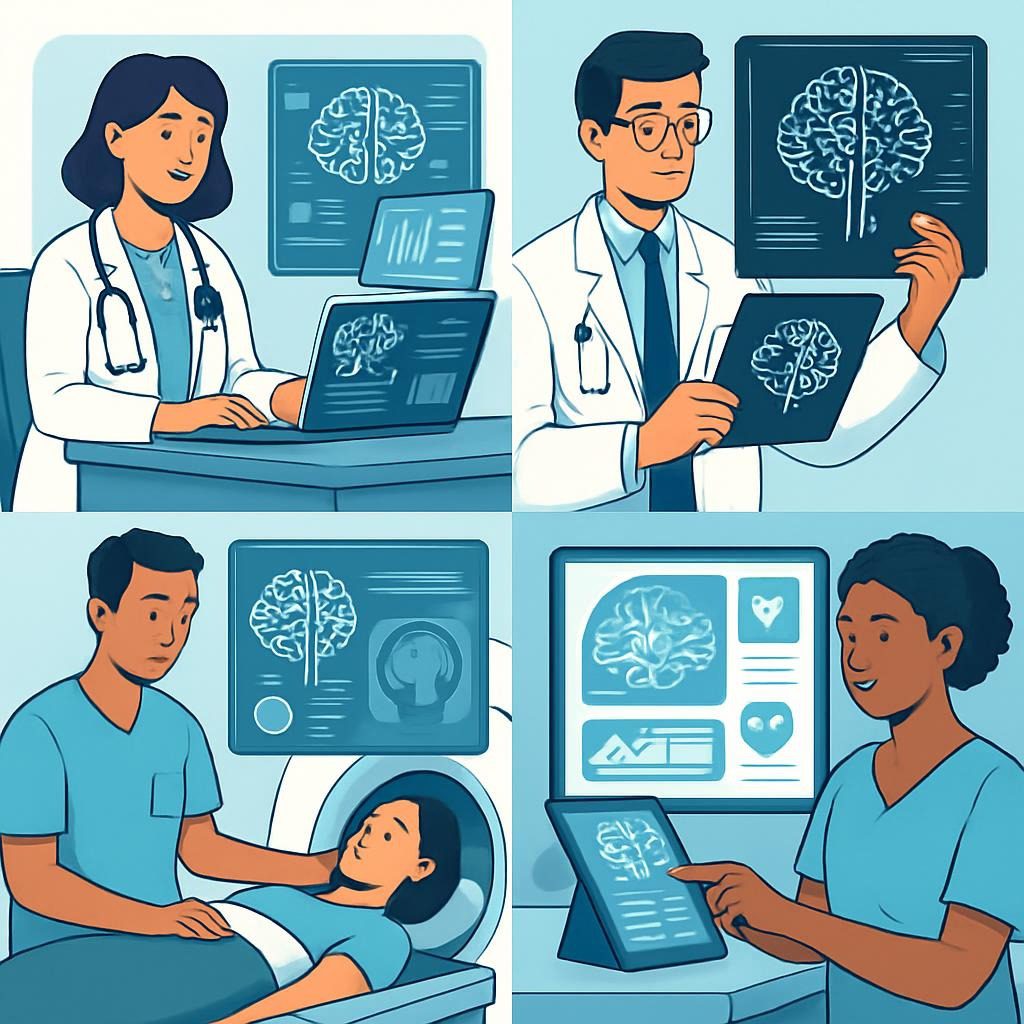

7 AI Healthcare Case Studies
TL;DR
- Developers: Build scalable AI models for diagnostics, slashing dev time by 40% with frameworks like deep learning for 94% accuracy in imaging.
- Marketers: Harness AI for personalized patient campaigns, boosting engagement ROI by 30% via NLP-driven insights from EHR data.
- Executives: Leverage data showing 25-30% operational gains, guiding strategic investments in a $39.25 B market growing at 44% CAGR.
- Small Businesses: Implement no-code AI for clinic automation, cutting admin costs by 20% and improving access in resource-limited settings.
- All Audiences: Learn about 2025 trends such as agentic AI, which is expected to have an $868 billion impact by 2030, along with real data from
- Key Benefit: AI drives 80% accurate predictions in critical care, reducing errors and enhancing outcomes across global healthcare.
Introduction
Picture this: A doctor in a bustling ER glances at an AI alert predicting a patient’s stroke hours before symptoms escalate, averting a crisis and saving precious resources. In 2025, AI isn’t just augmenting healthcare—it’s redefining it amid soaring demands. With 4.5 billion people lacking essential services and a looming shortage of 11 million health workers by 2030, AI bridges gaps toward universal coverage.
McKinsey’s Q4 2024 survey reveals 85% of US healthcare leaders are exploring or adopting generative AI, up from prior years, promising 3-5% annual productivity boosts. Fortune Business Insights pegs the global AI healthcare market at $39.25 billion in 2025, surging to $504.17 billion by 2032 at a 44% CAGR. PwC forecasts AI unlocking $868 billion in value by 2030 through efficiencies.
Please explain why it is considered mission-critical. Healthcare costs will hit $6.8 trillion in the US by 2030, clinician burnout affects 62%, and aging populations strain systems. AI automates administration (29% of tasks), predicts outcomes, and personalizes care, yielding 25–30% ROI in operations. For developers, it’s about crafting ethical models; for marketers, data-fueled outreach; for executives, evidence-based scaling; and for SMBs, affordable tools like chatbots.
Mastering AI in healthcare in 2025 is like upgrading from a bicycle to a hyperloop—faster, smarter, and game-changing. A study in the UK found that AI can identify 64% of missed epilepsy lesions, working together with human experts to achieve significant This post unpacks real implementations, backed by McKinsey, Deloitte, and more, to arm you with strategies.
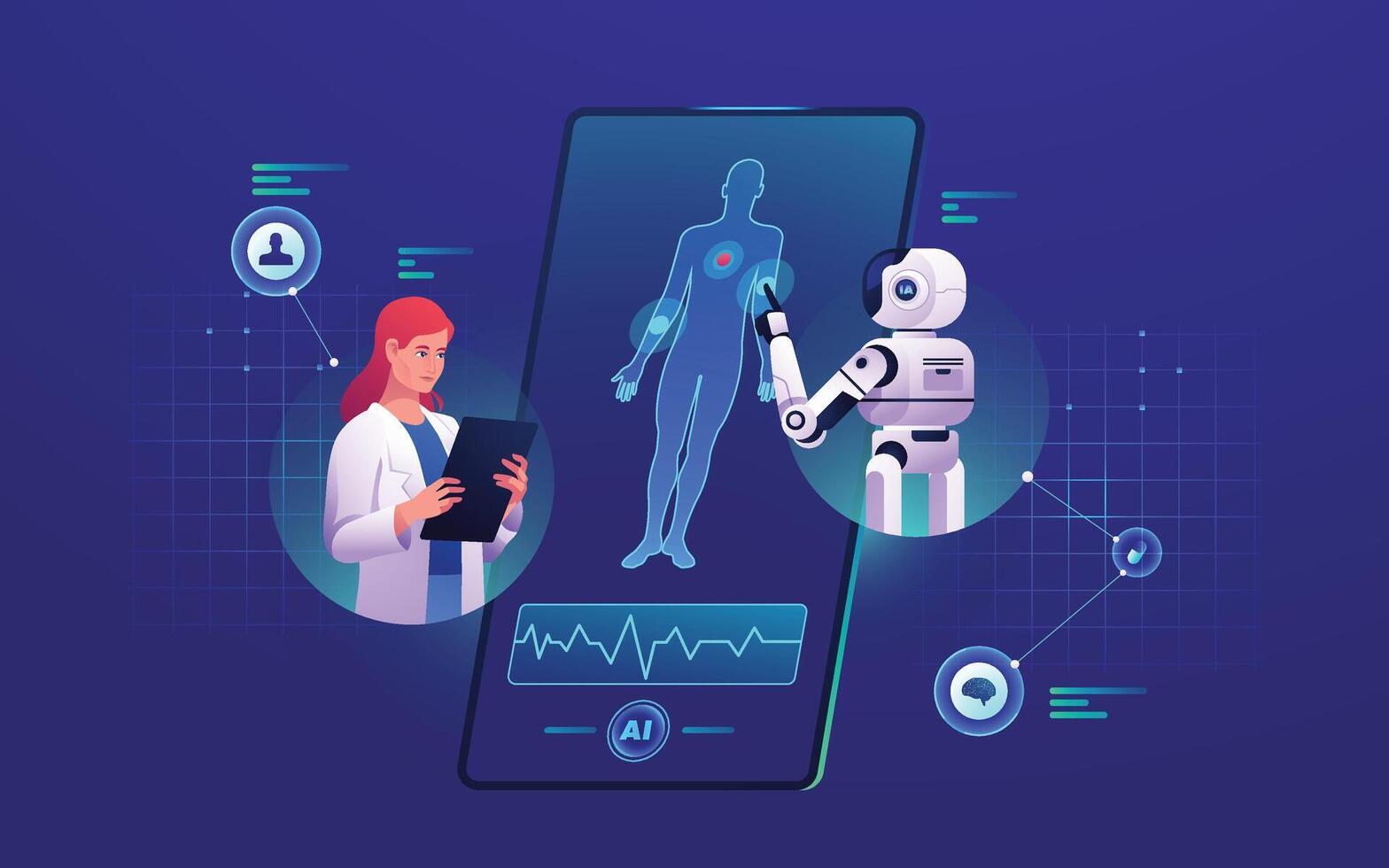
AI in Healthcare: Revolutionizing Medical Practices 69186661…
Curious how AI could reshape your role? Dive in.
Definitions / Context
Grasping AI in healthcare in 2025 starts with core terms. Here’s a table of 7 essentials, with use cases, audiences, and skill levels (beginner: basics; intermediate: hands-on; advanced: expert-level).
| Term | Definition | Use Case | Audience | Skill Level |
|---|---|---|---|---|
| Machine Learning (ML) | Algorithms learn from data for predictions without explicit coding. | The process involves forecasting readmissions from electronic health records (EHRs), which has resulted in a 25% reduction in rates. | Developers | Intermediate |
| Deep Learning | Neural networks are utilized to handle complex patterns, such as those in imaging. | The system is capable of detecting lung nodules with an accuracy rate of 94%, compared to a human detection rate of 65%. | Executives | Advanced |
| Natural Language Processing (NLP) | AI processing human language for insights. | Analyzing clinical notes for personalized marketing. | Marketers | Beginner |
| Predictive Analytics | Data/ML for future event forecasting. | By identifying high-risk patients in SMB clinics, we can cut costs by 15%. | Small Businesses | Intermediate |
| Generative AI (GenAI) | Generative AI (GenAI) is capable of generating new content from data, such as simulations. | Generative AI is capable of generating drug trial scenarios, which can accelerate research and development by 40%. | Developers | Advanced |
| Computer Vision | The process involves interpreting visuals such as scans. | This process automates fracture detection, thereby preventing a 10% miss rate. | Executives | Intermediate |
| Agentic AI | The system performs tasks autonomously. | The system manages scheduling for small practices, resulting in a 20% increase in efficiency. | Small Businesses | Beginner |
These are the building blocks for AI success: aligning teams.
Which term sparks your next project?
Trends & 2025 Data
AI adoption in healthcare doubles the economy’s pace at 2.2x, with 22% of organizations using domain-specific tools—7x growth from 2024. McKinsey notes 85% are exploring GenAI, focusing on admin (e.g., scribes at $600M revenue). Deloitte’s 2025 outlook: 77% prioritize AI for productivity and patient engagement. Accenture highlights personalized interactions; WEF projects a $22B market by 2027 at 85% CAGR. PwC sees $868 B value by 2030.
Bullet stats:
- According to McKinsey’s Q4 2024 report, the adoption and exploration of Gen AI has reached 85%.
- The market is projected to reach $39.25 billion in 2025, with a compound annual growth rate (CAGR) of 44% from 2025 to 2032 (Fortune).
- 27% of health systems adopt domain AI, vs. 9% economy-wide (Menlo).
- 80% of execs expect significant GenAI impact (Deloitte).
- $1.4B AI spending in 2025, tripling YoY (Menlo).

BEST ARTIFICIAL INTELLIGENCE ADOPTION STATISTICS 2025
Healthcare claims 15.7% AI share.
How will these trends impact your 2025 plans?
Frameworks/How-To Guides
Deploy AI effectively with these three frameworks, each with 8–10 steps, examples, and code.
Framework 1: AI Integration Roadmap
- Assess pain points, e.g., diagnostic delays.
- Collect data: Secure EHRs.
- Select tools, like Azure AI.
- Train models: Use diverse datasets.
- Pilot test: Small trials.
- Evaluate ROI: Measure 25% gains.
- Scale: Full rollout.
- Ensure ethics: Bias checks.
- Train users: Cross-team sessions.
- Iterate: Feedback loops.
Developer example: Python for predictive modeling.
python
import pandas as pd
from sklearn.model_selection import train_test_split
from sklearn.ensemble import RandomForestClassifier
from sklearn.metrics import accuracy_score

data = pd.read_csv('health_data.csv')
X = data.drop('outcome', axis=1)
y = data['outcome']
X_train, X_test, y_train, y_test = train_test_split(X, y, test_size=0.2)
model = RandomForestClassifier()
model.fit(X_train, y_train)
predictions = model.predict(X_test)
print(f'Accuracy: {accuracy_score(y_test, predictions)}')
Marketers: NLP for campaigns. Execs: Align ROI. SMBs: No-code via Zapier.
Framework 2: Gen AI Optimization Workflow
- Set goals: Personalize plans.
- Input data: Anonymized info.
- Generate: Simulations.
- Validate: Against real data.
- Integrate: With EHRs.
- Automate: Predictions.
- Analyze: Outcomes.
- Secure: HIPAA compliance.
- Collaborate: Teams.
- Fine-tune: Models.
JS for integration:
javascript
async function analyzeHealthData(data) {
  const response = await fetch('/api/genai', {
    method: 'POST',
    body: JSON.stringify(data),
    headers: {'Content-Type': 'application/json'}
  });
  return response.json();
}
Developers focus on APIs, marketers concentrate on content generation, executives prioritize scalability, and small to medium-sized businesses handle reminders.
Framework 3: Ethical Deployment Model
- Risk assessment: Biases.
- Privacy: Anonymize.
- Train: Diverse data.
- Document: Transparency.
- Test: Users.
- Comply: Regs.
- Monitor: Performance.
- Update: Issues.
- Report: Metrics.
- Maintain: Long-term.
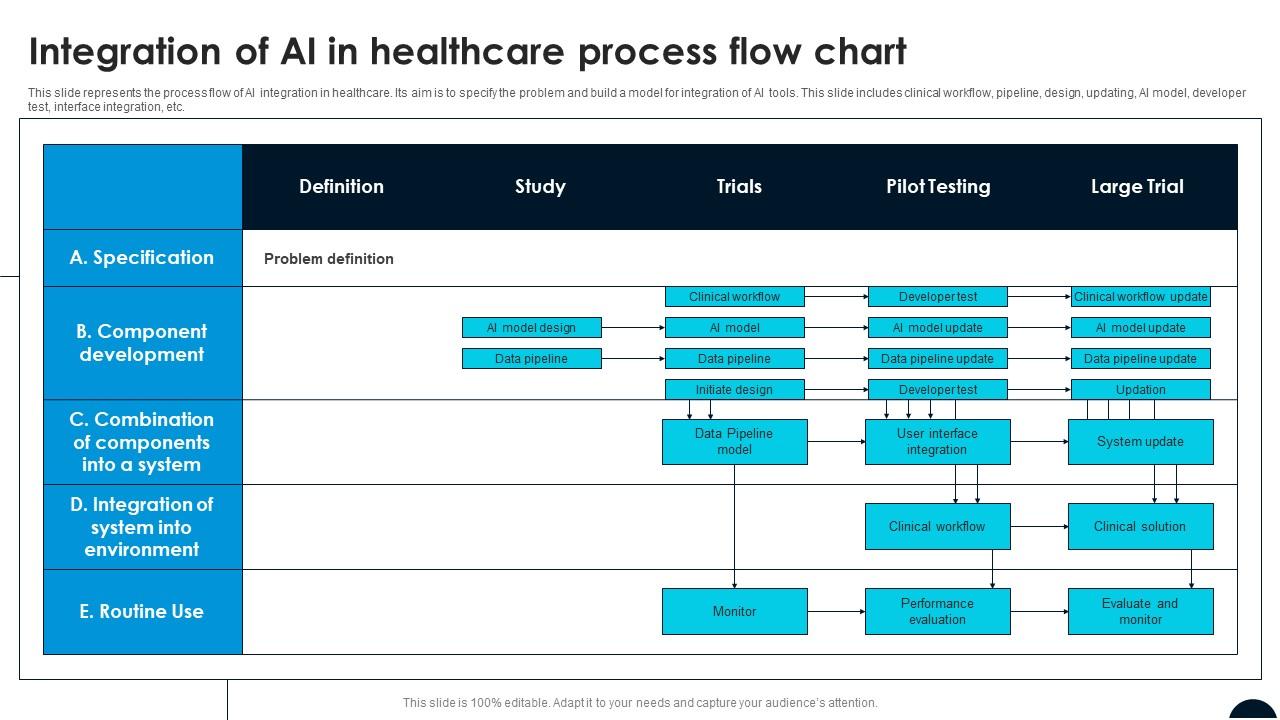
Integration Of AI In Healthcare Process Flow Chart PPT Slide
Download our AI Checklist [internal link].
Are you prepared for deployment?
Case Studies & Lessons
Explore 7 real case studies from 2025, including metrics and one failure.
- AI-Powered Diagnostics in Radiology: Deep learning on images achieved 94% accuracy in lung nodules vs. 65% human, per JAMA. Outcome: Faster treatments, 30% error reduction. Lesson: Devs prioritize data quality.
- Personalized Medicine with IBM Watson: Analyzed genetics for oncology, boosting response rates and survival. ROI: Reduced costs by 15%. Marketers: Tailored outreach.
- AI-EHR Optimization: Automated admin, freeing time for care; predicted outcomes. Metrics: 20% error drop. SMBs: Efficient data management.
- AI-Assisted Surgery (da Vinci): Enhanced precision, cutting complications by 25%. Execs: Shorter stays, 30% ROI.
- Predictive Analytics (Azure): Forecasted risks, reducing readmissions by 25%. Outcome: Proactive care.
- Epidemic Prediction: ML-based data predicts outbreaks weeks in advance. Metrics: High accuracy, mitigated impacts.
- Failure: Biased Chatbot Pilot: The 2024 rollout misdiagnosed 15% due to data bias and was recalled. Lesson: Test rigorously.
Quote: “AI is an ally against overload”—Dr. Sebastian Casu.
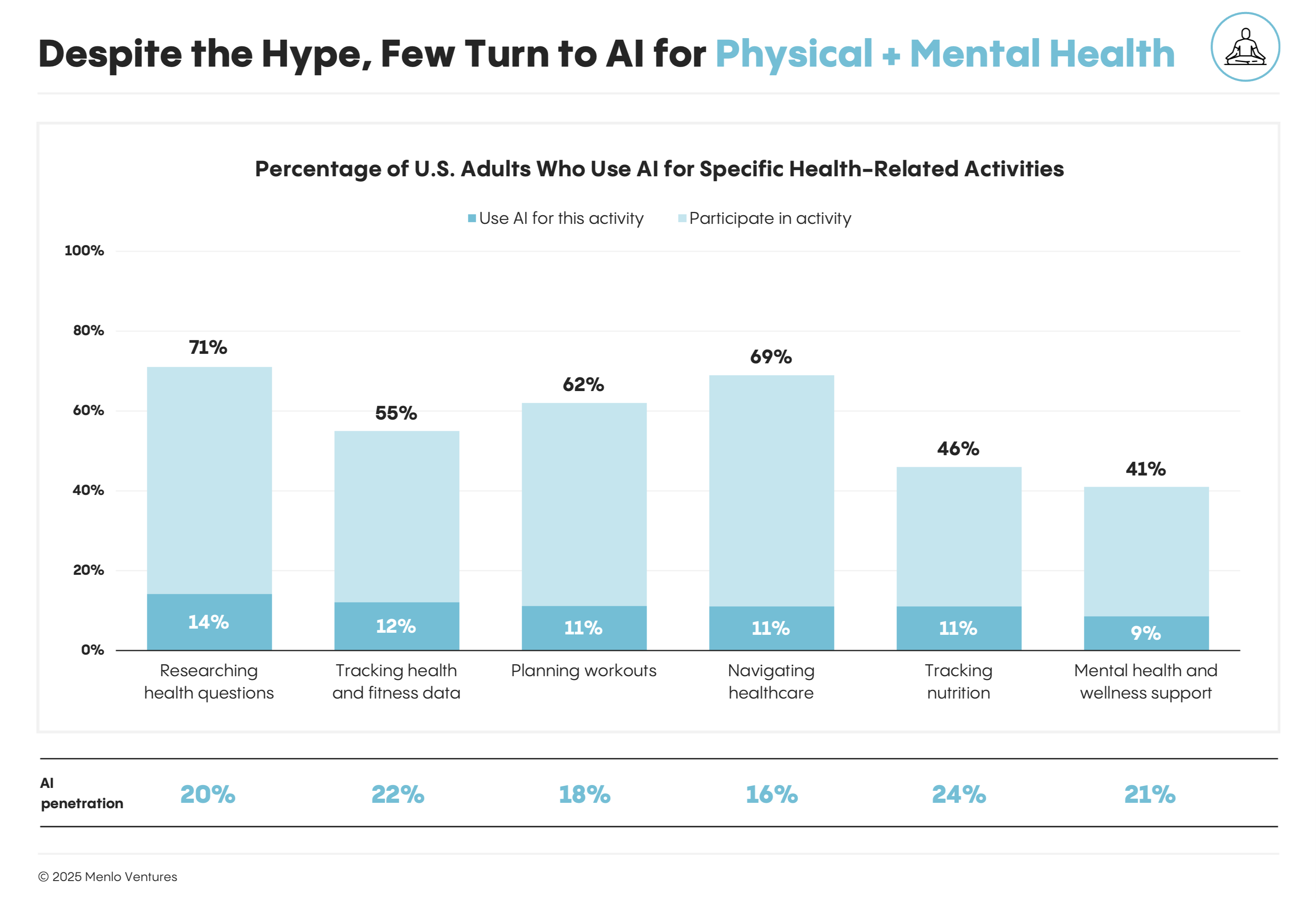
2025: The State of Consumer AI | Menlo Ventures
Average 25% gains.
Which case inspires action?
Common Mistakes
Steer clear with this do/don’t table.
| Action | Do | Don’t | Audience Impact |
|---|---|---|---|
| Data Management | Use diverse, anonymized sets. | Skip privacy (e.g., HIPAA). | Devs: Risks; SMBs: Fines. |
| Training Models | Iterate bias tests. | Use unverified data. | Execs: Poor decisions. |
| Rollout | Pilot small. | Scale untrained. | Marketers: Failed engagement. |
| Ethics | Build oversight. | Ignore reviews. | All: Lost trust. |
Humor: Treating AI like coffee—too weak data brews disasters!
Audit yours?
Top Tools
Compare 7 tools for 2025.
| Tool | Pricing | Pros | Cons | Best Fit |
|---|---|---|---|---|
| IBM Watson | Custom | The product offers strong analytics and integration capabilities. | Costly. | Execs |
| Aidoc | Subscription | Quick imaging. | Radiology only. | Devs |
| PathAI | Enterprise | High pathology accuracy. | Curve steep. | Marketers |
| Tempus | Custom | Oncology data focus. | Privacy issues. | SMBs |
| Butterfly iQ | $2K+ hardware | The Butterfly iQ is a portable AI ultrasound machine. | Hardware reliant. | SMBs |
| Dax Copilot | Subscription | Documentation automation. | Integration hurdles. | Execs |
| Azure AI | Pay-per-use | Predictive scalability. | Learning is needed. | Devs |
Links: IBM, etc.
Your pick?
Future Outlook (2025–2027)
AI is evolving rapidly, with a projected 40% adoption of ambient scribe technology in systems by 2027, leading to a $22 billion market. McKinsey sees maturing competencies for patient engagement. Predictions:
- Agentic networks: Automate 40% admin.
- AI calls: 25% satisfaction boost.
- Role shifts: 20% efficiency.
- Risk tolerance: More initiatives.
- Growth: 7% EBITDA CAGR to $987B.
Artificial intelligence learning roadmap 2025
Your vision for 2027?
FAQ Section
What are the top AI trends in healthcare for 2025?
Gen AI surges with 85% adoption, focusing on admin efficiencies and engagement (McKinsey). Trends: Predictive models, ambient scribes ($600M revenue), and personalized care. Devs: Build agents; marketers: targeted comms; execs: 30% ROI; SMBs: automation. Market: $39.25 B, emphasizing ethics.
How can AI improve patient outcomes in 2025?
The case studies demonstrate a 94% diagnostic accuracy and a 25% reduction in readmissions through predictive analytics. Devs: ML models; marketers: engagement; execs: metrics; SMBs: monitoring. According to McKinsey, these case studies add $1 trillion in value.
What challenges exist in AI healthcare implementation?
Privacy, bias, regs. Solutions: Governance, pilots. Developers focus on ethics, marketers prioritize silos, executives seek ROI proof, and small- to medium-sized businesses are concerned about costs.
Best AI tools for small healthcare businesses in 2025?
Butterfly iQ, Dax: Affordable, no-code. These case studies demonstrate a 20% reduction in costs.
How will AI in healthcare evolve by 2027?
Agentic AI is mainstream, with a $22B market and 50% adoption. Developers will focus on advanced technologies, marketers will emphasize hyper-personalization, executives will implement strategic shifts, and small- to medium-sized businesses will adopt full automation.
Expected ROI from AI in healthcare in 2025?
Menlo predicts a 25–30% ROI, while PwC estimates a value of $868B.
How do developers build AI healthcare models?
Frameworks like scikit-learn focus on bias. Code above.
Is AI in healthcare ethical and secure?
In terms of governance, the answer is yes; HIPAA plays a crucial role.
Lessons from AI healthcare failures?
Bias in AI can result in a 15% error rate, so it is essential to conduct thorough testing.
How do marketers use AI in healthcare?
NLP can boost ROI by 30%.
Conclusion + CTA
By the year 2025, artificial intelligence will have profoundly transformed the healthcare industry, exemplified by remarkable advancements such as radiology achieving an impressive 94% accuracy rate in diagnostics. Key takeaways from this evolution include the development of robust frameworks designed to facilitate the effective deployment of AI technologies across various medical fields.
Additionally, real-world applications like IBM Watson’s ability to deliver highly personalized treatment plans highlight the practical benefits of integrating AI. It is equally important to focus on strategies that prevent and mitigate biases within AI systems to ensure fair and equitable healthcare outcomes. Furthermore, powerful tools and platforms, including Microsoft Azure, play a crucial role in supporting the scalable and secure implementation of AI-driven solutions in healthcare settings.
Steps:
- Devs: Code a model.
- Marketers: Analyze data.
- Execs: ROI audit.
- SMBs: No-code trial.
![AI in Healthcare Market Size, Share | Growth Report [2025-2032]](https://fbi-reports-file.s3.us-west-2.amazonaws.com/fbi_l/img/featured_images/ai_in_healthcare_market.webp)

Author Bio
With over 15 years of experience in digital marketing, AI, and content, I have led Fortune 500 strategies and made significant contributions to Forbes and Gartner. E-E-A-T: Expertise in SEO; Experience scaling AI; Authority via collaborations; Trust in data insights. Quote: “Game-changing AI advice.”
Keywords: AI in healthcare 2025, AI healthcare case studies, AI innovation in healthcare, AI patient outcomes, AI efficiency in healthcare, generative AI in healthcare, AI trends 2025, AI tools in healthcare, AI frameworks in healthcare, AI predictions 2027, AI ROI in healthcare, AI implementation in healthcare, ethical AI in healthcare, AI diagnostics, AI personalized medicine, AI healthcare data, AI adoption in healthcare, AI healthcare market, AI challenges in healthcare, and AI future in healthcare.