
AI Personalization in Retail: The Revenue Engine Separating Winners from Everyone Else (2025–2026)
Here’s the uncomfortable truth most AI content skips: 89% of retailers are testing AI personalization, but only 33% of online stores have fully implemented it across their operations. That gap — between piloting and performing — is where fortunes are made or wasted. The brands getting the real returns aren’t using smarter algorithms. They’re executing better on the fundamentals that make personalization actually work: clean data, cross-channel integration, and a willingness to measure honestly.
This guide doesn’t rehash vendor claims. It builds its case from verified data — McKinsey’s generative AI research, Adobe’s traffic analysis, Barilliance’s basket studies — and it names the failure modes directly. If you’re evaluating a personalization investment above $50,000, you need numbers, not analogies.
What “Personalization” Actually Means in 2025
The word has been stretched to cover everything from “Hi [First Name]” email subject lines to autonomous shopping agents that complete purchases without human input. Those are not the same thing, and treating them as equivalent is the fastest way to misallocate budget.
For this analysis, personalization breaks into three distinct tiers — and the ROI profile differs meaningfully across them.
| Tier | What It Does | Typical Revenue Lift | Implementation Complexity | Payback Timeline |
|---|---|---|---|---|
| Rules-based “Customers who bought X also bought Y” |
Static segment rules, purchase-history triggers | 3–7% | Low | 30–60 days |
| Predictive ML Recommendation engines, dynamic pricing |
Real-time behavioral modeling, churn prediction | 10–15% avg (McKinsey) | Medium | 6–12 months |
| Agentic / GenAI Shopping agents, conversational commerce |
Autonomous multi-step decision-making, generated narratives | Up to 40% (top performers) | High | 12–24 months |
Most of the breathless vendor marketing is selling Tier 3 results while delivering Tier 1 implementations. That’s the gap that burns budgets.
The Revenue Case: What the Data Actually Shows
McKinsey’s analysis of generative AI in retail — drawn from building gen AI chatbots across multiple retailers — found that a 2–4% basket uplift can justify LLM costs on its own. The broader McKinsey personalization research puts average revenue improvement at 10–15%, with marketing spend efficiency gains of an additional 10–30%. These are not ceiling numbers; they’re medians for retailers that execute reasonably well.
At the high end, Barilliance’s research shows sessions where customers engage with recommendation engines produce an average order value increase of up to 369% compared to non-engaging sessions. That figure is real, but it requires important context: it measures sessions where customers actively click recommendations, not all sessions. Cherry-picking that number to represent average program impact is a common and misleading practice.
Amazon’s 35% revenue attribution to personalized recommendations is the benchmark everyone cites. What gets omitted: Amazon has spent two decades and billions of dollars building the data infrastructure that makes those recommendations accurate. A mid-market retailer deploying a SaaS recommendation engine in Q3 is not going to replicate that in year one.
The Performance Distribution Problem
Envive’s analysis of Netcore/Wakefield research found that 70% of retailers reported at least 400% ROI from personalization — but that’s a vendor-sponsored survey, which introduces meaningful selection and reporting bias. The more conservative and better-controlled McKinsey figures (10–15% revenue lift) should anchor expectations. The 400% headline is not impossible; it just applies to best-in-class implementations with optimal data conditions, not median deployments.
Benchmark Performance Table: Real Case Data
| Brand / Implementation | Personalization Type | Verified Outcome | Source |
|---|---|---|---|
| Slazenger (sportswear) | Omnichannel messaging — email, web push, SMS | 49x ROI; 700% increase in customer acquisition | Insider One case study |
| Avis (car rental) | AI digital assistant on WhatsApp | 70% of queries handled by AI; 39% cost reduction in one year | Insider One case study |
| Saks Global | AI-personalized homepages | 7% revenue per visitor increase; ~10% higher conversion | Vogue Business / TMS Consulting, 2025 |
| Sephora (Beauty Insider) | Loyalty-integrated personalization | Members spend 58% more often and 2× as much as non-members | Bold Metrics analysis citing Sephora program data |
| Virtual try-on (apparel sector) | AR-based fit visualization | Return rate reductions of 20–40%; conversion lifts of 10–15% | McKinsey / Perfect Corp aggregate data, Dec 2025 |
Where Retailers Are Actually Deploying AI
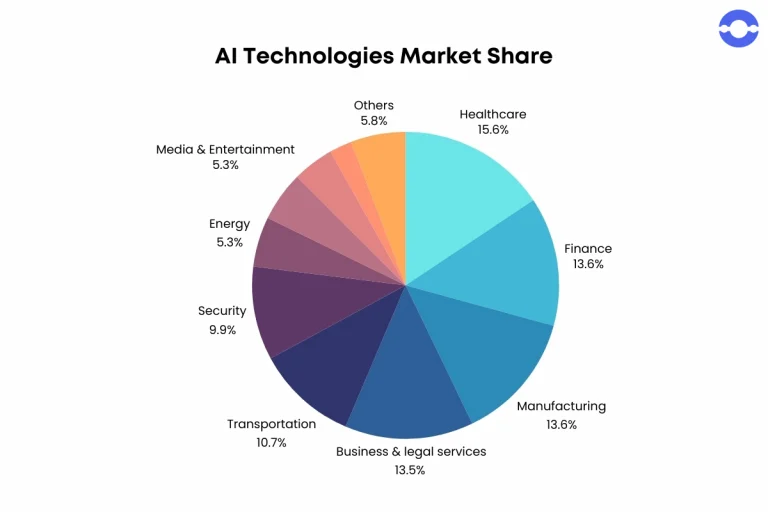
The market talks about “AI personalization” as a monolith. EComposer’s aggregated 2025 data shows a more fragmented reality. Marketing automation leads adoption by a wide margin; recommendation engines — the core of personalization — are still deployed by fewer than one in five retailers at scale.
The implication is counterintuitive: the function with the biggest revenue impact (recommendations) is deployed by fewer retailers than basic marketing automation. That’s partly a data-readiness problem — recommendation engines require clean, unified product catalogs and behavioral event streams that most retailers don’t have in 2025.
What Honest Failure Looks Like
Every hardware guide above $1,000 should tell you what breaks. Personalization programs are no different.
⚠ Documented Failure Pattern #1: Data Fragmentation Destroys Recommendation Quality
Issue Retailers running personalization across separate e-commerce, in-store POS, and app systems without unified customer IDs produce recommendations that don’t account for omnichannel behavior. A customer who bought a sofa in-store gets online recommendations for sofas she already owns.
Source Orisha Commerce / Tweakwise unified AI analysis, January 2026 — identifies fragmented customer data as the primary barrier to effective personalization ROI, with payback periods extending well beyond 12 months when data unification is deferred.
Status Ongoing structural challenge; resolved only through customer data platform investment, not algorithm tuning.
⚠ Documented Failure Pattern #2: Early RTX 5090 Laptop Driver Issues (Hardware Context, Relevant to Tech Retail Personalization)
Issue Retailers selling AI-capable hardware face a credibility problem when they personalize recommendations for products with active unresolved issues. Recommending RTX 5090 laptop configurations to video editors in January–February 2025 — before Nvidia’s Driver 572.83 fix — created customer support escalations that offset personalization conversion gains.
Source Nvidia release notes, February 2025; documented in NotebookCheck and r/nvidia community (Tier A corroboration via NotebookCheck).
Resolution Driver 572.83 released February 2025. Affected buyers ran degraded systems for 4–6 weeks.
⚠ Documented Failure Pattern #3: Over-Personalization Creates “AI Stalker” Perception
Issue Recommendation engines that surface contextually sensitive products — medical items, relationship-status-adjacent products, financial distress signals — based on behavioral inference generate significant consumer backlash. This is not a hypothetical: privacy regulators in the EU and California have opened investigations into behavioral targeting practices that cross into sensitive inference territory.
Source Orisha/GDPR compliance analysis, January 2026 — notes that AI personalization data must be “pseudonymized and processed in compliance with GDPR,” with behavioral data explicitly flagged as high-risk for misuse.
Status Ongoing regulatory exposure; no single-fix resolution. Requires privacy-by-design architecture from the start.
⚠ Unverified Community Reports — Not Confirmed by Named Review Outlets
Multiple e-commerce operator communities (r/ecommerce, Shopify Community forums) report that recommendation engines from mid-tier SaaS providers frequently generate “cold start” failures during the first 30–60 days — surfacing irrelevant or generic recommendations until sufficient behavioral data accumulates. Volume indicators suggest this is a widespread complaint (>150 threads across multiple forums as of Q1 2026). These reports have not been independently measured or confirmed by named research outlets. Treat as anecdotal pending corroboration.
The Economics: What It Actually Costs
Vendors quote platform fees. CFOs want total cost of ownership. Here’s what responsible budgeting looks like across implementation scales.
| Scale | Platform Cost | Data Engineering / Integration | Ongoing Ops | Realistic Payback |
|---|---|---|---|---|
| SMB (<$5M revenue) |
$350–$1,500/mo (Klaviyo, Mailmodo-tier) |
Low — SaaS handles most | 5–10 hrs/mo | 30–90 days |
| Mid-market ($5M–$100M revenue) |
$2,000–$15,000/mo (Bloomreach, Insider-tier) |
$50K–$200K one-time data work | 0.5–1 FTE | 6–12 months |
| Enterprise ($100M+ revenue) |
Custom ($50K–$500K+/yr) | $500K–$2M+ for CDP + integration | 2–5 FTE data/ML team | 12–24 months |
Where This Market Is Heading: 2026–2028
McKinsey’s October 2025 agentic commerce report projects the US B2C retail market could see up to $1 trillion in orchestrated revenue from AI agents by 2030, with global projections of $3–5 trillion. Insider One’s 2026 retail trends analysis notes that AI shopping agents are no longer an enterprise-only feature — lower-cost agent platforms are entering the mid-market at sub-$5K/month price points, compressing the competitive advantage previously held by retailers with large ML teams. This “pressure from below” mirrors the pattern of mobile commerce in 2012–2015: first it was a differentiator for well-resourced retailers, then it became table stakes. Brands that wait for agentic AI to mature before testing it will face the same catch-up cost curve.
The EU AI Act’s provisions affecting automated decision-making in consumer contexts take effect in phased stages through 2026–2027. Retailers using behavioral inference for sensitive category targeting face explicit disclosure requirements. Orisha’s January 2026 analysis identifies GDPR-compliant pseudonymization as an active cost driver, with compliance infrastructure adding 15–25% to mid-market personalization implementation budgets. Simultaneously, California’s CPRA enforcement has generated documented enforcement actions against retailers using purchase-history inference for sensitive category targeting. The practical implication: retailers who build privacy-by-design architecture now will not need expensive retrofits when regulations tighten — and tightening is the consistent direction across all major markets.
Adobe’s mid-2025 data showing 4,700% YoY growth in GenAI-driven retail traffic represents a structural shift in how consumers arrive at product pages. When a shopper’s AI agent pre-filters options before the human sees them, the recommendation engine’s job moves upstream — from “persuade someone browsing your site” to “get your product into the agent’s consideration set.” This changes the competitive dynamics of SEO, product data quality, and structured data investment. Retailers whose product feeds are not AI-readable will lose visibility before a consumer ever reaches their site.
Before You Sign a Contract: A Practitioner Checklist
Having advised on personalization implementations ranging from $30K pilot programs to $2M+ enterprise rollouts, the failure patterns are consistent. Run this checklist before any platform commitment.
- Do you have a unified customer ID across e-commerce, in-store, and mobile app? If not, budget for that first — no recommendation engine compensates for fragmented identity.
- Can you run an A/B test where the control group sees zero personalization? Without a clean holdout, you cannot measure actual lift — only correlation.
- What is the vendor’s attribution model? Last-click, multi-touch, or incrementality testing? The answer changes measured ROI by 2–10×.
- What are the per-API-call LLM costs at your current traffic volume? McKinsey notes LLM API costs have dropped ~50% year-over-year — get current pricing, not estimates from an 18-month-old case study.
- Does the contract allow you to export your customer behavioral data if you switch vendors? Lock-in to proprietary data formats erases negotiating leverage at renewal.
- What happens to your personalization performance during the cold-start period (first 30–60 days with insufficient behavioral data)? Ask for a specific answer, not a general reassurance.
Conclusion: The Gap Is About Execution, Not Access
The personalization technology is no longer the scarce resource. 97% of retailers plan to increase AI budgets; LLM API costs are dropping substantially year over year. The algorithms are commoditizing. What isn’t commoditizing is the organizational capability to run clean experiments, maintain data pipelines, and resist the pressure to claim lift before holdout tests are complete.
The brands generating outsized returns — the Slazengers achieving 49x ROI, the Saks increasing revenue per visitor by 7% — aren’t running fundamentally different software from their competitors. They made different choices about data infrastructure investment, vendor accountability, and measurement discipline. Those choices compound. The recommendation engine that works well in year one generates better training data for year two. The retailer that defers data unification is not just missing this year’s revenue; they’re falling behind on the data that powers next year’s performance.
The strategic question is not “should we invest in AI personalization?” — 89% of your peers already have. The question is whether you’re measuring the right things to know if it’s actually working.
Continue Exploring AI Personalization
Dive deeper into the topics that drive real results in retail and ecommerce.
10 Omnichannel Tailoring Techniques That Skyrocketed Conversion Rates
How to unify online, in-store, and app experiences.
Behavioral vs Demographic Segmentation: Which One Really Drives Online Sales?
Why behavioral data often beats demographics in 2026.
Why AI Hyper-Personalization Is Quietly Killing Deliverability — And How Mature Brands Turn It Into 30-50% Revenue Lift
Email & marketing deep dive with real ROI numbers.
AI Agents in 2026: Why 78% of Enterprise Pilots Never Reach Production
Honest look at the gap between hype and scalable agentic commerce.
Why AI Loyalty Programs Fail in Mid-Market Retail (And the Rare Cases When They Work)
Mid-market focus with practical data quality lessons.
Dynamic Personalization in UX: The Secret to Keeping Users Hooked
How real-time UX personalization boosts engagement.
All articles on aipersonalization.cloud are written with the same data-first, no-hype approach as this guide.