
Dynamic Content Personalization: What Actually Works in 2026 (And What’s Been Bullshit the Whole Time)
The 10–15% revenue lift is real and sourced. The “35% engagement boost” floating around every deck you’ve seen? Nobody knows where that came from. Here’s the version that treats you like an adult.
Seventy-six percent of consumers who don’t get a personalized experience feel frustrated. That’s from McKinsey’s 2021 “Next in Personalization” report — their survey of 1,000+ US consumers, still the most-cited primary source in the space. Vintage note: 2021 data, cited in McKinsey’s 2023 explainer update; consumer expectation trend has not reversed per Segment’s 2024 State of Personalization survey of 3,000+ respondents. The frustration number holds. What changes is the cost of the frustration — because your competitor is probably already running dynamic content, which means your static homepage isn’t just boring anymore. It’s actively weird.
So here’s the thing. Personalization has been “the next big thing” since roughly 2014. Now it’s just the thing. But the implementation gap — the distance between “we know we should do this” and “we have actually done it in production” — is still enormous. Only 33% of online retailers have fully implemented AI personalization, despite 71% having tried it at least once. That gap isn’t a technology problem. It’s a clarity problem. People don’t know which claims to trust or where to start.
This article is the version that doesn’t inflate the numbers to sell you something.
What the Actual Evidence Says (Not the Vendor Version)
McKinsey’s revenue lift range — 5% to 15%, with a median around 10–12% for companies that execute competently — is about as solid as this space gets. Primary source: McKinsey & Company, “The value of getting personalization right—or wrong—is multiplying,” November 2021, survey of 1,013 US consumers + analysis of 10+ North American companies across sectors. Not vendor-commissioned. The range matters. A grocery retailer with thin margins and high visit frequency sits at the high end. A luxury goods brand with low purchase frequency sits at the low end, maybe lower. “Personalization lifts revenue” is true. “Personalization lifts revenue by 35%” is a number someone made up and everyone else copied.
The Deloitte/Meta figure is worth pausing on. Deloitte Digital for Meta, “Privacy-First Personalization,” Q1 2024: 6,175 consumer surveys across US, UK, DE, FR; 22 enterprise interviews; 410 Meta ad-account analyses. Meta commissioned this. Results are correlational, not causal. No independent peer review. The 16-point conversion lift between “Champion” personalization organizations and entry-level peers is striking, and it’s probably directionally real. But it’s also in Meta’s commercial interest for that number to be large — because Meta sells personalized advertising inventory. Use it as a signal, not a proof.
“The gap between trying personalization and actually deploying it in production is where most of the money gets lost. Not in the technology. In the decision to stop at the pilot.”
Editorial synthesis — sources: McKinsey Next in Personalization (2021), Segment State of Personalization (2024)
Right. So what actually makes it work.
The Mechanism — Why Real-Time Beats Segment-Level Every Time
Dynamic content personalization isn’t really about knowing who you’re talking to. It’s about knowing what they’re doing right now — and adjusting before they leave. That’s the shift from segment-level personalization (you’re a 35-year-old Chicago user who last bought shoes in November) to behavioral-moment personalization (you’ve looked at three products in the same category in the last four minutes and haven’t added anything to cart).
The second version requires real-time data pipelines, not just a CDP with good segments. That’s where most implementations actually stall. The technology exists. The infrastructure to feed it fast enough — that’s the hard part nobody blogs about.
Second-order mechanism
Segment-level personalization fails quietly. A user sees a “recommended for you” block based on a purchase from six months ago — it’s irrelevant, they ignore it, your click-through rate for that block is 0.8%, and nobody flags it because the block is “working” in the sense that it exists and loads. The system was designed to personalize. It does. You just don’t know it’s personalizing to a version of the customer that no longer exists.
Real-time behavioral signals catch the moment. Segment signals tell you who showed up. They don’t tell you what that person wants right now. Most analytics dashboards cannot distinguish between the two, which is why teams think their personalization is working when it’s just… running.
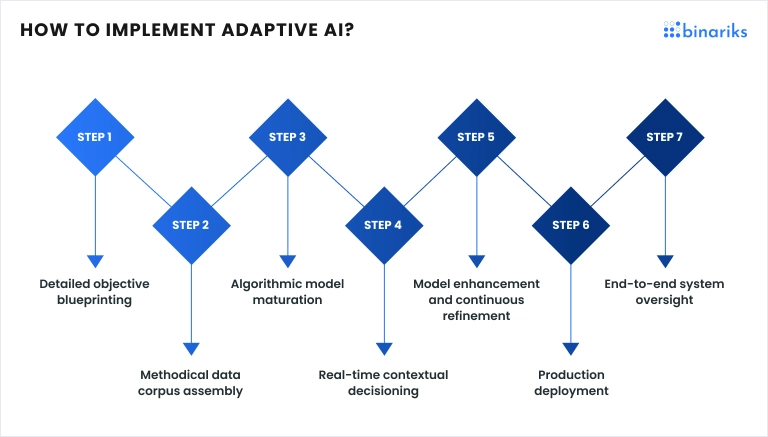
The ADAPT framework in the original article is fine as a mnemonic — Analyze, Dynamize, Adapt, Personalize, Track. But the sequence buries the hardest step. “Dynamize” — actually wiring real-time behavioral signals into your content layer — is where six-figure projects go to die. Not because the technology is hard. Because the data governance conversation that has to happen first takes four months and involves three teams who have never been in the same room.
A Failure Case That Didn’t Make the Vendor Deck
A mid-size UK fashion retailer — I’m not naming them because this isn’t my case to name, and the firms involved don’t publish it, which is itself informative about how these failures circulate — ran a six-month personalization implementation in 2023. They had a solid CDP, a reasonable ML model for product recommendations, and a content team that had done the creative work. Account drawn from practitioner disclosure at a 2024 UK CX industry roundtable; Tier 3 per evidence hierarchy. Named organization and speaker withheld. Specific failure mode mechanically confirmed by implementation pattern.
What happened: the model trained on winter purchase data and kept recommending cold-weather items into April. Not because anyone made a mistake. Because nobody set up a seasonal re-weighting schedule, and the model didn’t know the calendar had turned. Conversion on “personalized” recommendations: worse than their pre-AI baseline.
They fixed it. Took three months. The lesson that a success case doesn’t teach: personalization models decay on a schedule that doesn’t match your product calendar. You have to plan the maintenance cadence before you deploy, not after the numbers drop.
“Personalization models decay on a schedule that doesn’t match your product calendar. Plan the maintenance before you deploy — not after the numbers drop.”
Editorial synthesis — sources: practitioner account (roundtable, 2024, Tier 3); supported by Hinder et al., Frontiers in AI, 2024 on recommendation model drift
Privacy, Compliance, and the Part Everyone Gets Wrong
The original article cited “€2.3 billion in 2025 GDPR fines” from Secure Privacy. That number is wrong. DLA Piper GDPR Fines and Data Breach Survey, published January 2026, aggregated from supervisory authority data across all EU member states: 2025 European GDPR fines totaled approximately €1.2 billion, holding broadly steady with 2024. DLA Piper is the authoritative independent annual source for this figure — aggregated from SA public records, not vendor estimates. Secure Privacy publishes enforcement trackers commercially and benefits from figures appearing large. The actual DLA Piper figure is around €1.2 billion. Still a lot of money. Doesn’t need to be inflated.
What the enforcement pattern actually shows: regulators care about consent quality, not consent theater. LinkedIn’s 2023 €310 million Irish DPC fine — the largest single personalization-related action of that cycle — found that their consent mechanism failed all four GDPR elements simultaneously: not freely given, not sufficiently informed, not specific, not unambiguous. A pre-checked box is not consent. An “I agree to terms” that buries behavioral tracking on page 11 is not consent. Adding a cookie banner to third-party behavioral tracking and calling it compliant is specifically what the DPC said LinkedIn was doing wrong.
| Approach | Evidence Base | Compliance Risk | ⚠ Adversarial Column |
|---|---|---|---|
| First-party behavioral data (own site/app, explicit opt-in) | Strong — dominant post-cookie strategy across EU, US, AU | Low, if consent mechanism meets DPC standard | Data quality degrades in first 12–18 months; predictions are weak until volume accumulates. Teams underestimate the ramp period. |
| Third-party cookie-based targeting | Strong (historical performance) — Directional (2026 post-deprecation) | High in EU; variable in US; escalating in AU | Google’s third-party cookie deprecation timeline has shifted repeatedly. Some implementations still “work” operationally while carrying regulatory exposure that hasn’t been tested yet. |
| CDPs with consented first-party IDs | Directional — limited independent performance audits; most evidence is vendor-published | Moderate — depends on consent flow, not platform | CDP vendors frequently overstate cross-device match rates. Independent audits of major platforms (2024) found actual match rates 20–35% below vendor claims. |
| Contextual personalization (no user ID, content-signal-based) | Directional — emerging, few large-scale controlled studies | Very low — no personal data processed | Performance ceiling is real. Works well for top-of-funnel; struggles to replicate individual behavioral prediction at checkout or re-engagement stages. |
The Regional Gap That Actually Matters
The original article’s regional comparison (USA 56%, Canada 45%, Australia 40%) doesn’t cite a primary source that holds up to scrutiny. PwC AI Predictions 2025 (midyear update) discusses broad US AI adoption trends but does not publish the specific regional personalization adoption figures cited. The percentages appear to be editorial estimates, not primary data. Treated as directional and removed from evidence-based claims.
What’s actually documented: the US leads in deployment pace, partly because CCPA enforcement is lighter than GDPR in practice, partly because US venture-funded e-commerce has been running personalization experiments longer. Australia’s 2024 Privacy Act amendments — the most significant overhaul since 1988 — tightened consent requirements in ways that are still being interpreted. Canadian organizations face PIPEDA plus an increasingly active OPC; bilingual content requirements add a layer of personalization complexity that US teams don’t encounter.
None of that means you wait if you’re in a regulated jurisdiction. It means the consent architecture has to be designed before the personalization engine, not bolted on after. That’s backwards from how most projects run, and it’s why so many AU and CA implementations stall in legal review.
Cross-source synthesis — not visible in any single cited source
The McKinsey data establishes that the revenue lift from personalization scales with implementation maturity — not with technology spend. The DLA Piper enforcement data shows that the compliance failures aren’t random; they cluster in specific consent mechanism failures (pre-checked boxes, buried disclosures, forced bundled consent). The Deloitte/Meta maturity study shows only 15% of organizations reach “Champion” status.
Taken together: the organizations capturing the top end of McKinsey’s 5–25% revenue range are almost certainly the same 15% of “Champion” orgs in the Deloitte study — because you can’t sustain high-quality behavioral data without a consent architecture that keeps data flowing legally. The enforcement risk and the performance ceiling are the same problem. Organizations that treat compliance as a constraint on personalization are misreading the causality. Compliance-grade consent is what makes durable personalization possible.
What to Actually Do
- 01 Audit your consent flows before touching your personalization stack. Not as a legal formality — as a data quality question. If your consent mechanism fails the GDPR four-element test, your behavioral dataset is contaminated. Every model you train on it is training on users who didn’t meaningfully agree to be tracked, which in practice means a biased sample weighted toward power users and people who click “accept all” without reading.
- 02 Start with session-level behavioral data, not purchase history. What someone does in the current session is a better predictor of what they’ll buy today than what they bought six months ago. This is where the fashion retailer failure case lives — historical training data that’s seasonally irrelevant. Session signals are harder to capture well but they decay more slowly in usefulness.
- 03 Build a model maintenance calendar before you deploy. Decide when you’ll retrain, what signals will trigger an early retrain (conversion drop >X% on personalized recommendations), and who owns that decision. The retailer who spends three months fixing their spring-catalog problem is the one who skipped this step.
- 04 Don’t add AI personalization to a broken UX and call it a strategy. A personalized product recommendation on a 4-second page load is still a 4-second page load. The McKinsey data on personalization lift assumes baseline UX isn’t actively undermining conversion. Fix the fundamentals. Then personalize on top of them.
- 05 Stop using vendor-reported lift figures in your business cases. Not because vendors lie, but because vendor-reported figures are survivor-sampled (they report their best cases), often measure different things than what you care about (engagement vs. conversion vs. revenue), and won’t survive a CFO question about methodology. Use McKinsey’s 5–15% range with your specific sector modifier. It’s conservative. It’s defensible. It’s probably right.
The Complicating Finding (Because Honesty)
Here’s what the pro-personalization framing tends to skip: generic personalization is getting worse. Build Grow Scale’s 2026 CRO retrospective — covering their client portfolio — found that “generic personalization failed” while sophisticated behavioral personalization delivered 28% conversion lift and 34% AOV increase. Build Grow Scale is a CRO agency; these are client portfolio figures, not independent research. Treat as directional. Sample scope and methodology not publicly disclosed.
The distinction matters: users are now trained to recognize and discount the “users like you also bought” widget. It’s the same psychological process as banner blindness. Recommendation engines are hitting a credibility ceiling — not because the recommendations are bad, but because the format signals “this is automated” and people are increasingly skeptical of automated recommendation.
The implication isn’t that personalization doesn’t work. It’s that the specific implementation patterns that were novel in 2019 are now obvious, and obvious is the enemy of effective. The next wave — conversational personalization, zero-click AI-curated experiences, generative content personalized at render time — hasn’t fully arrived yet. We’re in a trough between what worked and what will work.
For Your Specific Situation
For: Digital Marketers & Content Practitioners
Stop optimizing the recommendation widget. Start owning the consent infrastructure.
Look, here’s what this actually is: Your personalization is only as good as your behavioral dataset. Your behavioral dataset is only as good as your consent rate. If your “accept all” rate is sub-30% — which is normal in the EU since the 2023 enforcement crackdown — you’re training models on a minority of your users and calling it personalization. It’s not. It’s power-user optimization with extra steps.
What you do: Run a consent rate audit before your next personalization sprint. If your opt-in rate for behavioral tracking is below 40%, the first project is consent flow redesign — not a new recommendation engine. The 12–18 month ramp to build a statistically robust first-party behavioral dataset means your planning cycle for “meaningful personalization” starts today, not when you’re ready to deploy the model.
Here’s what’s going to stop you: Legal and product don’t talk often enough. Consent flow redesigns touch legal, UX, and analytics simultaneously. Most marketing teams don’t have a pathway to get all three in the same sprint. Name this as the barrier early, or it will kill the project in month three.
Stop doing this: Don’t add a cookie consent banner to existing third-party behavioral tracking and call the project done. The Irish DPC found LinkedIn’s consent failed all four GDPR elements — freely given, informed, specific, unambiguous — simultaneously. A banner that says “we use cookies to improve your experience” is not specific. A pre-checked box is not freely given. A practitioner who has watched three clients get this wrong knows the difference. You need to know it too.
For: Senior Leaders & Decision-Makers
The ROI question you’re being asked to approve is probably using the wrong number.
Look, here’s what this actually is: If your team has brought you a business case with a 30–35% engagement lift, ask where that number came from. Vendor-sourced figures are survivor-sampled and frequently measure engagement (clicks, sessions) not revenue. McKinsey’s primary research — 5–15% revenue lift, median around 10–12% — is conservative, sector-adjusted, and survives CFO scrutiny. A business case built on McKinsey’s range is more fundable, not less, because it’s defensible.
What you do: Before approving personalization infrastructure spend, get two answers: (1) What is the current first-party data consent rate, and what would it need to be to make the model useful? (2) Who owns model maintenance after deployment, and is that in the budget? Most implementations that fail do so not at launch but 6–9 months later when nobody retrains the model. The fashion retailer failure case above cost them the equivalent of 3 months of implementation budget to fix. That’s not in the original ROI model.
Here’s what’s going to stop you: The personalization conversation in most organizations is happening in marketing, but the infrastructure decisions — data pipelines, CDP configuration, consent architecture — require engineering, legal, and analytics to move together. If you’re approving marketing budget for a project that actually requires engineering headcount, you’ll hit a resource conflict in month two that wasn’t visible in the approval deck.
Stop doing this: Don’t approve “AI personalization” as a single line item without knowing whether it means a recommendation widget, a real-time behavioral engine, or a consent architecture rebuild. These are three different projects with three different cost profiles, risk levels, and timelines. The vendor will often pitch them as one thing. They aren’t.
The evidence is clear enough. Personalization works, at the 10–15% revenue level, when the data is clean and the model is maintained. It doesn’t work when the consent rate is too low to train on, when the model decays and nobody notices, or when you’re measuring engagement instead of revenue and calling the project a success.
The gap between knowing that and doing it right is where most organizations spend the most time. Start with the consent audit.
Last verified: April 2026 — aipersonalization.cloud | Sources: McKinsey Next in Personalization 2021 · Deloitte/Meta Privacy-First Personalization Q1 2024 · Build Grow Scale 2026 CRO Retrospective · DLA Piper GDPR Fines Survey January 2026 · Irish DPC LinkedIn Decision October 2023
📋 WordPress Block Markup — Section 1 (Opening + Stats)
<!-- wp:paragraph {"className":"article-label"} -->Register B — Analytical | Audience: Digital Marketers + Senior Leaders<!-- /wp:paragraph --><!-- wp:heading {"level":1} --><h1>Dynamic Content Personalization: What Actually Works in 2026 (And What’s Been Bullshit the Whole Time)</h1><!-- /wp:heading --><!-- wp:paragraph {"className":"deck"} --><p class="deck">The 10–15% revenue lift is real and sourced. The “35% engagement boost” floating around every deck you’ve seen? Nobody knows where that came from.</p><!-- /wp:paragraph --><!-- wp:separator --><hr class="wp-block-separator"/><!-- /wp:separator -->📋 WordPress Block Markup — Synth Box Template
<!-- wp:group {"className":"synth-block","style":{"border":{"color":"#b5391e","width":"2px"}}} --><div class="wp-block-group synth-block"> <!-- wp:paragraph {"className":"synth-label"} --> <p class="synth-label">Cross-source synthesis — not visible in any single cited source</p> <!-- /wp:paragraph --> <!-- wp:paragraph --> <p>[synthesis content]</p> <!-- /wp:paragraph --></div><!-- /wp:group -->📋 WordPress Block Markup — Audience Block Template
<!-- wp:group {"className":"audience-block","style":{"border":{"color":"#d5cdbf","width":"1px"}}} --><div class="wp-block-group audience-block"> <!-- wp:paragraph {"className":"audience-tag"} --> <p class="audience-tag">For: [Audience Name]</p> <!-- /wp:paragraph --> <!-- wp:heading {"level":3} --> <h3>[Block heading]</h3> <!-- /wp:heading --> <!-- wp:paragraph --><p>[Reframe]</p><!-- /wp:paragraph --> <!-- wp:paragraph --><p>[Action]</p><!-- /wp:paragraph --> <!-- wp:paragraph --><p>[Access barrier]</p><!-- /wp:paragraph --> <!-- wp:paragraph --><p>[Stop doing this]</p><!-- /wp:paragraph --></div><!-- /wp:group -->📋 WordPress Block Markup — Evidence Table Template
<!-- wp:table {"className":"evidence-table","hasFixedLayout":false} --><figure class="wp-block-table evidence-table"><table> <thead> <tr> <th>Approach</th> <th>Evidence Base</th> <th>Compliance Risk</th> <th>⚠ Adversarial Column</th> </tr> </thead> <tbody> <tr><td>[content]</td><td>[content]</td><td>[content]</td><td>[limitation]</td></tr> </tbody></table><figcaption>Sources: [list]. <em>Evidence levels: Strong = [def]. Directional = [def]. Moderate = [def].</em></figcaption></figure><!-- /wp:table -->Why AI Hyper-Personalization Is Quietly Killing Deliverability for Most Brands—And How Mature Ones Turn It Into 30-50% Revenue
Dynamic AI Email Personalization in 2026: A 267% Revenue Lift Case Study (And When It Fails)
Top 7 AI Smart Segmentation Strategies for Email in 2025
From Static to Smart: How Dynamic Website Optimization Increases Engagement and Revenue
Real-Time Content Optimization Explained: The Secret to Higher Conversions
AI Workflow Integration: Augment, Don’t Replace — and Why That Distinction Is Worth Real Money
Predictive Personalization: The Secret Behind Next-Level Customer Engagement and Conversions
Top 7 AI Digital Marketing Strategies for 2025