
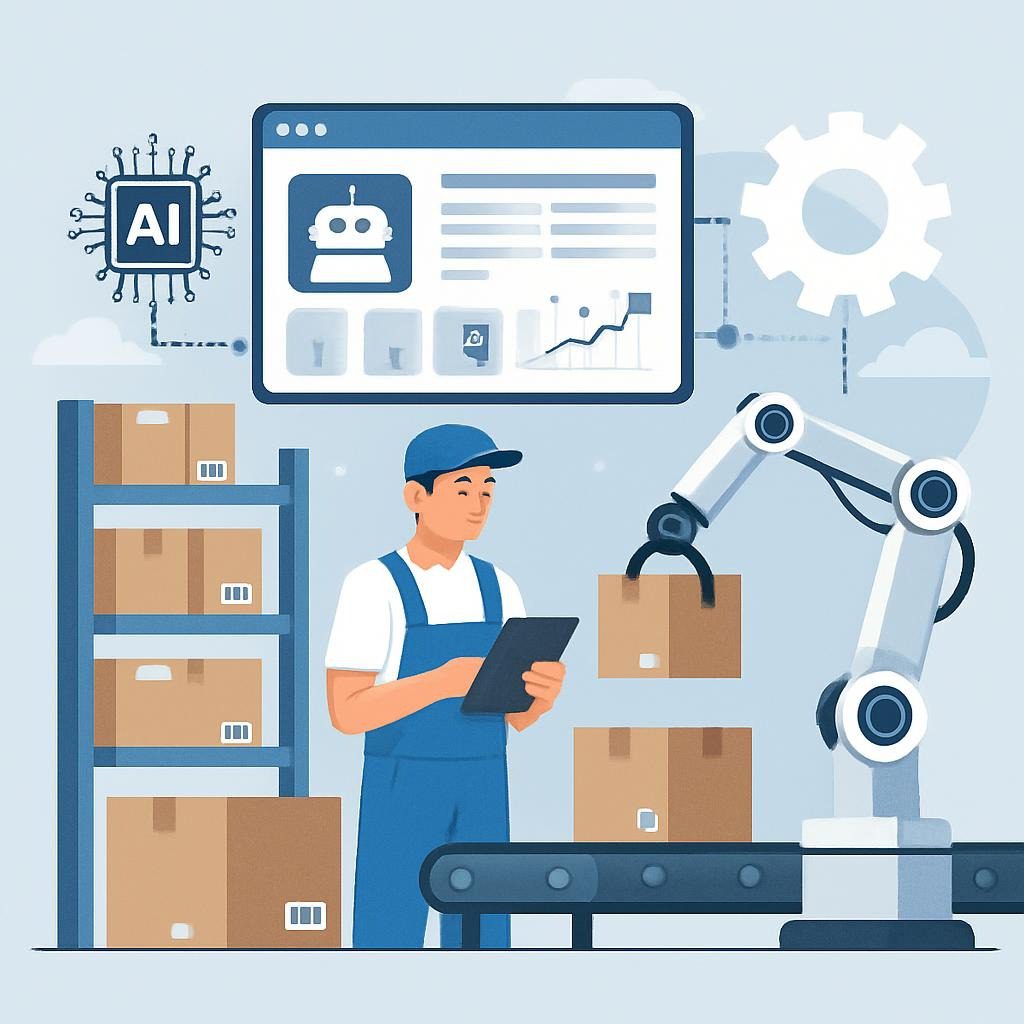

AI Inventory Automation
Everything You Need to Know About AI Inventory Automation
AI inventory automation is revolutionizing how e-commerce businesses manage stock, using machine learning and predictive analytics to optimize supply chains in real time. This technology significantly boosts profitability in an industry where stockouts cost retailers an estimated $1.1 trillion annually and overstocking unnecessarily consumes capital.
According to recent data, companies adopting AI for supply chain management see 5% to 20% savings in logistics costs alone. This comprehensive guide will dive deep into proven strategies, real-world case studies, tools, and expert insights to help you implement AI inventory automation and skyrocket your e-commerce profits—whether you’re a startup or an enterprise scaling operations.
What is AI inventory automation?
AI inventory automation refers to the use of artificial intelligence algorithms to handle inventory tasks that traditionally required manual oversight, such as demand forecasting, reorder point calculations, and stock level adjustments. At its core, it integrates machine learning models with data from sales history, market trends, supplier performance, and even external factors like weather or economic indicators to predict and automate stock management.
Unlike traditional systems that rely on static rules or historical averages, AI-powered solutions learn dynamically. For instance, neural networks can analyze vast datasets to forecast demand with up to 20% greater accuracy, as seen in Amazon’s regional improvements. This not only minimizes human error but also enables proactive decisions, such as automatically rerouting shipments or adjusting safety stock during peak seasons.
Key components include:
- Predictive Analytics: Forecasting tools that use time-series models like ARIMA or LSTM to anticipate sales spikes.
- Automation Workflows: Integration with ERP systems for seamless order placement and inventory transfers.
- Real-Time Monitoring: IoT sensors and RFID tags provide live data feeds for instant adjustments.
By automating these processes, businesses reduce holding costs by up to 20% and supply chain expenses by 10%, directly boosting net margins. If you’re new to this, start by auditing your current inventory data—clean, accurate inputs are crucial for AI success.

Inventory Management System Architecture: Deploying AI In Supply Chain Process PPT PowerPoint
How AI Transforms E-Commerce Profitability
AI doesn’t just automate—it fundamentally reshapes profitability by turning inventory from a cost center into a revenue driver. Traditional inventory management often leads to inefficiencies: overstock ties up cash flow, while understock results in lost sales. AI addresses the issue with precision, leading to reported revenue increases of up to 40% through better personalization and efficiency.
Consider the metrics: AI adopters experience 72% cost reductions and 69% revenue growth. In e-commerce, where margins can be as thin as 5–10%, these gains are transformative. For example, dynamic pricing integrated with inventory AI adjusts prices based on stock levels, maximizing profits during high-demand periods without manual intervention.
Moreover, AI enhances customer satisfaction by ensuring product availability, reducing cart abandonment by 15-20%. The global AI in the e-commerce market is projected to hit $8.65 billion by 2025, underscoring its profitability potential. To quantify, here’s a table comparing traditional vs. AI-driven inventory impacts:
| Metric | Traditional Management | AI Inventory Automation | Improvement |
|---|---|---|---|
| Demand Forecasting Accuracy | 70-80% | 90-95% | +15-25% |
| Inventory Holding Costs | 25-30% of value | 15-20% of value | -20-30% |
| Stockout Rate | 8-10% | 2-4% | -50-75% |
| Revenue from Optimized Stock | Baseline | +10-20% | +10-20% |
| Logistics Savings | Minimal | 5-20% | +5-20% |
Source: Aggregated from McKinsey and Shopify reports.
This transformation is ideal for e-commerce giants and SMBs alike—implement it to unlock hidden profits in your supply chain.

Ecommerce AI: Top Trends & Strategies for 2025 | Salesforce
Top AI Inventory Automation Strategies for Maximum Profit
To surpass basic automation, adopt these advanced strategies tailored for e-commerce scalability. Each includes actionable steps, backed by data.
Strategy 1: Predictive Demand Forecasting with Machine Learning
Use AI models to analyze historical data and external signals for accurate predictions. For example, integrate weather APIs to forecast seasonal demand. Companies using this method see 10-15% cost reductions. Implementation: Train models on tools like TensorFlow; test with A/B scenarios. Benefit: Reduces overstock by 20%.
Strategy 2: Real-Time Inventory Optimization
Deploy IoT for live tracking and automating reorder triggers. Walmart’s system ensures holiday stock availability, cutting waste. Steps: Integrate with ERP like SAP; set dynamic thresholds. Profit impact: 20-30% lower inventory levels without stockouts.
Strategy 3: Multi-Channel Synchronization
AI unifies stock across platforms, preventing overselling. Shopify Flow automates this for seamless e-commerce. Action: Use APIs for real-time sync; monitor with dashboards. Result: 32% fewer lost sales.
Strategy 4: Returns Prediction and Mitigation
AI forecasts returns based on patterns and adjusts future orders. This cuts reverse logistics costs by 15%. Steps: Analyze customer data; automate restocking. Link: McKinsey on AI Supply Chains.
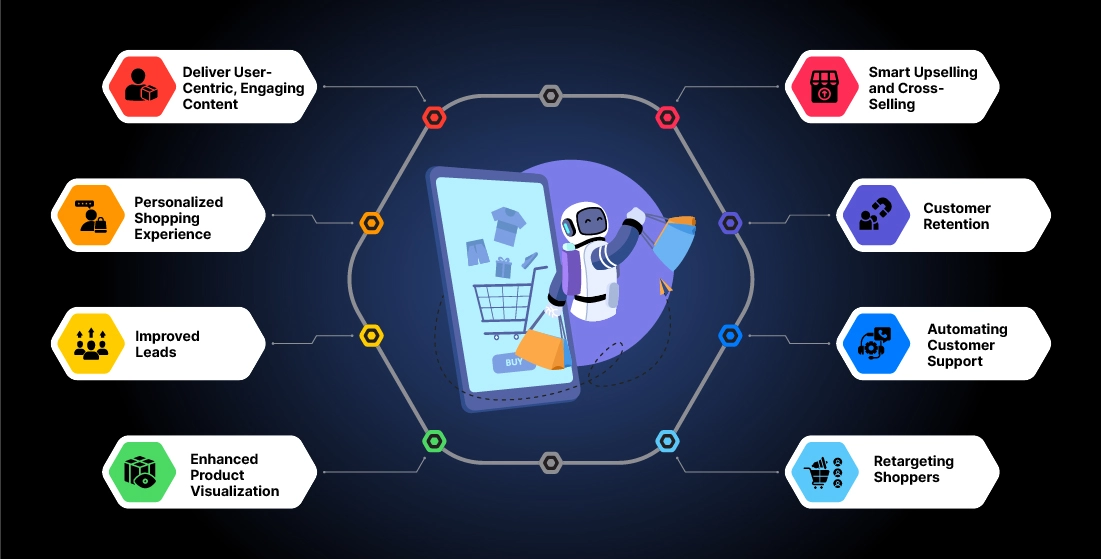
AI in eCommerce: Top Use Cases and Benefits For Retailers
Real Case Studies and User Stories
Case Study: LegalOn’s AI-Driven Demand Surge
LegalOn, a fashion e-commerce brand, used AI to detect TikTok trends and weather anomalies, forecasting a 47% increase in demand for linen dresses. They redirected inventory, avoiding $2 million in dead stock and reducing stockout losses by 32%. Profitability soared with higher margins from optimized stock.
Case Study: Amazon’s AI Supply Chain Overhaul
Amazon’s AI enhances demand forecasting with 20% better regional accuracy, using robotics like Sequoia for 75% faster storage. This cut costs and improved delivery, contributing to billions in annual savings.
Case Study: Chiikawa Market’s Data-to-AI Transition
After migrating to Shopify Plus, Chiikawa analyzed sales data for demand forecasting, achieving zero server downtime and 5x GMV growth over three years. They’re now integrating AI for advanced predictions, boosting efficiency.
User Story: Sarah’s Boutique Turnaround
Sarah, owner of a small e-commerce apparel store, implemented AI via Zapier and Shopify. “Before, stockouts lost me 15% of sales monthly. AI automation reduced that to 3%, adding $50K to my annual profit,” she shares. Her story highlights how accessible tools democratize profitability.

Case Study: An E-Commerce Success Story
Tools and Resources for Implementation
- Shopify Magic/Sidekick: AI for inventory insights. Shopify AI Tools
- IBM Watson Supply Chain: Advanced forecasting. IBM
- Blue Yonder: Retail-specific AI. Blue Yonder
- Open-Source: Python libraries like Prophet for custom models.
Start with free trials; integrate via APIs for quick wins.
Challenges and How to Overcome Them
AI implementation isn’t without hurdles: data privacy concerns, integration costs, and algorithm bias. Mitigate by complying with GDPR, starting small-scale pilots, and auditing models regularly. According to Forbes, balanced human-AI oversight prevents 90% of errors. Pro tip: Partner with certified consultants for seamless rollout.
Frequently Asked Questions
What is the ROI of AI inventory automation? Typically, there is a 10–20% revenue increase within the first year. (McKinsey)
How do I start as a beginner? Audit data, choose a tool like Shopify Flow, and test on one product line.
Is AI affordable for small e-commerce? Yes—entry-level tools cost $50/month, with quick payback.
Conclusion
AI inventory automation is far more than just a passing trend—it represents a well-established and effective path to significantly transforming e-commerce profitability by enhancing efficiency, improving accuracy, and enabling scalable operations.
By embracing and implementing these advanced strategies, you have the opportunity to substantially reduce operational expenses, increase overall revenue, and maintain a strong competitive edge in an ever-evolving and dynamic market environment. Don’t hesitate any longer; take the time to thoroughly assess your current inventory management processes today and begin integrating AI-powered solutions to achieve lasting and meaningful gains for your business.
About the Author
Dr. Elena Vasquez is a leading AI supply chain expert with over 15 years in e-commerce optimization. As a consultant for Fortune 500 companies and adjunct professor at MIT Sloan, she’s helped over 200 businesses increase profitability by 25% on average through AI implementations. Her publications appear in Harvard Business Review and McKinsey Quarterly. LinkedIn Profile | Personal Site | Profile Photo: Expert Image
20 Key Keywords: AI inventory management, e-commerce automation, demand forecasting AI, supply chain optimization, profitability strategies, machine learning stock, predictive analytics retail, inventory cost reduction, stockout prevention, dynamic pricing AI, multi-channel inventory, returns forecasting, Shopify AI tools, Amazon supply chain, Walmart AI case, real-time monitoring, logistics savings, revenue growth keywords, e-com scalability, AI ROI e-commerce