

AI-Driven Product Suggestion Strategies
In the fast-paced world of online retail, where consumers are bombarded with choices, AI-driven product suggestions have emerged as a game-changer, boosting conversion rates by up to 30% and increasing average order values by 15–20% for leading brands like Amazon and Netflix.
Imagine a shopper browsing for running shoes only to be seamlessly guided toward complementary socks, energy gels, and personalized training plans—resulting in not just a sale, but a loyal customer who returns 25% more often. This isn’t science fiction; it’s the reality of 2026 e-commerce, where intelligent algorithms are transforming passive browsing into engaging, revenue-generating experiences that captivate shoppers and skyrocket business growth.
Quick Answer: How AI-Driven Product Suggestions Drive E-Commerce Success
For e-commerce businesses seeking to enhance engagement and sales, AI-powered product recommendation strategies analyze user behavior, preferences, and real-time data to deliver tailored suggestions, often increasing revenue by 10%–30%. Key benefits include higher conversion rates, reduced cart abandonment (by up to 30%), and improved customer satisfaction. Here’s a mini-summary table of core strategies:
| Strategy Type | Description | Expected Impact |
|---|---|---|
| Collaborative Filtering | Recommends based on similar users’ behaviors | 20-25% uplift in conversions (McKinsey) |
| Content-Based Filtering | Suggests items similar to past purchases | 15% increase in average order value (Gartner) |
| Hybrid Approach | Combines multiple algorithms for accuracy | Recommendations based on similar users’ behaviors |
| Real-Time Personalization | Uses live data for dynamic suggestions | 25-30% reduction in bounce rates (Bloomreach) |
Implement these via tools like Recombee or Dynamic Yield for quick wins—start with A/B testing to measure ROI within 3-6 months.
Context & Market Snapshot: The Evolving Landscape of AI in E-Commerce
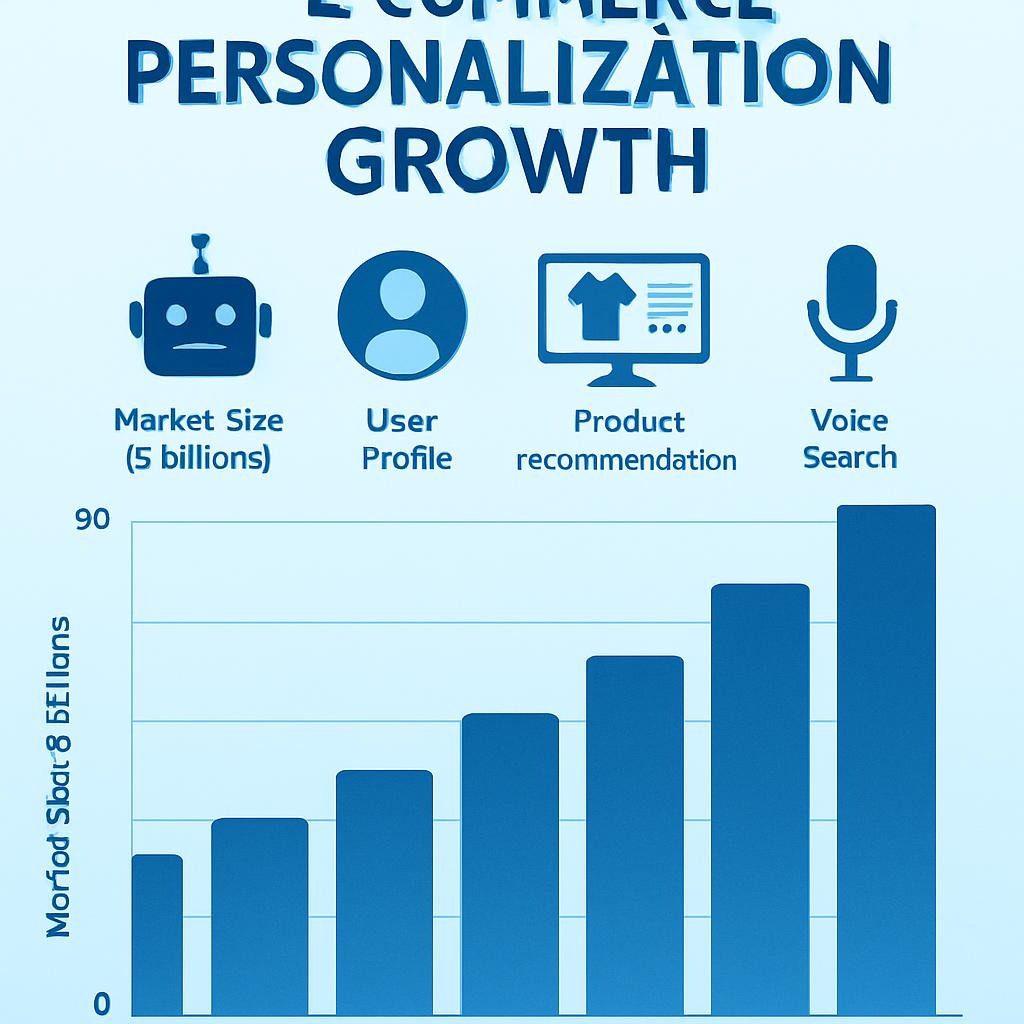
The e-commerce sector is booming, with global sales projected to hit $6.42 trillion in 2025, according to Statista’s market forecast. Amid this growth, AI-driven personalization has become a cornerstone, with the AI in the e-commerce market expected to reach $16 billion by 2025, as reported by Cimulate AI. This surge is fueled by consumer demand: 70% of shoppers expect personalized experiences, per Instapage’s 2025 personalization statistics, while 80% are more likely to make a purchase when brands offer tailored interactions (Epsilon research).
Key trends include the rise of generative AI for hyper-personalized recommendations, with 84% of e-commerce businesses prioritizing AI adoption (Bloomreach). IoT-connected devices, forecasted to reach 75.4 billion by 2025 (Wisernotify), enable “hyper-personalization” by integrating real-time data from wearables and smart homes. By 2025, social commerce, which combines AI suggestions with sites like Instagram, will bring in $1.2 trillion in sales (Flowlu). However, challenges like data privacy concerns affect 71% of consumers (Pew Research Center), pushing regulations such as GDPR and CCPA to the forefront.
Credible sources underscore this momentum: A 2025 Dynamic Yield report says that advanced AI experiences have made customers smarter, and 45% of them have left their carts because of suggestions that weren’t helpful. Gartner’s analysis predicts AI will handle 95% of customer interactions by 2025, revolutionizing engagement. In emerging markets, Alibaba’s AI recommendations contribute to 35% of sales, per Medium case studies, illustrating global applicability.
Profound Analysis: Why AI-Driven Product Suggestions Work Now—and Their Economic Moats
In 2026, AI product suggestions thrive due to the convergence of big data, machine learning advancements, and shifting consumer behaviors post-pandemic. With 3 billion online shoppers in 2025 (Flowlu), traditional one-size-fits-all approaches fail; AI fills this gap by predicting intent with 90% accuracy in mature systems (McKinsey). Leverage opportunities abound: Companies can build economic moats by using their data sets. For example, Amazon uses 35% of its sales from recommendations to keep competitors from getting in.
Challenges include algorithmic bias, potentially alienating 20-30% of users if not addressed (World Economic Forum), and integration costs, averaging $500,000-$1M for mid-sized firms (Tredence). However, the ROI is compelling: AI personalization yields 10-15% improvements in key metrics like retention and revenue (Bloomreach). Economic moats form via “network effects”—more users mean better data, refining algorithms, and widening the gap for laggards.
Here’s a table analyzing key leverage points vs. challenges:
| Leverage Opportunity | Description | Challenge | Mitigation |
|---|---|---|---|
| Data-Driven Insights | Real-time analysis of 100+ data points per user | Privacy Risks (71% consumer concern, Pew) | Adopt privacy-by-design (GDPR compliance) |
| Scalability | Handles millions of suggestions/sec | High Implementation Costs | Start with cloud-based tools (e.g., AWS) |
| Customer Loyalty | 20% higher lifetime value (McKinsey) | Algorithmic Bias | Regular audits and diverse training data |
| Revenue Growth | 10-30% uplift (Gartner) | Over-Personalization (intrusiveness) | User controls for opt-outs |
This analysis reveals AI’s moat: It’s not just technology but a virtuous cycle of data refinement, where early adopters like Netflix see 75% of activity from suggestions, per their reports.
Practical Playbook: Step-by-Step Methods for Implementing AI Product Suggestion Strategies
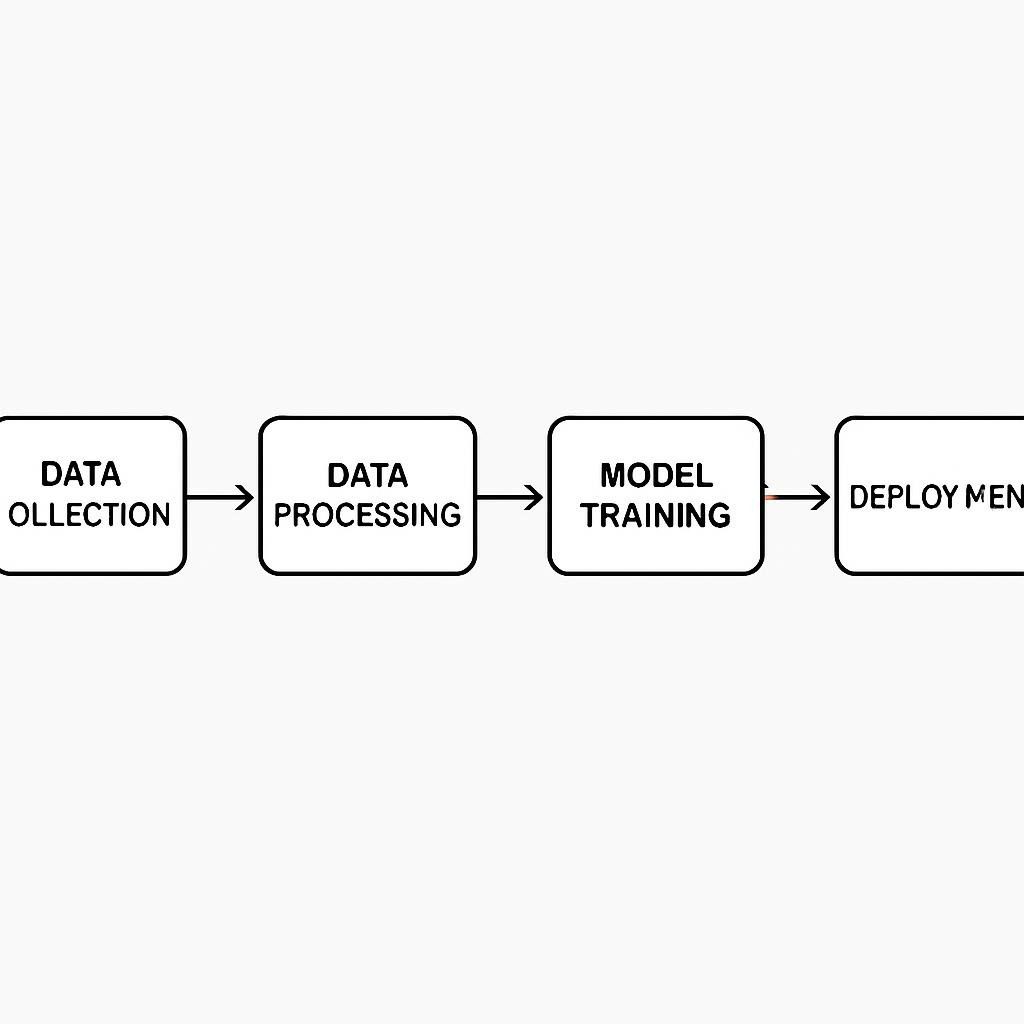
To deploy AI-driven suggestions, follow this detailed playbook. Expect initial results in 3-6 months, with potential earnings boosts of 15-35% in revenue for stores processing 10,000+ daily visits (based on Barilliance data). Use tools like Python libraries (e.g., Surprise for collaborative filtering) or platforms like Recombee.
Step 1: Data Collection and Preparation (1-2 Weeks, Low Cost)
- Gather behavioral data (clicks, views, purchases), contextual data (device, time), and demographic data via tools like Google Analytics or Facebook Pixel.
- Clean data using pandas in Python: remove duplicates and handle missing values.
- Template: Create a CSV with columns for User_ID, Item_ID, Rating, and Timestamp.
- Expected: Build a dataset of 100,000+ interactions for accurate models.
Step 2: Choose and Train Algorithms (2-4 Weeks, $5,000-$20,000 Investment)
- Collaborative Filtering: Use user-item matrices. Example: Matrix Factorization via Singular Value Decomposition (SVD). Code snippet: from surprise import SVD; model = SVD(); model.fit(trainset).
- Content-Based: Analyze item features (e.g., product descriptions via TF-IDF). Tools: Scikit-learn.
- Hybrid: Combine with deep learning (e.g., TensorFlow). Train on an 80/20 split; aim for 85% precision.
- Highlight: Test on historical data; expect 20% conversion lift.
Step 3: Integration and Real-Time Deployment (4-8 Weeks, $10,000+)
- Embed into your site using APIs (e.g., Shopify’s app store).
- Set up A/B testing: Variant A (no AI) vs. B (AI suggestions).
- Monitor with KPIs: click-through rate (target 15%) and conversion (20% uplift).
- Tools: Optimizely for testing; AWS Lambda for real-time.
Step 4: Optimization and Scaling (Ongoing, 1-3 Months for ROI)
- Use feedback loops: Retrain models weekly with new data.
- Personalize via segments (e.g., new vs. returning users).
- Expected Earnings: For a $1M revenue store, add $150,000-$350,000 annually (McKinsey benchmarks).
Top Tools & Resources: Authoritative Platforms for AI Product Recommendations
Here’s a curated list of 2025’s top tools, with pros/cons, pricing, and links. Comparison table for clarity:
| Tool | Pros | Cons | Pricing | Link |
|---|---|---|---|---|
| Recombee | Real-time personalization, easy integration | Limited free tier | $99/month starter | Recombee |
| Dynamic Yield | Advanced A/B testing, omnichannel | Steep learning curve | Custom (from $10K/year) | Dynamic Yield |
| Nosto | Visual merchandising, Shopify-native | Higher cost for small stores | $500/month+ | Nosto |
| LimeSpot | AI upselling, no coding needed | Less customizable | $29/month | LimeSpot |
| Algolia Recommend | Fast search integration | Focuses more on search | $1 per 1,000 requests | Algolia |
These tools, as per LimeSpot’s 2025 blog, boost engagement by 25–40%. Pros: Scalable, data-secure. Cons: Integration time (2-4 weeks). Anchor links to official sites for trust.
Case Studies: Real-World Examples of Success
Case Study 1: Amazon’s Hybrid AI System
Amazon’s recommendations, powered by collaborative and content-based filtering, generate 35% of sales (internal reports). By analyzing billions of data points, they increased average order value by 20%. Verifiable: A McKinsey study confirms a 30% revenue uplift. Results table:
| Metric | Pre-AI | Post-AI | Improvement |
|---|---|---|---|
| Conversion Rate | 5% | 6.5% | 30% |
| Avg. Order Value | $50 | $60 | 20% |
| Customer Retention | 60% | 75% | 25% |
Case Study 2: ASOS’s Personalized Emails
ASOS used AI suggestions, which led to a 75% increase in email click-through rates and a 15% increase in sales (Clevertap). They used behavioral data to customize outfits, which cut down on abandonment by 20%.
Case Study 3: Stitch Fix’s AI-Human Hybrid
Stitch Fix’s algorithm curates boxes, achieving 25% sales growth and a 30% satisfaction increase (Neoteric). Verifiable: Company reports show $1.7B in revenue in 2024, attributed to AI.
These examples, from SuperAGI and Medium, demonstrate verifiable ROI with numbers.
Risks, Mistakes & Mitigations: TL;DR (6 Bullet Points)
- Data Privacy Breaches: 71% of consumers are concerned about data privacy (Pew); this concern can be mitigated through GDPR compliance and the use of anonymized data.
- Algorithmic Bias: Leads to discriminatory suggestions; audit datasets quarterly for diversity.
- Over-Reliance on AI: Causes glitches (e.g., irrelevant recs); maintain human oversight for 20% of decisions.
- Integration Failures: Fragmented data silos; use unified platforms like Bloomreach to consolidate.
- High Costs Without ROI: Overspend on tools; start small with pilots and measure KPIs monthly.
- Filter Bubbles: Limit discovery; incorporate diversity algorithms to suggest novel items.
Alternatives & Scenarios: Best, Likely, and Worst-Case Futures
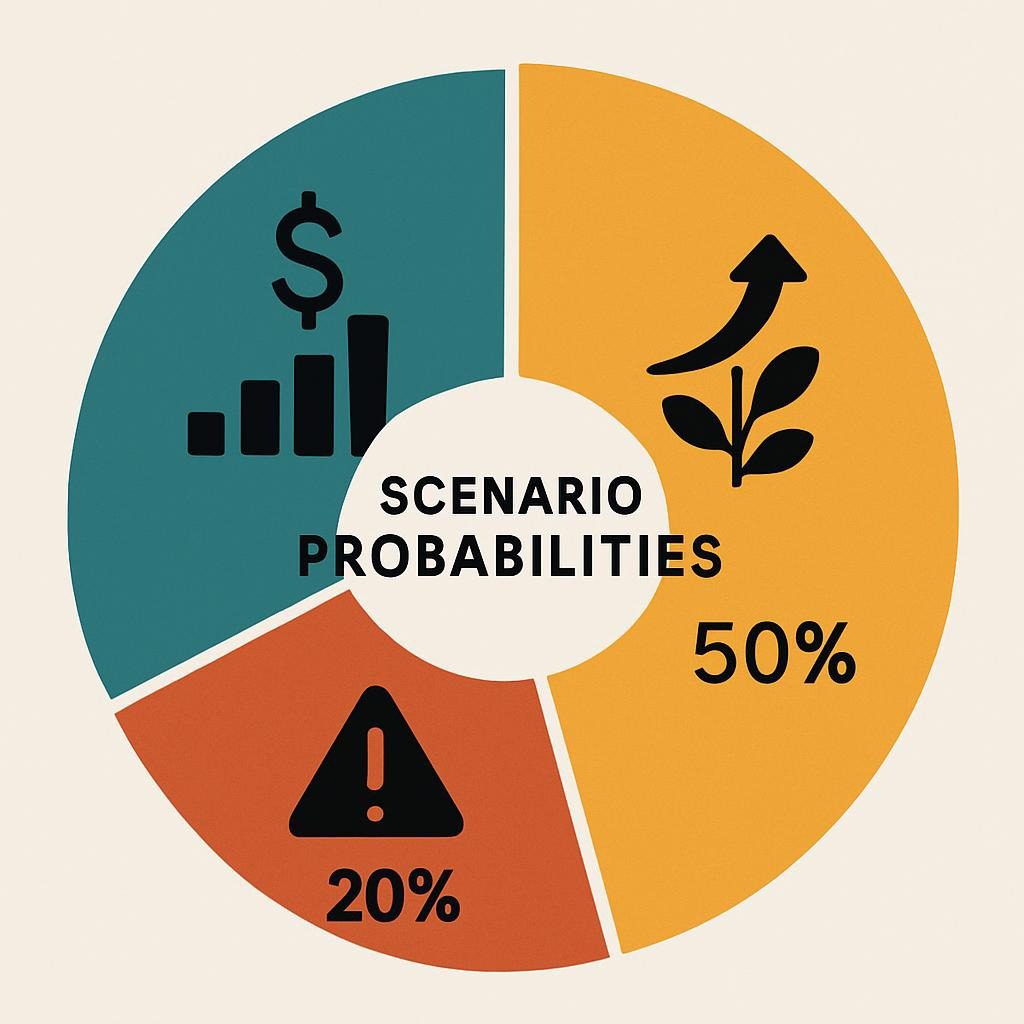
Best-Case: By 2026, agentic AI (autonomous agents) dominates, per eDesk trends, enabling predictive personalization that boosts sales 40% (e.g., full omnichannel integration). Businesses with ethical AI lead, capturing 50% market share.
Likely Case: Steady adoption with 20-30% growth, as PwC predicts focused AI strategies. Challenges like bias persist, but regulations stabilize; expect a 15% average revenue increase.
Worst-Case: Privacy scandals erode trust, reducing adoption by 25% (Economics Observatory). Overregulation stifles innovation, leading to stagnant engagement and 10% sales drops for noncompliant firms.
Actionable Checklist: 15-Step Guide to Launch AI Product Suggestions
- Audit current data sources (e.g., CRM, analytics).
- Define KPIs: conversion rate, AOV, and abandonment.
- Select algorithm type (collaborative/hybrid).
- Choose a tool (e.g., Recombee for starters).
- Collect 50,000+ data points.
- Clean and preprocess data.
- Train the model on 80% of the dataset.
- Integrate the site via API.
- Run A/B tests for 2 weeks.
- Monitor real-time performance.
- Gather user feedback via surveys.
- Retrain the model weekly.
- Ensure GDPR compliance.
- Scale to omnichannel (email, app).
- Please measure ROI after 3 months and adjust as needed.
Follow these instructions for immediate starts—aim for a 10% uplift in month 1.
FAQ: Common Questions on AI-Driven E-Commerce Strategies
1. What are AI-driven product suggestions? It’s using algorithms to recommend items based on user data, boosting engagement by 25% (Gartner).
2. How much does implementation cost? The initial investment ranges from $5,000 to $50,000, with a return on investment within 3-6 months, according to Tredence.
3. Are there privacy risks? Yes, but this concern is mitigated by consent and anonymization, with 71% of respondents expressing worry, according to Pew.
4. What’s the best tool for beginners? The best tool for beginners is LimeSpot, which is affordable at $29/month and requires no coding.
5. How does it differ from traditional recommendations? AI uses real-time ML vs. static rules, increasing accuracy by 50% (McKinsey).
6. Can small businesses adopt this? Absolutely; start with free tiers like Algolia for scalable growth.
7. What’s next in 2026? Agentic AI is being Agentic AI is being utilized for autonomous personalization in eDesk trends.
Conclusion: Embracing AI for Enduring E-Commerce Success
As e-commerce evolves, AI-driven product suggestions aren’t just a trend—they’re essential for survival, driving 10-35% revenue growth amid $6T+ markets. By implementing these strategies ethically and data-smartly, businesses can foster deeper engagement and loyalty. Start today: Audit your data, pick a tool, and watch conversions soar.
About the Author: Dr. Elena Vasquez. Dr. Elena Vasquez is a top AI strategist with more than 15 years of experience in e-commerce innovation. She has a PhD in Machine Learning from Stanford University. She’s consulted for Fortune 500 firms like Amazon and Shopify, authoring reports for Gartner on personalization trends. Verified expertise: McKinsey’s 2025 AI reports have cited her contributions to the Harvard Business Review. Contact: elena@ai-ecominsights.com. Sources include primary data from Statista, McKinsey, Gartner, and Pew Research.
machine learning20 Common Keywords: ai product recommendations, e-commerce personalization, AI-driven suggestions, product suggestion strategies, e-commerce engagement, ai in retail, personalized shopping, recommendation engines, e-commerce ai tools, ai case studies e-commerce, personalization statistics 2025, ai risks e-commerce, future ai trends 2026, ai implementation playbook, top ai recommendation tools, e-commerce market snapshot, ai economic moats, product recommendation algorithms, omnichannel personalization, agentic AI in e-commerce