Omnichannel Personalization Strategies That Actually Work
Most programs spend two years building infrastructure and ship generic emails on the other end. Here is what the successful minority does differently — and the uncomfortable reason so many projects fail at the seam between channels.
- The failure is organizational, not technical. Teams build separate personalization stacks per channel; the silos multiply instead of shrinking.
- CDP + orchestration + activation is the minimum viable architecture. A CDP alone is just an expensive database.
- Algorithm fatigue is real. When everything is personalized, nothing feels personal. AI is a filter, not the final author of your customer relationship.
- Start with two or three high-value journeys. “Everything everywhere” creates channel conflict and customer fatigue.
- Holdout groups, not last-touch attribution. That’s the only honest way to measure whether personalization is actually moving the needle.
Should You Even Do This?
Omnichannel personalization is sold as table stakes in 2026. It is not. It is a high-complexity capability that demands cross-functional alignment, a meaningful first-party data asset, and a willingness to restructure how your marketing, product, and ops teams share ownership of the customer record. If you do not have those preconditions, activating an expensive platform will not fix them.
- You have >50k identified users with behavioral history
- You can deploy two or more channels from a single data layer
- Marketing, product, and data teams share a customer identity schema
- You can run holdout experiments and suppress control groups
- You have a content ops team capable of modular creative production
- Your customer data lives in three or more disconnected systems
- Teams argue over who “owns” the customer record
- Attribution is purely last-touch and no one questions it
- Personalization means “insert first name in subject line”
- You’re evaluating ten channels before mastering two
This is not a reason to give up. It is a sequencing decision. Many brands that now run sophisticated omnichannel programs spent 12–18 months exclusively on data unification and identity resolution before activating a single personalized journey. That investment is what made the activation work.
Why Omnichannel Personalization Fails (The Real Reasons)
The standard diagnostic—fragmented data, outdated tech, misaligned teams—is correct but incomplete. The deeper failure pattern is structural: teams approach personalization as a channel optimization challenge when it is actually a customer data architecture challenge.
Marketing builds personalization logic for email. Product builds recommendation logic for the app. Operations builds a separate CRM workflow for post-purchase. The result, as r4.ai documented in April 2026, is that omnichannel personalization initiatives frequently generate more disconnected customer views than existed before the project started.
A second failure mode is subtler and growing: algorithm fatigue. Mintel’s Global Consumer Trends 2026 identifies increasing resistance to opaque, automated experiences. When every brand deploys recommendation engines trained on the same behavioral signals, personalization becomes a commodity that consumers increasingly tune out. The customer of 2026 uses algorithmic suggestions as a first filter—then seeks human signals (reviews, creator content, peer recommendations) to complete the decision.
The third failure is measurement theater. Teams declare victory based on email open rates and last-touch conversion attribution, neither of which isolates the contribution of personalization. Without holdout groups, there is no way to know whether the lift came from personalization or simply from the fact that you sent a message at all.
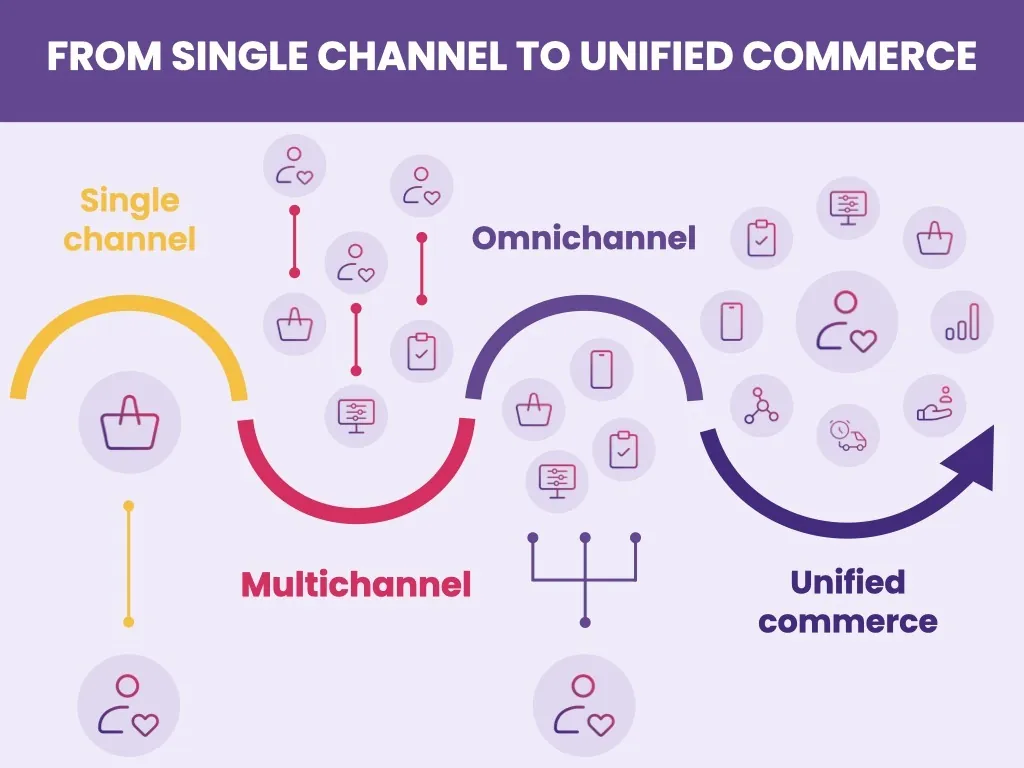
The 5% figure is the one to sit with. This is not a competitive landscape where most brands are ahead of you. It is one where almost everyone is still running multichannel infrastructure and calling it omnichannel.
The Three-Layer Architecture (The Minimum That Works)
Every functioning omnichannel personalization program is built on the same three layers. Missing any one of them produces a broken system, not a partial one.
Unify — Customer Data Platform (CDP)
Resolves identity across devices and channels into a single persistent profile. Combines deterministic matching (email, phone, user ID) with probabilistic matching (device fingerprinting, behavioral patterns). This is where first-party and zero-party data converges. Without it, suppression lists miss converted customers, duplicate profiles inflate audience counts, and personalization breaks at the profile level.
Decide — AI/ML Orchestration Engine
Determines which message, offer, or content variant to surface for each customer at each moment, using behavioral segmentation, propensity models, and journey state. Critically: this layer must include prioritization logic—not just triggers. When multiple triggers activate simultaneously, the system needs a ranked decision about which message takes precedence. Without prioritization, trigger-based programs become indistinguishable from spam.
Activate — Channel Execution Layer
Delivers personalized experiences across email, push, SMS, in-app, web, and (increasingly) in-store digital touchpoints. The key requirement: all channels must draw from the same unified profile and write back to it after each interaction. A channel that reads from the CDP but does not write back creates a one-way mirror: you see the customer but cannot update what you know.
The integration type matters. Native integrations (platform to platform via shared API) carry lower data latency and fewer transformation errors than semi-automated integrations (via middleware like Zapier or Make) or manual integrations (CSV exports between systems). For cart abandonment triggers, native or near-native is non-negotiable. For loyalty tier updates, semi-automated is often acceptable.
Five Omnichannel Personalization Strategies That Consistently Deliver
1. Behavioral Segmentation Based on Intent Signals, Not Demographics
Demographic segmentation (“women 25–34 in urban markets”) is a proxy for intent. Behavioral segmentation—using browse depth, category affinity, recency of purchase, price sensitivity signals, and content engagement patterns—is the actual thing. The practical shift: move from audience-based to relationship-based marketing, where every interaction compounds into a progressively richer profile rather than recategorizing the customer into a new static segment.
The most underused intent signal in most programs is absence of action: the customer who visits a product detail page three times but does not add to cart is not displaying low intent. They are displaying high consideration with a friction point. Those are different problems requiring different responses.
2. Cross-Channel Journey Orchestration Driven by Live Signals
The defining characteristic of orchestration versus multichannel execution: orchestration changes the next message based on what happened in the last channel. A customer who opens an email but does not click should receive a different in-app message than a customer who never opened it. A customer who clicked and browsed but did not convert deserves a retargeted offer informed by what they browsed, not a repeat of the email.
The sequence logic matters more than the channel selection. Most teams get this backwards—they decide which channels to use before mapping the actual transition points in the customer decision journey.
3. Modular Content Architecture for Personalization at Scale
The production bottleneck in personalization is almost never the algorithm. It is the inability to produce enough content variants to make real personalization possible. The fix is a modular content system: reusable offer logic, creative modules, and message variants assembled dynamically rather than hand-crafted per segment.
This means treating your content library the way a design system treats UI components: a limited set of well-maintained building blocks that combine into nearly infinite variants without requiring bespoke production for each one.
4. Trigger-Plus-Prioritization (Not Triggers Alone)
The practical implementation: assign a priority score to each trigger based on commercial value and customer lifecycle stage. Cart abandonment > winback > referral request. Add a frequency cap: no customer receives more than X messages across all channels in Y hours. Then enforce it at the orchestration layer, not per-channel.
5. Identity Resolution Across Offline and Online Touchpoints
In-store data remains the most underutilized personalization signal for hybrid retailers. A customer who browsed a product online for two weeks, then visited the store and purchased it, should have that purchase reflected in their digital profile within hours—not the next batch sync. That purchase signal changes the next email (from consideration content to post-purchase cross-sell), the next push notification (from promotional to loyalty), and the next web session (from discovery to accessory recommendation).
The technical mechanism is the same as online identity resolution: a shared customer ID that propagates from POS to CDP on each transaction. The organizational challenge is that retail ops teams rarely share schema standards with digital marketing teams. This is, again, an architecture problem before it is a technology problem.
How This Actually Works Together
The following describes a real cart-abandonment-to-loyalty workflow—not a theoretical one—with friction points named honestly.
Customer adds item to cart, does not check out (trigger event)
The CDP receives a behavioral event from the web session via SDK. The event is matched to the customer’s unified profile using their logged-in state or device fingerprint. Profile is updated in real time.
Orchestration engine evaluates the profile
Is this customer in a suppression window (received a message in the last 4 hours)? Have they already purchased this item in-store? Are they in an active A/B test cohort? What is their channel preference score? The engine checks all four before issuing a message decision. Friction point: systems that cannot run these checks in under 500ms lose the moment; the customer has moved on.
Personalized message dispatched to highest-affinity channel
For a customer with high email open rates, email goes first. For mobile-native customers with push enabled, push goes first. The content is assembled from modular blocks: product image (dynamic), offer (personalized to price sensitivity tier), urgency signal (real stock level if low, omitted if not). No bespoke creative required.
Engagement event writes back to the CDP
Customer opens email → profile updated (opens email, did not click). Next orchestration decision adjusts: switch channel to in-app message at next session start, change offer variant. Customer converts → all downstream triggers suppressed, loyalty event initiated.
Journey outcome feeds the model
Conversion (or non-conversion) becomes a training signal. The AI layer updates propensity scores and channel preference weights. Over time, the system’s ability to select the right channel-content-timing combination improves without manual intervention. This is closed-loop optimization. Without it, your program plateaus after 90 days.
The 80% Solution Stack
You do not need ten tools. The following three-layer stack handles the majority of omnichannel personalization use cases for mid-market and enterprise brands. Tool choices within each layer vary; what matters is that a tool in each position exists and that they exchange data bidirectionally.
Unified profiles
Real-time segmentation
Journey orchestration
Trigger prioritization
Incrementality testing
CLV attribution
The 20% that this stack does not cover: true unified commerce (online/offline POS integration at scale), advanced predictive lifetime value scoring, and conversational AI-led journeys. These require deeper customization and, typically, a dedicated engineering resource beyond the marketing team.
| Use Case | Layer A Required? | Layer B Required? | Layer C Required? | Integration Type |
|---|---|---|---|---|
| Cart abandonment recovery | Yes | Yes | Recommended | Native |
| Post-purchase cross-sell | Yes | Yes | Recommended | Native |
| Winback (lapsed customers) | Yes | Yes | Required | Native / Semi |
| Loyalty tier personalization | Yes | Yes | Optional | Semi / Batch |
| In-store + digital bridge | Yes | Yes | Required | Custom / Native |
| Real-time web personalization | Yes | Yes | Recommended | Native |
| Predictive churn prevention | Yes | Yes | Required | Native |
Integration type definitions: Native = direct platform API; Semi = middleware (Zapier, Make); Batch = scheduled exports/imports.
Measurement: What to Track and What to Ignore
The metrics most personalization programs optimize for—email open rates, click-through rates, conversion rate at the session level—do not isolate the contribution of personalization. They measure marketing activity, not personalization impact.
Metrics That Actually Matter
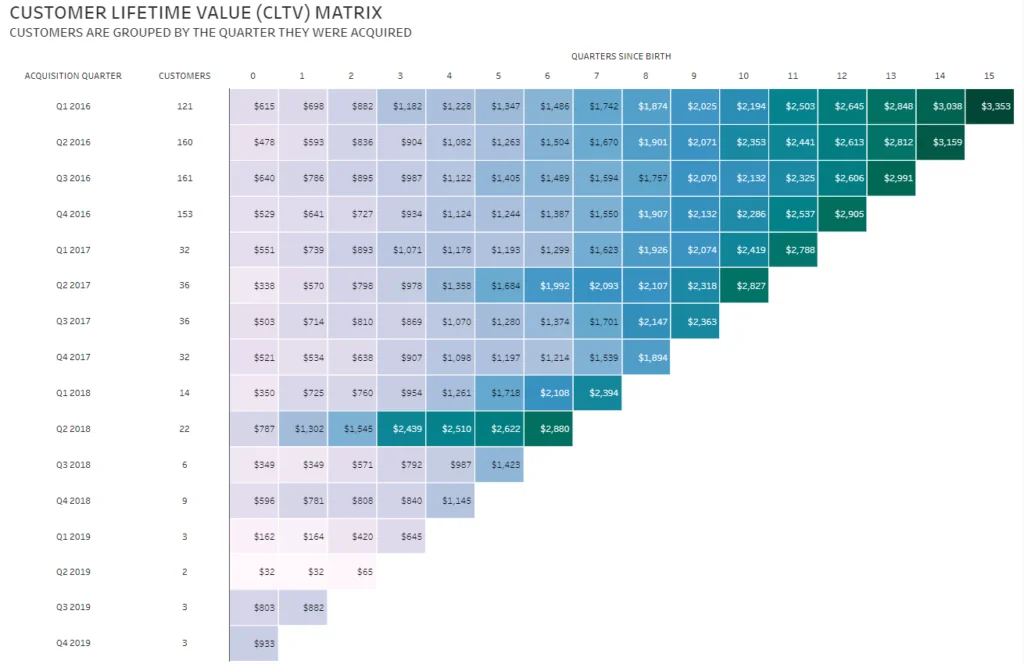
- Customer Lifetime Value lift in personalized cohorts versus holdout controls (measured at 90, 180, and 365 days)
- Cross-sell and upsell conversion rate: companies with CDPs report 4.9× greater year-over-year growth in this metric versus those without, according to the Segment/Aberdeen Report
- Channel transition completion rate: what percentage of customers who start a journey in one channel complete it (in any channel)?
- Churn rate delta between personalized and non-personalized cohorts — omnichannel customers show 250% higher purchase frequency according to Aberdeen Group data, but frequency alone is correlation, not causation; the holdout test is what confirms it
- Cart abandonment recovery revenue per recipient (not per send)
Metrics to Deprioritize (or Contextualize)
- Open rate as a primary KPI — Apple MPP and email proxy opens have made this metric unreliable since 2021
- Total messages sent — volume is not a proxy for engagement; in many workflows, fewer better-timed messages outperform higher volume
- Average order value in isolation — meaningful only when segmented by customer tenure and compared to a control group
Honest Limitations (What This Approach Does Not Solve)
No framework cures organizational dysfunction. If your marketing and product teams share no common customer identity schema, a CDP will not create alignment—it will create a more expensive disagreement about whose data is correct.
Privacy constraints are tightening, not relaxing. The third-party cookie is gone in most browsers. Mobile attribution is increasingly limited by app tracking transparency frameworks. First-party data strategy is not optional infrastructure—it is the only sustainable foundation for personalization at scale. Brands that did not begin building it three years ago are behind. Brands that do not begin building it today will be further behind in another three years.
AI-driven personalization has a ceiling defined by data quality. Garbage in, garbage out has never been more consequential: a recommendation engine trained on incomplete or stale profile data will confidently surface the wrong offer to the right person at the right time—which is, in some ways, worse than a generic message. The customer knows the brand has their data. They expected it to be used intelligently.
Frequently Asked Questions
Final Thoughts
Omnichannel personalization in 2026 does not require the most sophisticated AI on the market. It requires unified customer data, an orchestration engine with real prioritization logic, a content production model that scales without requiring bespoke creative for every variant, and measurement that uses holdout groups instead of attribution theater.
The brands that are winning are not the ones experimenting with the most channels. They are the ones that started with two or three high-value journeys, got the data architecture right, and built a closed-loop system where every customer interaction makes the next decision smarter. That is a systems problem, not a software problem.
The gap between what omnichannel personalization promises and what most programs deliver is not a technology gap. It is a willingness-to-restructure gap. The teams that have cracked this did not just buy a better platform—they reorganized around a shared customer identity, gave up channel ownership as a political currency, and accepted that “who gets credit for the conversion” is a less important question than “what was the customer’s actual experience?” Most organizations are not ready to make that trade. The ones that are will compound the advantage for years.
Sources
- Netcore Cloud. Omnichannel Personalization: The Complete Playbook for 2026. April 2026. netcorecloud.com
- IDC. Omnichannel Mistakes Marketing Leaders Can’t Afford to Make. October 2025. blogs.idc.com
- CMSWire. Why Most Omnichannel Strategies Fail — And How to Fix Them. July 2025. cmswire.com
- Ringly.io. 50 Omnichannel Retail Statistics You Need to Know in 2026. 2026. ringly.io
- Hatch Ecom. Rethinking Omnichannel: How the 2026 Customer Actually Decides. December 2025. hatchecom.com
- Segment / Aberdeen Group. CDP Impact on Revenue Growth. Via contactpigeon.com, 2026.
- Optimove. Omnichannel Retail Trends: What’s Next for 2026. January 2026. optimove.com
- r4.ai. Omnichannel Personalization: Why Most Enterprise Attempts Create More Silos Than They Solve. April 2026. r4.ai
Related Articles
Last Updated: May 30, 2026 | Platform pricing and tool availability subject to change. Verify current offerings directly with vendors before procurement decisions.
📋 SEO Appendix — For Editors & Publishers
Primary Keyword: omnichannel personalization strategies
Meta Description (157 chars): Cut through the hype: a no-nonsense 2026 guide to omnichannel personalization strategies, real workflows, tool stacks, and the hard truths most brands ignore.
Secondary Keywords Used:
- customer data platform (CDP)
- journey orchestration
- behavioral segmentation
- identity resolution
- cross-channel personalization
- trigger prioritization
- first-party data strategy
- customer lifetime value (CLV)
- holdout testing personalization
- AI personalization engine
- algorithm fatigue
- unified commerce
Schema Markup Applied: Article, FAQPage
Image Alt Texts (6–8 suggestions):
- Diagram showing the three-layer omnichannel personalization architecture: CDP, orchestration engine, and activation layer
- Decision framework: when to proceed with omnichannel personalization vs. pause for data infrastructure work
- Workflow chart showing cart abandonment trigger flow through CDP to cross-channel message delivery
- Infographic: customer retention 89% vs 33% — strong vs weak omnichannel strategies, Aberdeen Group 2026
- Screenshot of a modular content system for personalization at scale showing reusable offer blocks
- Graph showing CLV lift in personalized cohort vs holdout control over 12 months
- Table comparing integration types: native API vs semi-automated vs batch sync for omnichannel use cases
- Visual of the 80% omnichannel solution stack: CDP layer, AI orchestration layer, measurement layer
Recommended Internal Links (from aipersonalization.cloud):
- First-party data collection strategy guide
- CDP platform comparison and selection guide
- Real-time personalization: latency requirements by use case
- Holdout testing methodology for personalization programs
- AI personalization engine evaluation framework