


15 Individual AI Models — Personalized AI Instances Shaped Uniquely Around Each User’s Identity
Every tactic backed by peer-reviewed data. No hype, no speculation — just what actually works, what doesn’t, and why the difference matters more than most people admit.
The idea sounds obvious once you hear it: an AI that knows you — really knows you — performs better than one that doesn’t. But knowing how to build that, measure it, and avoid the subtle traps along the way? That’s where it gets genuinely complicated.
There’s a meaningful difference between a model that remembers your name and one that has genuinely internalized your communication style, reasoning patterns, domain expertise, and long-term goals. The first is a UX trick. The second is an architectural decision. This guide is about the second kind.
What follows is a breakdown of 15 distinct tactics — from low-overhead prompt-layer approaches to full per-user adapter fine-tuning — each with real benchmarks, honest failure modes, and the research behind the claims. I’ve tried hard not to oversell anything here. The field is moving fast, several approaches are still more theory than practice, and some of the most promising techniques have uncomfortable privacy trade-offs.
Why Individual AI Models Matter Now — and Why “Personalization” Is Often Misunderstood
For most of AI’s history, personalization meant segmentation: put users into buckets, serve each bucket a different experience. That’s not personalization — that’s audience clustering. True per-user models, where the AI’s behavior is shaped specifically around a single individual’s identity, preferences, and context, is genuinely new territory.
The research community has started paying serious attention. A 2025 paper from the PersonaMem-V2 team introduced the state-of-the-art benchmark for LLM personalization, simulating 1,000 realistic user-chatbot interactions across 300+ scenarios with 20,000+ user preferences in 128k-token context windows. What they found was sobering: frontier LLMs currently achieve only 37–48% accuracy on implicit personalization tasks — meaning the model misreads who you are more than half the time when preferences aren’t stated outright. That’s the gap we’re trying to close.
The business case is well-documented, even if often overstated. McKinsey’s research consistently shows personalization driving 10–15% revenue lift with top performers reaching 25%, and faster-growing companies generating 40% more revenue from personalization than slower peers. Meanwhile, 71% of consumers expect personalized experiences and 76% express frustration when they don’t get them. These are real figures from real studies — though it’s worth noting they mostly describe recommendation engines and marketing, not individual AI model instances.
The genuinely interesting question — which this piece focuses on — is what happens when you apply that same personalization logic not just to content recommendations but to the AI model itself.
The 15 Tactics — What They Are, What the Data Says, Where They Break
These aren’t theoretical frameworks. Each tactic below is implemented in real systems today — some at massive scale (Netflix, Spotify), some in research settings with validated benchmarks. I’ve categorized them loosely by where in the AI stack the personalization happens.
Per-User LoRA Adapters — Lightweight, Swappable Identity Layers
Low-Rank Adaptation (LoRA) lets you inject trainable low-rank matrices into a frozen base model. For per-user personalization, this means training a tiny adapter — often just a few megabytes — that captures a single user’s patterns, then loading it at inference time. The base model never changes. Only the adapter does.
The math is elegant: for a weight matrix W, LoRA adds W + BA where B and A are small matrices of rank r (typically 8–64), dramatically smaller than the full weight dimension. Fine-tuning LLaMA 3.1 70B with LoRA at rank 16 adds only 0.29% additional parameters. GPU memory drops to 142GB vs. full fine-tuning requirements. More importantly, each user can have their own adapter stored as a lightweight file.
Agentic Long-Term Memory — The AI That Actually Remembers You
Standard LLM interactions are stateless. Agentic memory systems break that by maintaining a human-readable, evolving representation of what the model has learned about each user across all conversations. Unlike a raw vector database of past messages, agentic memory actively distills and updates a structured user profile — preferences, communication style, domain knowledge, past decisions.
The PersonaMem-V2 research group developed an agentic memory framework that grows with each user over time, using reinforcement fine-tuning to improve long-context reasoning about user preferences. Their result: 55% accuracy on personalization tasks using only 2k-token memory instead of 32k conversation histories — a 16× token efficiency gain. This matters enormously for inference cost.
Dual-Memory Architecture (Episodic + Semantic) — How Human Memory Actually Works
Human memory isn’t monolithic. Cognitive science distinguishes between episodic memory (specific experiences: “last Tuesday, the user said they hate bullet points”) and semantic memory (generalized knowledge: “this user prefers concise prose”). The PRIME framework from ACL 2025 applies this distinction directly to LLM personalization, maintaining two separate memory stores and showing that the combination outperforms either alone.
Episodic memory captures individual interactions as discrete episodes. Semantic memory extracts durable patterns from those episodes through a distillation process. The PRIME paper shows that parametric semantic memory instantiated through task-oriented fine-tuning provides the best overall personalization performance across the benchmark.
Personal Language Models (PLMs) — Your Own Trained Model Instance
Rather than adapting a shared base model, a PLM is trained specifically on a single user’s data: their messages, documents, notes, communication patterns. Personal AI’s MODEL-1, announced in April 2023 and iterated through MODEL-2 and MODEL-3, pioneered this approach commercially. The core architecture uses an ensemble of expert models separately trained on each user’s data, creating what the company calls a “digital mind” capable of hyper-accurate question answering from personal memory.
The claim of “40× less expense” than alternatives in their original marketing refers to training cost relative to full foundation model training — made possible by the limited scope of individual training data. MODEL-3 specifically adapts to communication style, whether formal or casual, across every interaction.
Personalized Retrieval-Augmented Generation (RAG) — Context Without Fine-Tuning
RAG is often dismissed as “just retrieval” but personalized RAG — where the retrieval index is populated specifically with a user’s own documents, history, and context — can achieve meaningful personalization without any model weight changes. The key differentiator is what you retrieve, how you chunk it, and how you inject it into the prompt window.
At inference time, a query triggers retrieval from the user’s personal vector store. The returned chunks are injected into the prompt alongside the query. Done well, this creates a personalization effect that’s functionally close to a fine-tuned model for in-distribution queries. Done poorly — oversized chunks, no relevance filtering, poor deduplication — it actively degrades output quality.
Reinforcement Fine-Tuning from User Signals — Learning What You Actually Want
Standard RLHF uses human preference annotations at the population level. Per-user reinforcement fine-tuning uses the individual’s implicit signals — thumbs up/down, continuation patterns, edit behavior, query reformulations — to continuously adjust the model toward that user’s preferences. This is operationally different from RLHF: the reward signal is personal, not crowd-sourced.
The PersonaMem-V2 team specifically tested reinforcement fine-tuning as a mechanism for improving long-context reasoning about user preferences. They trained Qwen3-4B using this approach and it outperformed GPT-5 on their personalization benchmark — reaching 53% accuracy on implicit personalization tasks. That’s a meaningful result: a 4B parameter model beating a frontier model at a specific task through targeted individual alignment.
Doc-to-LoRA Instant Personalization — Overnight Adapter Refresh
Sakana AI’s Doc-to-LoRA and Text-to-LoRA (ICML 2025) represent a different angle: instead of training a LoRA adapter through gradient descent over many steps, these systems learn to generate a LoRA adapter directly from a document or text description in a single forward pass. For per-user personalization, this means you could update someone’s adapter overnight based on their day’s interactions — without running a full training job.
The practical implication is rapid personalization at scale. A platform could refresh user adapters nightly, incorporating each user’s new interactions into their model instance without the latency of traditional fine-tuning pipelines. The team at Sakana AI describes this enabling “mass model customization” and “continual learning without paying the full cost of fine-tuning every time.”
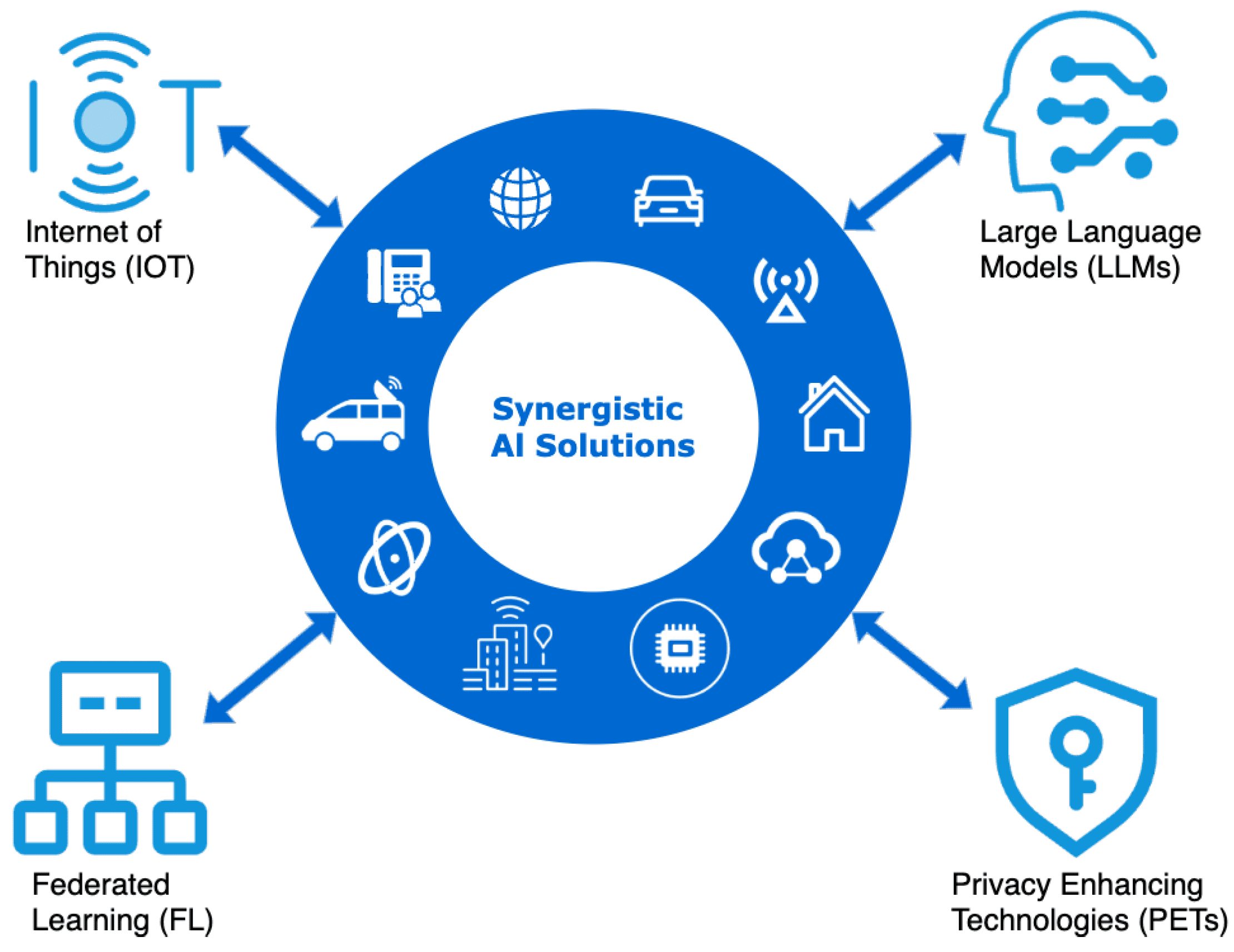
Federated Learning for On-Device Personalization — Private by Design
Federated learning trains model updates locally on a user’s device, sharing only encrypted gradient updates with a central server — never the raw data. For personalization, this means each device trains a local adapter on the user’s private data, uploads only the differential to a global model, and receives back improvements from the aggregate without anyone’s raw data ever leaving their device.
Google’s Gboard keyboard is the canonical example: it learns from individual typing patterns locally, then contributes updates to a global model that improves suggestions for everyone — without uploading personal messages. This is genuine on-device personalization with privacy guarantees, and it’s been running in production at massive scale for years.
User Identity Graph Integration — Connecting Behavioral Signals Across Contexts
Individual users generate behavioral signals across multiple surfaces: browsing, purchasing, messaging, content consumption, search queries. An identity graph connects these signals to a unified user profile — and feeding that profile into the AI model creates personalization that understands you across contexts, not just within a single application.
AI-enhanced Customer Data Platforms (CDPs) do this today, using probabilistic matching and machine learning to resolve user identity across data sources. The result is what practitioners call “360-degree” user understanding — though this framing should be treated with skepticism. The data is always incomplete, the matching is probabilistic, and the resulting profile is an approximation. But as an approximation, it’s often substantially more useful than single-session data.
Communication Style Adaptation — Voice, Tone, and Register Matching
This is the most immediately visible form of personalization: adjusting how the AI speaks — formality level, sentence length, vocabulary complexity, use of humor, directness — to match the individual user. It sounds simple but implementing it robustly is harder than it looks. A user who writes casually in Slack may want formal output when asking the AI to draft a legal memo. Context-sensitivity within style adaptation is what separates useful systems from annoying ones.
Personal AI’s MODEL-3 explicitly targets this: “adapts to your communication style, whether formal or casual, ensuring every interaction feels natural.” Netflix’s AI analyzes not just what users watch but how they engage — pause behavior, rewind patterns, completion rates — inferring preferences that never get explicitly stated.
Persona Templates for Domain-Specific Identity Bootstrapping
Cold-start is the hardest problem in per-user personalization. If you have zero interaction data on a new user, where do you begin? Persona templates address this by creating structured starting points: a persona for “early-career software engineer,” “hospital administrator,” “independent copywriter.” The AI adopts that template on first interaction and then diverges from it as individual signals accumulate.
Personal AI explicitly plans in 2025 to scale this via “vertical workflow templates” targeting specific industry needs, with distribution partner collaboration to reach SMBs. The conceptual framing borrows from recommendation systems’ item-based cold start: if you know nothing about the user but you know their job title, you can make educated guesses about their baseline preferences.
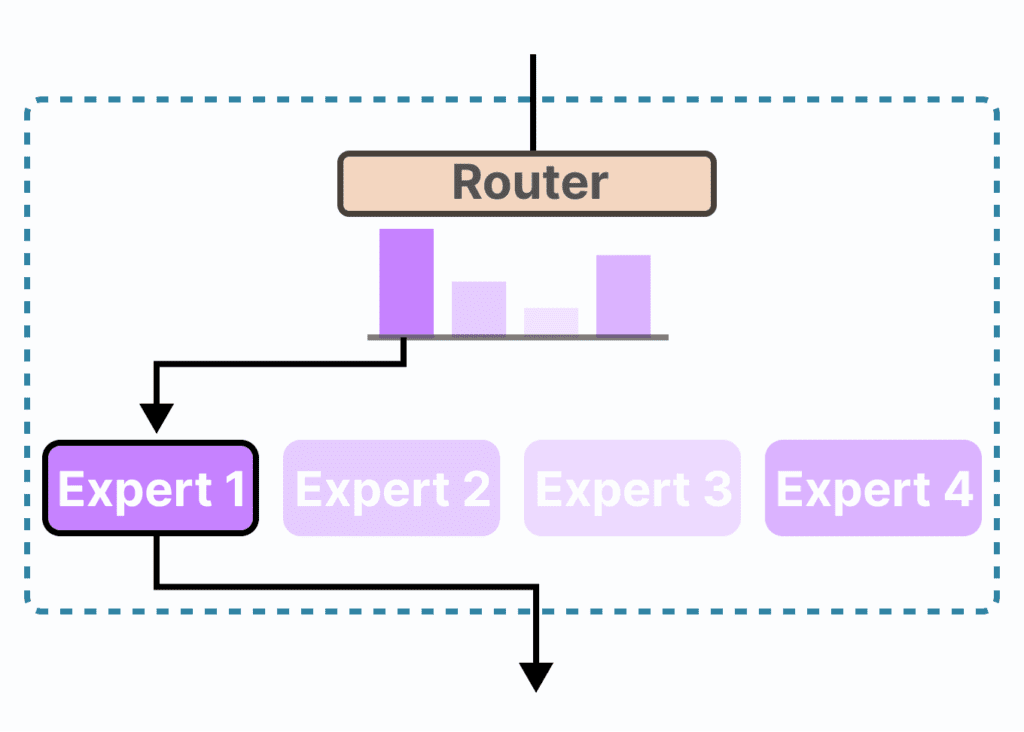
Mixture-of-Experts Routing by User Profile — Dynamic Skill Activation
Mixture-of-Experts (MoE) models route different queries to different specialist “expert” modules within a single model. Personalized MoE routing extends this by using user profile features — not just the query content — to influence which experts activate. A user with deep technical expertise might route toward more advanced reasoning pathways; a creative writing user might route toward more associative, generative pathways.
This is an emerging approach that sits between inference-time personalization (no weight changes) and full per-user fine-tuning. The user profile acts as a soft routing signal layered on top of the standard content-based router, creating different effective models for different user types without multiplying storage costs.
Persistent User Profile Agents — Always-On Context Managers
Rather than rebuilding user context from scratch on each session, persistent profile agents maintain a continuously updated user model that lives between conversations. Each session ends with the agent updating its profile store; each new session begins with the agent loading and validating that profile before the first response is generated.
The 2025 paper “Enabling Personalized Long-term Interactions in LLM-based Agents through Persistent Memory and User Profiles” (arXiv 2510.07925) frames this as addressing the fundamental limitation of current AI systems: “the inability to retain and use past interaction data to deliver personalized responses.” Their framework defines personalization as requiring explicit system-level mechanisms — not just model capability — to bridge the conceptual and technical gap.
Differential Privacy in Personalization — Quantifiable Data Protection
Differential privacy (DP) provides formal, mathematical guarantees that no single individual’s data can be reliably extracted from a trained model. For personalized AI, this is particularly relevant when per-user models or shared adapters are involved — the risk that someone else’s model leaks information about your training data is real, not theoretical.
The practical tension is real: differential privacy adds noise, and noise degrades personalization accuracy. The APDP-FL approach (2025) tries to navigate this by adapting noise levels based on data sensitivity — quieter noise for less sensitive updates, more noise where privacy stakes are higher. FedEmbed similarly uses Gaussian differential privacy with per-user personal embeddings kept on-device rather than shared, achieving personalization while maintaining provable privacy bounds.
Evolving Memory with Temporal Reasoning — Understanding Who You’re Becoming, Not Just Who You Were
This is the frontier. Most memory systems are good at remembering that you said something, but poor at understanding how your preferences, knowledge, and identity have evolved over time. TSUBASA (arXiv 2604.07894, 2026) specifically targets this: rather than treating user memory as a flat database of past interactions, it models the trajectory — using self-learning with context distillation to internalize historical engagement into model weights via lightweight adapters while preserving the causal chain of user evolution.
The difference matters. A user who was a beginner programmer three years ago and an expert today should receive responses calibrated to their current capability, not their past self. A user whose opinions have shifted on a topic should have those shifts captured, not averaged away by static preference scores. This is genuinely hard — and most deployed systems fail at it.
All 15 Tactics at a Glance
The table below summarizes key trade-offs. “Training Required” means whether the tactic requires model weight updates. “Privacy Risk” reflects raw data exposure potential, not formal guarantees.
| # | Tactic | Training Required | Cold-Start Friendly | Privacy Risk | Scalability | Best For |
|---|---|---|---|---|---|---|
| 1 | Per-User LoRA Adapters | Yes | No | Medium | Medium | Deep style & domain adaptation |
| 2 | Agentic Long-Term Memory | No | Partial | Medium | High | Continuous preference learning |
| 3 | Dual-Memory (Episodic + Semantic) | Optional | Partial | Medium | Medium | Complex argumentation, style reasoning |
| 4 | Personal Language Models (PLMs) | Yes | No | Low | Low | Full identity replication, owned AI |
| 5 | Personalized RAG | No | Yes | Medium | High | Explicit knowledge retrieval |
| 6 | Per-User Reinforcement Fine-Tuning | Yes | No | Medium | Medium | Aligning to implicit preferences |
| 7 | Doc-to-LoRA Instant Personalization | Meta-trained | Yes | Medium | High | Rapid daily adapter refresh |
| 8 | Federated On-Device Personalization | Yes (local) | Partial | Very Low | High | Privacy-critical domains |
| 9 | Identity Graph Integration | No | Yes | High | High | Cross-channel behavioral signals |
| 10 | Communication Style Adaptation | No | Yes | Low | High | Tone/register matching, first impressions |
| 11 | Persona Templates | No | Yes | Low | High | Bootstrapping new users in vertical markets |
| 12 | User-Profile MoE Routing | Partial | Yes | Low | High | Expertise-tiered response quality |
| 13 | Persistent Profile Agents | No | Partial | Medium | Medium | Long-horizon conversation continuity |
| 14 | Differential Privacy in Personalization | Yes | No | Very Low | Medium | Healthcare, finance, sensitive domains |
| 15 | Evolving Memory with Temporal Reasoning | Incremental | No | Medium | Medium | Long-term identity tracking |
Real-World Cases — What Deployed Systems Actually Do
Abstractions are useful, but the most instructive thing is looking at how organizations with enormous data resources and genuine technical depth have approached this problem — and what they’ve learned.
Netflix: When Personalization Accounts for 80% of Consumption
Netflix’s recommendation system is the most publicly documented large-scale AI personalization deployment in existence. Its core claim — that over 80% of what users watch is driven by AI recommendations — is supported by Netflix’s own engineering communications and widely cited in academic literature on recommender systems.
The system works through multiple personalization layers: collaborative filtering identifies users with similar taste patterns; content-based filtering analyzes show attributes; each user profile evolves dynamically based on real-time inputs — what they watch, how long, when they pause, what they skip, and even device type. Critically, Netflix doesn’t just personalize what gets recommended — it personalizes how recommendations are presented, including which thumbnail variants appear for which users.
At the 2025 Netflix Personalization, Recommendations & Search workshop, Netflix researchers discussed how the paradigm is shifting from “retrieval from candidate sets” toward proactively “going and finding” what the user needs — anticipating preferences before they’re expressed. This is consistent with the direction of the research literature (tactics 2, 3, 15 above).
Spotify: Fine-Tuning LLaMA for 600+ Million Personal Music Experiences
Spotify’s approach to personalization has evolved from collaborative filtering (the foundation of Discover Weekly) to something considerably more sophisticated. At the 2025 Netflix Personalization workshop, Spotify engineers presented their work on making open-weight large language models “domain-aware” — specifically fine-tuning LLaMA models on Spotify’s unique catalog using semantic tokenization.
The core innovation is treating catalog entities — artists, episodes, audiobooks — as structured tokens with semantic representations, added to the fine-tuned model’s vocabulary. This allows the LLM to reason about music relationships in a way that’s grounded in Spotify’s actual catalog rather than relying on general world knowledge. For individual users, the personalization layer uses these domain-aware representations to deliver playlist sequencing, cold-start video recommendations, and personalized podcast experiences at a scale of 600+ million users.
Jacqueline Wood, a Senior ML Engineer at Spotify specializing in adapting open-weight LLMs for personalization, has publicly described the work as focused on “optimizing cost and latency to unlock innovative recommendation capabilities” — a practical framing that reflects the engineering reality: personalization at this scale is as much an infrastructure problem as a modeling problem.
Personal AI: The Personal Language Model in Practice
Personal AI is attempting something more ambitious than recommendation improvement: giving individuals a genuinely owned, individually trained model that represents their personal knowledge, voice, and reasoning style. Their MODEL-1 (April 2023) established the core architecture — an ensemble of expert models separately trained on each user’s data, continuously learning from uploaded documents, transcripts, and messages.
MODEL-2 (CES 2024) added multi-persona capability: users can have separate “personas” for professional, personal, and creative contexts, each with distinct style profiles but drawing on the same underlying memory store. MODEL-3 added real-time style adaptation and improved cross-channel consistency.
What’s particularly notable about Personal AI’s approach — and what sets it apart from most commercial AI products — is the emphasis on user ownership. Your model is trained on your data, accessible to you, and doesn’t cross-train on other users’ data. The privacy isolation is architectural, not just a policy promise. For 2025–2026, the company has committed to HIPAA and GDPR compliance with an Enterprise On-Premise Solution, giving organizations complete control over their model infrastructure.
The Privacy Problem — It’s More Complicated Than “Just Use GDPR”
Personalized AI models are, by definition, trained on personal data. That creates privacy risks that range from the mundane to the genuinely serious — and the research literature in 2025–2026 has become considerably more honest about this than the marketing materials.
Three specific risks deserve attention:
1. Model Inversion and Data Extraction
Fine-tuned models can memorize their training data in ways that allow extraction. A model trained on your emails might be prompted into reproducing fragments of those emails verbatim. The risk scales with training data sensitivity and model size. Differential privacy provides formal protection, but as the research notes, it comes at an accuracy cost that must be explicitly calibrated — you can’t just turn DP on and expect full personalization quality.
2. Cross-User Contamination in Shared Systems
Some personalization approaches — particularly shared base models with lightweight per-user adapters stored centrally — create theoretical risks that information from one user’s training data could influence outputs for another. The TSUBASA paper flags that some evolving memory approaches “compromise production privacy through cross-user training.” This is a real concern that naive implementations of centralized personalization systems can fall into.
3. Bias Amplification via Personalization
“Systems designed for personalization may inadvertently reinforce social inequalities.” — The Personalization Trap: How User Memory Alters Emotional Reasoning in LLMs, arXiv 2510.09905, 2025
This finding from 2025 deserves more attention than it’s received. The “Personalization Trap” paper found that in high-performing LLMs with memory, advantaged user profiles received more accurate emotional interpretations than disadvantaged ones. In other words: an AI that personalizes based on your profile may calibrate differently for a wealthy executive than for a single working parent — even on objective questions. The same data that enables helpful personalization can embed and amplify social hierarchies in the model’s reasoning.
What Actually Works in 2026 — An Honest Assessment
Having gone through all 15 tactics, a few honest observations.
The Implicit Personalization Gap Is Real and Large
The headline finding from PersonaMem-V2 deserves to be repeated clearly: frontier LLMs — the very best models available — achieve only 37–48% accuracy on implicit personalization tasks. That means when users don’t explicitly state their preferences (which is most of the time in real interactions), the model is wrong about who you are more than half the time. This is the central unsolved problem in individual AI models, and architectures that specifically address it — agentic memory, reinforcement fine-tuning, dual-memory systems — show the most meaningful progress.
More Data Doesn’t Automatically Mean Better Personalization
The research consistently shows that quality of personalization signals matters more than quantity. A fine-tuned model with 500 high-quality user examples (IMPersona study) outperforms a prompted model with access to thousands of messages. The bottleneck is reasoning about identity, not volume of data.
The Best Architecture Depends on Your Domain
There’s no universal winner across the 15 tactics. For privacy-critical domains (healthcare, legal, financial), federated learning with differential privacy is non-negotiable regardless of accuracy trade-offs. For consumer entertainment, recommendation-layer personalization at scale (Netflix, Spotify model) is proven and mature. For professional productivity tools where individual knowledge matters, the PLM/LoRA adapter approach offers the most genuine per-user depth. For systems where users are long-term and interactions are sustained, evolving memory with temporal reasoning is the frontier worth investing in now.
The Cold-Start Problem Is Only Partially Solved
Persona templates and RAG help with cold-start but both have real limitations — templates risk stereotyping, RAG struggles with implicit preferences. Instant personalization approaches like Doc-to-LoRA (Sakana AI, 2025–2026) are genuinely promising here, but are still early-stage. For most production deployments, expect a meaningful quality gap in the first 20–50 interactions before individual models stabilize.
Individual AI Models Are Coming Regardless
OpenAI, Meta, and Anthropic have all explicitly cited personalization as a near-term frontier in their 2025 research roadmaps. The PersonaMem-V2 paper opens by citing personalization as “one of the next milestones towards artificial super-intelligence.” This isn’t marketing; it reflects genuine convergence in the research community around the importance of individual user modeling as a core AI capability.
What’s less certain is whether that personalization will be built on architectures that give users genuine control and ownership of their individual models — or whether it will be captured inside proprietary systems where the personalization runs on someone else’s infrastructure, trained on your data, optimized for their objectives. That question is as much about product design and regulation as it is about machine learning architecture.
Explore More on AI Personalization
From aipersonalization.cloud