


Last updated October 21, 2026. Originally published May 22, 2026. This edition replaces several May claims that did not hold up. The changes are listed in What changed since May.
Key takeaways
- AI-referred traffic is growing fast, but from a small base. Adobe forecasts a 130% year-over-year rise in AI-referred visits to US retail sites this holiday season, within record online spending of $275.1 billion. Adobe does not publish AI’s share of total traffic, so treat the percentage as momentum, not market share.
- The agentic checkout story got more complicated in 2026. OpenAI scaled back Instant Checkout in March after only a small number of merchants went live. Google’s checkout in AI Mode and Gemini, and Amazon’s Rufus, are the live examples worth studying.
- Retailer-built assistants are beating general-purpose agents so far. Amazon says Rufus drove nearly $12 billion in incremental annualized sales in 2025 and that Amazon’s CEO expects shoppers to favor retailer-built tools over horizontal agents.
- Personalized pricing became a legal risk. Several US states now ban or restrict using personal data to set individual prices, and more bills are moving.
- Zero-party data is still the most reliable moat. Shoppers say they want personalization and worry about data use at the same time. Explicit, consented data resolves most of that tension.
- Much of the evidence is vendor-reported. This guide grades the evidence behind every trend so you know what to trust and what to test yourself.
Who this is for: ecommerce leaders, retail marketers, product managers, and founders deciding where to spend the next two quarters.
Contents
- How we sourced this
- What changed since May
- Discovery moves into AI (Trends 1–4)
- Personalization inside your store (Trends 5–7)
- Pricing, privacy and trust (Trends 8–10)
- Social and creator commerce (Trends 11–12)
- Experience and channels (Trends 13–15)
- Trend scorecard
- Your action plan
- FAQ
- Sources
How we sourced this
Every statistic below links to the report, earnings call coverage, or regulator-facing analysis it came from. We prefer three kinds of sources, in this order: company-reported figures (earnings calls, press releases), independent forecasts (Adobe, eMarketer, Forrester), and vendor case studies.
Each trend carries an evidence grade:
- A: reported by the company that made the money, or measured across large datasets.
- B: analyst forecast or survey. Directionally useful; assumptions vary.
- C: vendor-reported or single-source. Run your own test before you budget against it.
Two cautions apply to the whole guide. Vendors in this space have an incentive to publish their best numbers. And large percentage growth figures often start from small bases. Where we know either problem applies, we say so.
What changed since May
We re-checked the May edition against current sources. These are the material changes.
| May 2026 claim | October 2026 reality |
|---|---|
| OpenAI’s agentic shopping was a live, scaling channel | OpenAI deprioritized standalone Instant Checkout in March. Checkout moved to merchant apps and merchant sites, and ChatGPT focused on discovery. |
| “Buy for me” described as broadly live | Google’s checkout in AI Mode and Gemini runs on its Universal Commerce Protocol for eligible US listings. It is real but still limited in scope. |
| Social commerce “$2.11T globally” | Removed. No credible single global figure exists. The better-sourced number is US social commerce of roughly $101B in 2026 (eMarketer). |
| Livestream shopping “converts at 30%.” | Removed. The figure traced to weak secondary sources. |
| Personalized pricing as an ethical gray area | Now a regulatory issue. Disclosure rules and outright bans exist in multiple states. |
| Holiday outlook not covered | Added Adobe’s September 28 forecast and AI-traffic data. |
Discovery moves into AI
1. AI referral traffic is up sharply, and it converts better, from a small base
Adobe’s September 28 forecast puts US online holiday spending (November 1 to December 31) at $275.1 billion, up 6.7% from $257.8 billion a year earlier. Cyber Week is forecast at $47.5 billion. Within that, Adobe expects traffic arriving from AI chat and browser services to retail sites to rise 130% year over year.
Two details make this more useful than the headline. First, Adobe’s July survey of 5,000 consumers found that among people who have used AI for shopping, 77% felt more confident in their purchase and 69% were less likely to return what they bought. Second, practitioners tracking Adobe’s earlier data report that AI-referred shoppers converted roughly 31% better than other traffic last holiday season. That is a conversion edge, not a volume story, and it fits what you would expect from people who arrive after asking detailed questions.
The caution: Adobe’s release does not say what share of total traffic or revenue AI referrals represent. Growth of 130% on a small base is still small.
Evidence grade: B. What to do: tag AI-referred sessions separately in analytics before Black Friday so you can see your own conversion gap rather than borrow someone else’s.
Sources: Adobe holiday forecast release; Digital Commerce 360; Practical Ecommerce.
2. Retailer-built assistants are winning the early agentic race
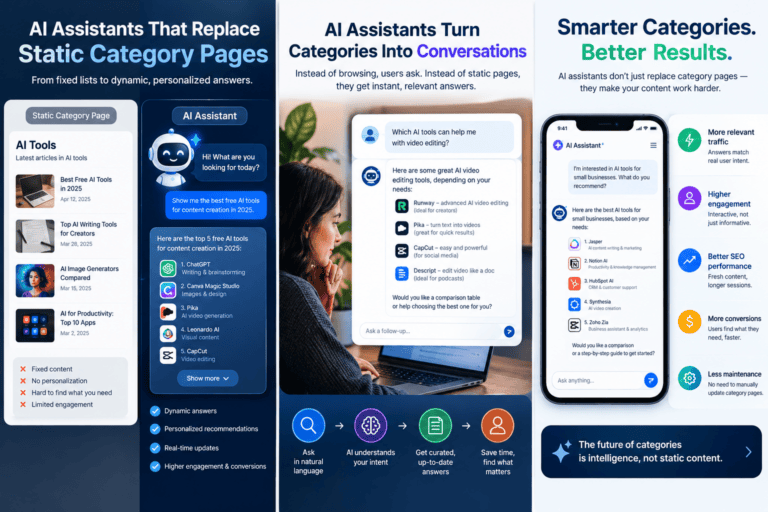
Amazon’s Rufus is the best-documented case in the category. Amazon reported that Rufus was used by around 300 million customers in 2025 and helped drive nearly $12 billion in incremental annualized sales. Monthly active users rose 115% year over year in the first quarter of 2026, and Amazon says Rufus users are 60% more likely to complete a purchase.
Read those numbers with care. “Incremental” is Amazon’s own downstream-impact measure, and higher purchase likelihood among assistant users may partly reflect that high-intent shoppers use assistants more. Even so, Amazon’s CEO told analysts that experiences with third-party horizontal agents have not been great yet, and that shoppers will likely gravitate to retailer-built tools. His reasoning is practical: a retailer-built assistant already has purchase history, saved payment details, live inventory and delivery data.
The implication for everyone else: your assistant’s advantage is the first-party data a general chatbot cannot see.
Evidence grade: A for the reported totals, B for causal interpretation. What to do: if you build an on-site assistant, connect it to inventory, order history, and return policy before you polish its personality.
Sources: Modern Retail on Amazon Q1 2026; PPC Land.
3. Agentic checkout is getting a reality check, not a funeral
In September 2025, OpenAI launched Instant Checkout, with the Agentic Commerce Protocol built with Stripe. By March 2026, it was scaling the feature back. Reporting at the time indicated that only a small number of Shopify merchants had actually gone live, and that shoppers were happy to research in ChatGPT but did not want to pay there. OpenAI said it would prioritize product discovery, with purchases happening in merchants’ own apps and sites.
Google took a different path. Its Universal Commerce Protocol, announced in January with retailers including Walmart, Target, Shopify, Etsy and Wayfair, powers a checkout on eligible US product listings in AI Mode and the Gemini app. Google also launched Business Agent with Lowe’s, Michael’s, Poshmark and Reebok, and piloted a “Direct Offers” ad format inside AI Mode.
Forecasts disagree wildly because they measure different things. McKinsey projects $3 to $5 trillion in global agentic commerce by 2030, Morgan Stanley puts US agentic ecommerce at $190 to $385 billion, and eMarketer expects US ecommerce through AI platforms to pass $20 billion in 2026. One analyst’s framing is worth borrowing: agentic commerce is a small, fast-growing, high-intent slice, and the growth rate should not size your budget; the slice should.
Evidence grade: B. What to do: make your catalog and checkout reachable by agents, but do not rebuild your Q4 plan around them. Spread risk across protocols instead of betting on one.
Sources: Modern Retail; Forrester; Digital Commerce 360; Chain Store Age on UCP; Apadmi; Ecommerce Fastlane.
4. Product data is the new shelf space
When an AI assistant answers “best waterproof jacket under $200,” it does not read your homepage. It reads structured attributes: materials, dimensions, availability, ratings, shipping and return terms. Google added dozens of new Merchant Center attributes specifically to improve discovery in AI Mode, Gemini and Business Agent.
This is the least glamorous and most durable trend in the guide. Clean product data feeds traditional search, your on-site recommendations, marketplace listings, and every agentic surface at once. If a size chart lives in an image, or your return policy is inconsistent across pages, you are harder for every system to recommend.
Evidence grade: B. What to do: audit your top 100 products for missing attributes, ambiguous titles, and unstructured policies. Fix those before building anything new.
Personalization inside your store
5. The shift from segments to decisions per moment
Older personalization put shoppers in pre-built audiences. Newer systems decide per visit, using live behavior, device, location, and business constraints like margin and stock. The technology is no longer the bottleneck. Identity resolution is. If your web, app, email, and in-store data cannot be tied to the same person, a more advanced model just makes confident mistakes faster.
Attentive’s 2026 survey of 1,050 US, UK and Australian consumers found 93% say they are likely to keep shopping with brands that personalize. Treat that as a statement of preference, not a measured retention effect, but it matches what most retention teams see anecdotally.
Evidence grade: B. What to do: before buying a new engine, check how many of your active customers you can actually recognize across two channels. If the answer is under half, fix identity first.
Source: Attentive 2026 Personalization Trends.
6. Generative AI is rewriting the page, not just the recommendation
Retailers are using generative models to adapt product copy, email, imagery order, and landing-page sequencing to a visitor’s context. Two shoppers can now see different benefit framing on the same product page.
The risk is quality control. A generated description that invents a feature, or personalization that contradicts your return policy, costs more than it earns. The brands doing this well put guardrails around claims, keep a human review step for new templates, and A/B test against the static page rather than assuming the generated version wins.
Evidence grade: C. What to do: start with email and category pages where errors are cheap, and lock factual attributes to your product database.
7. Fewer, better-chosen options
The more interesting personalization frame in 2026 is subtraction. Shoppers do not need ten thousand SKUs reordered; they need five good ones. Research on Rufus published in April by Workflow Labs argues the assistant compresses the practical discovery space from dozens of results to roughly five. That is a single-source finding and should be treated as a hypothesis, but it points to a real design principle: reducing decision effort builds confidence, and confidence drives purchase and fewer returns.
For your own store, this means curated “edits,” a clear top pick with reasons, and sorting that reflects the shopper’s stated needs.
Evidence grade: C. What to do: test a three-item “best for you” module against your standard grid on one high-traffic category.
Source: PPC Land summary of Workflow Labs research.
Pricing, privacy and trust
8. Personalized pricing turned into a compliance issue
This is the biggest update since May. Using personal data to set individual prices, often called surveillance pricing, moved from an ethics debate to legislation and enforcement.
- New York has required a clear disclosure when an algorithm uses personal data to set prices since its Algorithmic Pricing Disclosure Act took effect in November 2025. The National Retail Federation challenged the law in court. In June 2026, the legislature also passed the One Fair Price Act, a broader ban. At our latest check, the governor had until the end of the year to act, and chapter-amendment talks were reported. Verify its current status before relying on it.
- Maryland and Connecticut enacted bans on using personal data to set grocery prices, and New Jersey became the third state to do so, with its law taking effect August 1, 2027. The New Jersey law does not ban loyalty programs or discounts, and dynamic pricing based on demand is not covered.
- California’s attorney general opened an investigative sweep in January 2026 under the existing CCPA, with inquiry letters to retail, grocery, and hotel businesses.
- More than 40 bills on personalized algorithmic pricing had been introduced in at least 24 states by late March.
The practical line most legal commentary draws: separate cost- or demand-based dynamic pricing from pricing that uses an individual’s data, and keep loyalty rewards transparent. Personalized promotions are not the same as personalized prices, but the boundary is where the lawsuits will happen. This is not legal advice; talk to counsel before changing any pricing logic.
Evidence grade: A for the laws, B for how they will be enforced. What to do: inventory every place a price or offer varies by person, and document the data inputs.
Sources: Paul Weiss analysis; Chain Store Age on New Jersey; EPIC on New York; LexisNexis.
9. Zero-party data is still the most defensible moat
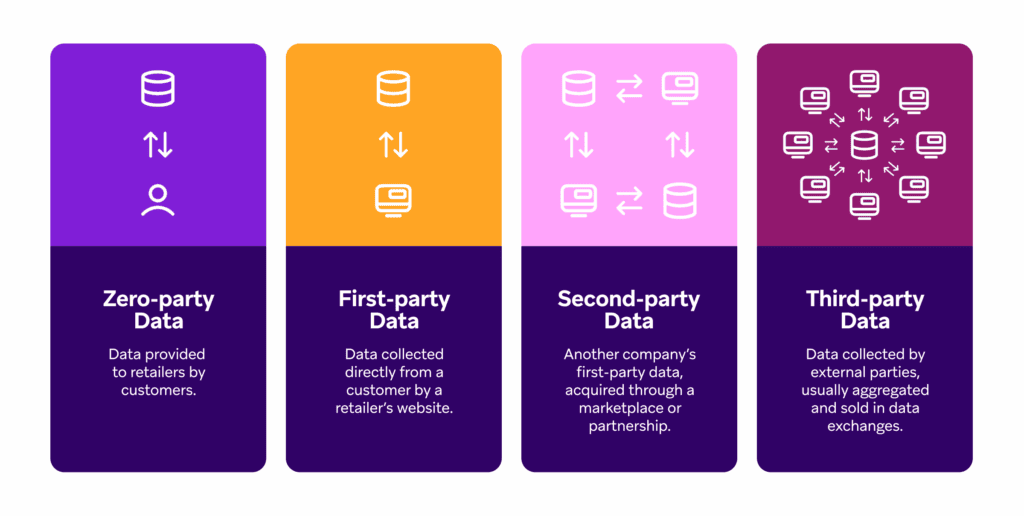
Zero-party data is what a customer tells you on purpose: a size, a skin concern, a gift recipient, a budget. It is consented, accurate, and needs no inference. If a shopper says they need a size 12 bridesmaid dress in sage green, that beats any behavioral guess.
Kantar’s 2026 marketing trends work, as reported by Raconteur, describes the tension plainly: a large majority of consumers worry about brands harvesting their data, and a similar majority still want relevance. The gap narrows when sharing is clearly consensual and pays off immediately. A fit finder that visibly improves the next ten products shown is a fair trade; a ten-question quiz that leads to a generic email is not.
Evidence grade: B. What to do: replace one generic newsletter signup with a two-question preference prompt, and show the benefit on the very next screen.
Source: Raconteur on Kantar.
10. Explaining the “why” is a conversion lever, not a legal footnote
“Because you bought X” and “based on the size you saved” do two things. They make a recommendation feel earned, and they keep you inside what a shopper expects you to know. The creepy factor comes from data a shopper does not expect you to have, such as off-site browsing or inferred sensitive attributes. Attentive’s guidance to brands is to avoid personalization built on sensitive inferences or third-party data a shopper would not expect.
Given Trend 8, this is also becoming risk management. A brand that can explain every personalized element in one sentence is better prepared for regulators and for customers.
Evidence grade: B. What to do: add a one-line reason beneath your recommendation modules and measure click-through against the unlabeled version.
Social and creator commerce
11. TikTok Shop is a real channel with messy numbers
The most-cited forecast, from eMarketer, puts TikTok Shop US gross merchandise value at about $23.4 billion in 2026, up 48%, and about 18% of US social commerce in 2025. eMarketer separately forecasts US social commerce of roughly $101 billion in 2026, around 7% of US ecommerce. Third-party trackers report US GMV for the first half of 2026 at $11.8 billion, up 103%, though trackers differ from each other and from eMarketer on 2025 figures ($15.1 billion versus $15.82 billion).
Two things matter more than the exact total. The platform’s fee is a flat 3.5% of GMV, with an additional 1% during campaign periods that began in April 2026, which changes the unit economics of discounting. And one tracker reports 97% of US TikTok Shop customers also shop on Amazon, so this is an additional discovery layer, not a replacement.
The personalization here sits in TikTok’s algorithm, not in your stack. You influence it through creators, content quality, and product-video fit.
Evidence grade: B for forecasts, C for tracker data. What to do: pilot with a small creator roster and a hero product before building a full catalog presence.
Sources: Digital Applied; SmartScout.
12. Creators and affiliates are taking share from paid search
Adobe expects affiliate and partner channels to grow 12% in holiday revenue share and social 17%, against 4% for paid search. Inside affiliates, cashback and rewards partners lead with a 36% share of traffic, and influencers and creators follow at 22%. A tracker of TikTok Shop data reports that affiliate-driven content accounts for 42% of US GMV.
Paying creators per sale rather than flat fees tends to align incentives, and a roster of niche creators effectively personalizes your message to each community without you writing every variation. Claims of 4x to 8x return on ad spend circulate widely, but we could not trace them to a primary source, so we have left them out.
Evidence grade: B. What to do: move at least one creator relationship to a performance-based structure this quarter and compare cost per acquisition against a paid social cohort.
Experience and channels
13. Virtual try-on is moving from website gimmick to clienteling tool
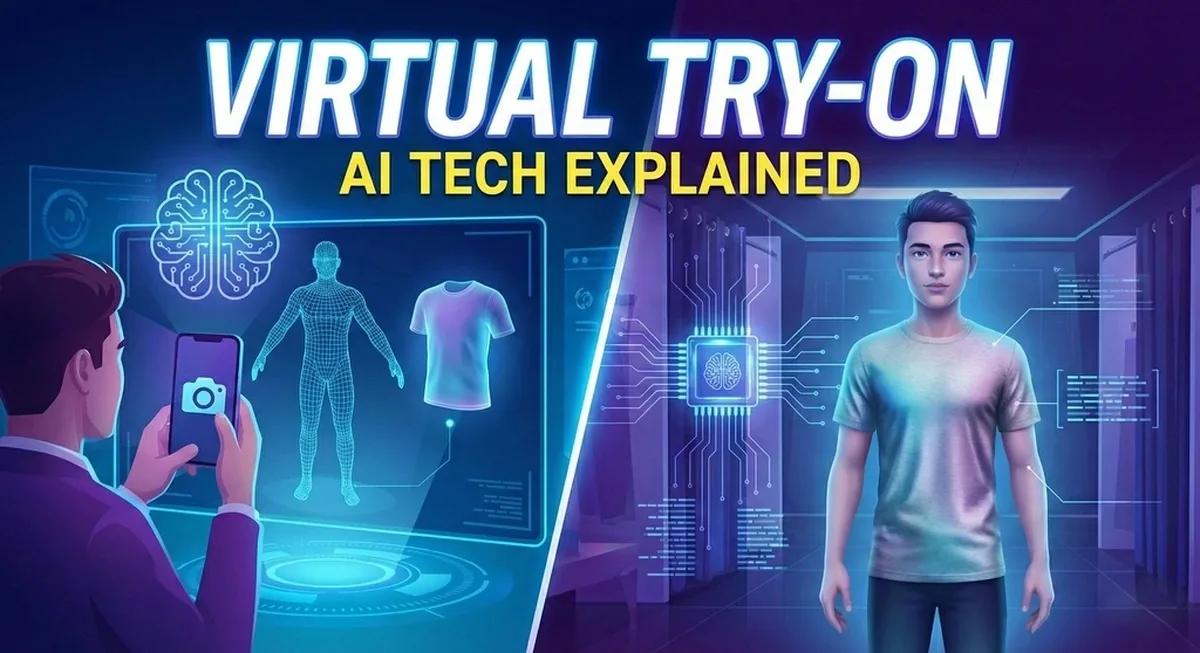
Try-on has matured, and its most credible 2026 use is human-assisted. In May, OTB Group (Diesel, Jil Sander, Maison Margiela, Marni, Viktor&Rolf) announced a virtual try-on experience built on Google Cloud’s Virtual Try-On API, giving client advisors photorealistic previews to share with selected customers in the US and Europe.
You will see large conversion and returns-reduction numbers across vendor blogs. Most are vendor-reported, from different categories and without consistent controls, so we are deliberately not repeating them as benchmarks. The pattern that holds up: try-on helps most where appearance drives the purchase (eyewear, cosmetics, accessories) and least for basic apparel where fit dominates.
Evidence grade: C. What to do: estimate the return-cost savings on your own return rate and category before any contract, and demand a holdout test in the pilot.
Source: Google Cloud Press Corner, May 7, 2026.
14. The holiday cart is a phone cart
Adobe projects 57.4% of holiday online sales will happen on mobile devices, and says buy now, pay later could generate $21.3 billion in holiday ecommerce spend, with the large majority of BNPL transactions on mobile. Personalization on mobile uses different signals (tap patterns, app sessions) and different channels (push, SMS, in-app messages). Teams that personalize in email and desktop only are missing most of the season.
Evidence grade: B. What to do: check your saved-preference and recommendation modules on a mid-range phone on a slow connection. Personalization that loads late is not personalization.
15. Loyalty and post-purchase are the underinvested frontier
Most programs give everyone the same point structure. A customer who only buys on sale does not need a discount reward; a full-price buyer values early access. Treating them identically wastes margin on one and under-rewards the other.
The window between delivery and the next purchase is where sentiment peaks and where most brands send only logistics emails. Personalized replenishment timing, care guides for the product they just bought, and cross-category suggestions based on what they kept rather than what they browsed all sit here. This is an inference from retention practice, not a measured benchmark, which is why it is graded C, but it is also where most programs have the easiest wins.
Evidence grade: C. What to do: rewrite your order-delivered email using the product they bought and one follow-up action, then measure the 60-day repeat rate.
Trend scorecard
| # | Trend | Maturity | Evidence | Effort | Start now if |
|---|---|---|---|---|---|
| 1 | AI referral traffic | Growing | B | Low | You have analytics and traffic from AI sources |
| 2 | Retailer-built assistants | Early | A/B | High | You have a large catalog and clean data |
| 3 | Agentic checkout | Emerging | B | Medium | You sell on Shopify or Google Merchant Center |
| 4 | Structured product data | Mature need | B | Medium | Always |
| 5 | Decisions per moment | Mature | B | High | You can resolve identity across channels |
| 6 | Generative page content | Early | C | Medium | You can run controlled tests |
| 7 | Fewer, better options | Early | C | Low | You have high-traffic category pages |
| 8 | Pricing compliance | Urgent | A | Medium | You vary prices or offers by person |
| 9 | Zero-party data | Mature | B | Low | Always |
| 10 | Explaining the “why” | Mature | B | Low | Always |
| 11 | TikTok Shop | Growing | B/C | Medium | You sell beauty, fashion, home or wellness |
| 12 | Creator and affiliate | Growing | B | Medium | You can track attributed sales |
| 13 | Virtual try-on | Growing | C | Medium-High | Appearance drives returns in your category |
| 14 | Mobile personalization | Mature | B | Medium | More than half your traffic is mobile |
| 15 | Loyalty and post-purchase | Underused | C | Low-Medium | You have repeat buyers |
Your action plan
Before Black Friday (the next five weeks)
- Tag AI-referred sessions in analytics and set a baseline for conversion and return rate.
- Audit price and offer logic for anything that varies by individual, and document inputs.
- Fix product data gaps on your top 100 revenue products.
- Add a one-line reason under recommendation modules.
Q1 2027
- Launch one zero-party data moment, such as a two-question preference prompt, and measure repeat purchase.
- Pilot a creator roster on performance terms.
- Test one agentic surface (Google Merchant Center attributes plus UCP if you are on a supported platform).
- Run a holdout test before signing any try-on or assistant contract.
Skip for now
Rebuilding your checkout around one agent protocol. The market is still deciding how checkout will work, and the safest approach is to keep your own checkout strong and your product data portable.
FAQ
What are the biggest personalized shopping trends in 2026?
The biggest shifts are AI-assisted discovery (with Adobe forecasting 130% growth in AI-referred retail traffic this holiday season), retailer-built shopping assistants like Amazon’s Rufus, a reality check on agentic checkout, new state laws on personalized pricing, and the rise of TikTok Shop and creator-led commerce.
Is agentic commerce real or hype?
Both. Live deployments exist, including Amazon’s Rufus and Google’s checkout in AI Mode and Gemini. But OpenAI scaled back its Instant Checkout in March after limited merchant adoption, and forecasts range from tens of billions to trillions depending on definitions. Prepare your product data and keep your own checkout strong.
Is personalized pricing legal?
It depends on the state and the method. New York requires disclosure when an algorithm uses personal data to set prices. Maryland, Connecticut, and New Jersey have enacted bans focused on grocery pricing, and California’s attorney general is investigating under existing privacy law. Loyalty discounts are treated differently from individualized prices in the enacted laws we reviewed. Consult counsel for your specific practice.
What is zero-party data?
Information a customer deliberately shares with you, such as a size, budget, skin concern or style preference, usually through a quiz, fit finder, or preference center. Because it is volunteered, it is more accurate than inferred behavior and easier to defend on privacy grounds.
Do AI-referred shoppers convert better?
Reports from Adobe’s holiday analysis, as summarized by practitioners, indicate AI-referred shoppers converted roughly 31% better than other traffic last holiday season and about 40% better during the June Prime Day event. Volumes are still small, and your own results will vary, so measure them separately.
How much does a Rufus-style assistant cost to build?
There is no reliable public range, and vendors price by catalog size and traffic. Cost depends mostly on connecting the assistant to inventory, order, and policy data. Start with a narrow scope, such as a single category, and measure answer accuracy and conversion before expanding.
Should small brands worry about AI shopping agents?
Prepare, but do not panic. The foundation is the same work that helps you today: accurate product attributes, honest reviews, clear return terms, and consistent pricing. Brands with strong data will be easier for any agent to recommend.
Is TikTok Shop worth it for a small brand?
It can be, especially in beauty, fashion, home, and wellness. Start with a hero product, a few creators on performance terms, and a clear view of margin after the 3.5% platform fee. Most buyers also shop elsewhere, so treat it as added discovery.
How do I avoid personalization feeling creepy?
Use data customers gave you or that comes from their activity on your own store, explain why a recommendation appears, and avoid inferring sensitive attributes or using data from other sites they would not expect you to have.
How should I measure personalization ROI?
Use holdout tests: a group that sees the personalized experience and a comparable group that does not. Compare conversion, average order value, return rate and 90-day repeat purchase, not just clicks. For AI traffic specifically, segment conversion and returns by referral source.
Related reading
- AI Recommendation Engines: Complete 2026 Guide
- Zero-Party Data Strategy for Ecommerce Brands
- Hyper-Personalization in Retail: Real-World Playbook
- Agentic Commerce Explained: What Brands Need to Know
- AR Virtual Try-On ROI: Category-by-Category Breakdown
- TikTok Shop and Social Commerce Personalization
- Personalizing Loyalty Programs with AI
- Personalization vs. Privacy: The 2026 Framework
- Best Ecommerce Personalization Tools Compared
Sources
Primary and near-primary sources used in this edition:
- Adobe, U.S. holiday shopping forecast, September 28, 2026
- Digital Commerce 360, Adobe projection coverage
- Modern Retail, Amazon Q1 2026 and Rufus
- Modern Retail, What went wrong with ChatGPT’s Instant Checkout
- Forrester, What it means that the leader in agentic commerce just pulled back
- Digital Commerce 360, OpenAI shifts checkout plans
- Chain Store Age, Google launches new agentic commerce standard
- Paul Weiss, Surveillance and algorithmic pricing developments
- Chain Store Age, New Jersey signs surveillance pricing ban
- EPIC, New York passes surveillance pricing ban
- Google Cloud, OTB Group announcement, May 7, 2026
- Attentive, 2026 Personalization Trends
- Raconteur, Personalisation in the age of zero-party trust
Secondary and tracker sources, used with the grades noted above: Digital Applied, SmartScout, Apadmi, Ecommerce Fastlane, PPC Land, Practical Ecommerce, LexisNexis.