
Why Generic Online Stores Are Dying
(And What’s Replacing Them)
The data is unambiguous. Sell-everything stores are haemorrhaging money while niche, community-led, and AI-personalised commerce quietly takes over.
The Honest Summary
- The problem: Generic “sell-everything” online stores are failing at an accelerating rate—roughly 70–80% close within their first two years, and the survivors are under mounting margin pressure from rising ad costs, Temu/Shein price wars, and Amazon’s dominance.
- The cause: Customer acquisition costs jumped 40–60% between 2023 and 2026. Google Shopping CPCs rose 33.7% in a single year. ROAS declined 10% across the board. The economics of broad, undifferentiated selling are simply broken.
- The shift: What’s replacing generic stores isn’t one thing—it’s a cluster of models: niche-authority stores, community-led commerce, creator/DTC brands, AI-personalised experiences, and subscription-anchored relationships.
- The data: The global niche e-commerce market was valued at $1.5 trillion in 2023 and is projected to reach $3.2 trillion by 2032 at a 12% CAGR. Niche stores consistently achieve conversion rates of 4%+ versus the generic average of 1.4–2.5%.
- The warning: “Going niche” alone won’t save you. The graveyard is full of niche stores with no real expertise, no community, and no data strategy. Specificity without depth is still generic.
- Next steps: Audit your store’s differentiation (honestly), identify where you can build genuine authority, and read the framework in Section 7 before making any decisions.
Table of Contents
- The Collapse Is Already Happening
- Why Now? The Compounding Forces Nobody Warned You About
- The Amazon Effect and What It Actually Means
- What’s Actually Winning: 5 Models Replacing the Generic Store
- The AI Personalization Inflection Point
- Real-World Cases: Who Pivoted and What Happened
- A Practical Framework for Deciding What to Do Next
- Honest Limitations: When This Analysis Doesn’t Apply
- FAQ
- Final Verdict
1. The Collapse Is Already Happening
There are now roughly 28 million ecommerce stores worldwide. Most of them are failing. Not slowly, not quietly—failing fast, and often within months of launching. The numbers are bleak enough that even industry optimists have stopped pretending otherwise.
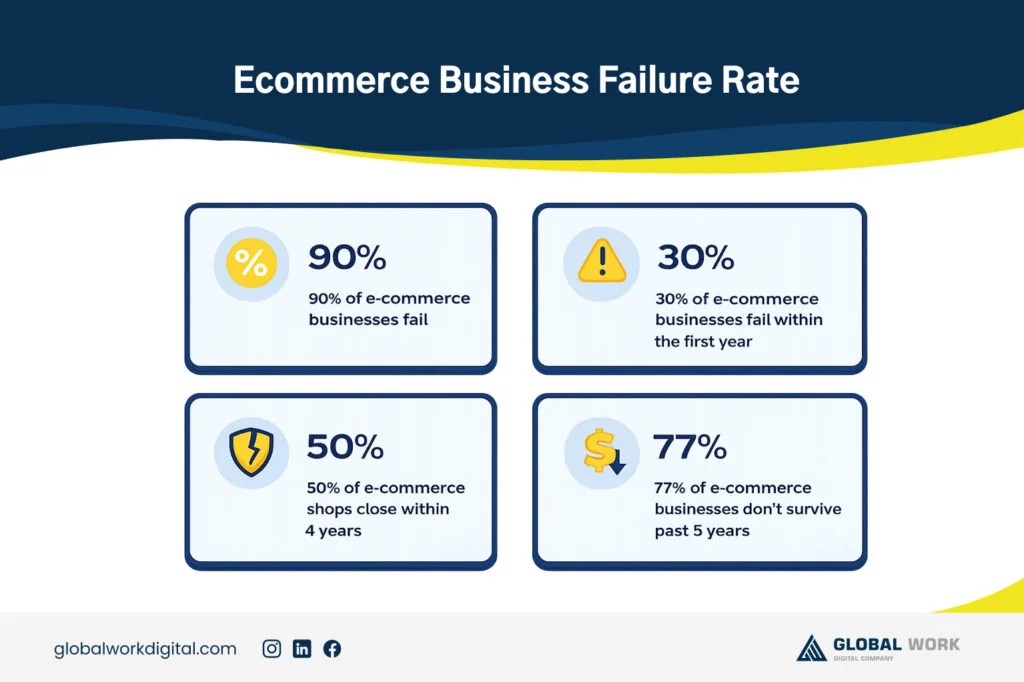
According to several ecommerce-focused analyses, somewhere between 70% and 90% of new online stores close within their first 120 days, with failure concentrated heavily in what researchers call “commoditised” niches: dropshipping, generic DTC brands, private-label mass-market goods. By year two, the failure rate climbs to around 80%. [Source: Global Work Digital, 2026]
What’s striking about this picture isn’t the failure rate itself—businesses have always failed. What’s changed is the nature of what’s failing. It’s not the technically incompetent stores or the ones with broken checkout flows. It’s stores that are perfectly functional, reasonably priced, and adequately marketed—but have nothing specific to offer anyone. Competence is no longer a competitive advantage. It’s baseline.
The old model—find products, list them at a margin, run Google Shopping and Meta ads, scale—is hitting structural limits on all three fronts simultaneously. Products can be sourced by anyone. Listing is automated. And advertising is eating the margin alive.
2. Why Now? The Compounding Forces Nobody Warned You About
The death of the generic store isn’t a sudden event. It’s the accumulation of five overlapping pressures that have been building since 2021 and hit critical mass somewhere around 2024–2025.
The Ad Cost Crisis
Google Shopping CPCs rose 33.72% in a single year to $3.49, according to industry benchmarks. Overall ROAS across ecommerce declined 10.03% in 2025—meaning brands paid more per click and got less back per dollar spent. [MobiLoud, 2026]
The driver isn’t just competition—though that’s real. It’s the compound effect of iOS privacy changes (the global ATT opt-in rate settled at approximately 13.85% as of Q2 2024, gutting Meta’s targeting precision) combined with the arrival of Temu and Shein, which reportedly spent an estimated $2.7 billion on digital advertising in 2023 alone. As Etsy’s CEO publicly stated, these platforms were effectively single-handedly inflating ad costs across the entire industry.
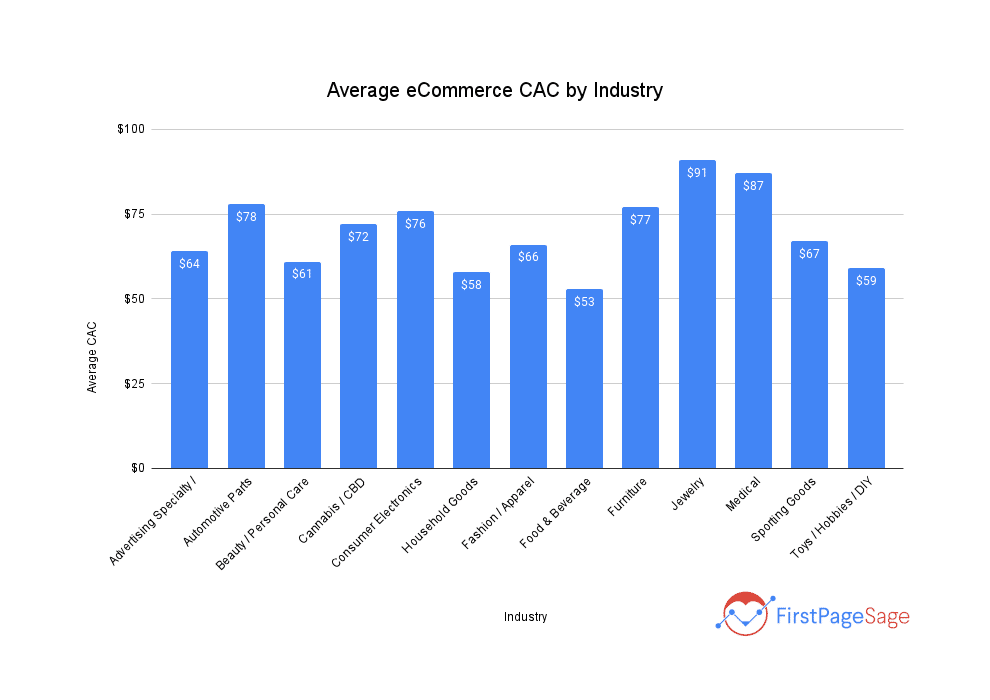
Between 2023 and 2025, customer acquisition costs jumped by 40–60% across ecommerce channels, driven by platform competition, privacy regulations, and market saturation.
— Phoenix Strategy Group, CAC Benchmarks Report 2026The Race to the Bottom Is Won—By Players You Can’t Beat
Temu and Shein didn’t invent price competition. They just made it absolute. When a generic consumer goods store tries to compete on price in apparel, homeware, or electronics, it’s not competing with other independent stores—it’s competing with platforms that are structurally subsidised (through investor capital or state-adjacent advantages) to operate at losses for years. That isn’t a pricing strategy problem you can fix. It’s a category problem.
The Trust Deficit
Consumers have gotten better at identifying stores with no story, no community, no actual expertise. The blank-canvas Shopify store with stock photos and generic product descriptions generates immediate suspicion. Return rates in undifferentiated categories are high, reviews are thin, and brand recognition is zero—which pushes acquisition costs even higher in a vicious cycle.
The Attention Fragmentation
Search is no longer the only door into ecommerce. TikTok Shop, Instagram Shopping, YouTube Commerce, livestream shopping (US livestream ecommerce hit $50 billion in 2023 and is projected at $68 billion by 2026, with conversion rates up to 30% versus the 2–3% norm for standard ecommerce)—these channels reward personality, storytelling, and specificity. A generic product listing cannot convert in a livestream context. You need a reason for someone to watch. [BigCommerce, 2026]
| Pressure | Metric | Impact on Generic Stores | Severity |
|---|---|---|---|
| Ad cost inflation | Google Shopping CPC +33.7%, ROAS -10% | Margin erosion, CAC exceeds LTV | Critical |
| Ultra-low-cost competition | Temu/Shein $2.7B ad spend (2023) | Price-floor collapse in mass categories | Critical |
| Privacy signal loss | ATT opt-in rate ~13.85% | Targeting degraded, CPM rises | High |
| Consumer trust deficit | 71% frustrated by impersonal shopping | Low conversion, high returns, poor retention | High |
| Channel fragmentation | Social/livestream growing at 30%+ CVR | Generic stores invisible in social commerce | Medium-High |
3. The Amazon Effect and What It Actually Means
Amazon is the 800-pound gorilla that everyone cites and almost nobody analyses properly. Amazon drew nearly 2.8 billion monthly visitors in May 2025 (Semrush data) and commands roughly 37–40% of US ecommerce market share. The common response is: “don’t compete with Amazon.” Which is fine advice as far as it goes—but it doesn’t go far enough.
The real lesson from Amazon isn’t that you can’t sell products online. It’s that you can’t win on selection, price, or logistics against a platform that has spent $500 billion building exactly those capabilities. You can only win on what Amazon structurally cannot provide: genuine expertise, community, taste, curation, and authentic human identity behind the brand.
Amazon itself has acknowledged this indirectly. Its private-label brands—which seemed threatening five years ago—have largely underperformed because they have no story, no community, no reason to prefer them other than price. Consumers who want a specific experience don’t find it on Amazon. They go looking for it.
4. What’s Actually Winning: 5 Models Replacing the Generic Store
Here is where most articles wave their hands at “niche stores” and call it a day. The reality is more textured. There are at least five distinct models gaining ground, and they work through different mechanisms. Understanding the difference matters if you’re trying to build something durable rather than just less-generic.
Model 1 — The Niche-Authority Store
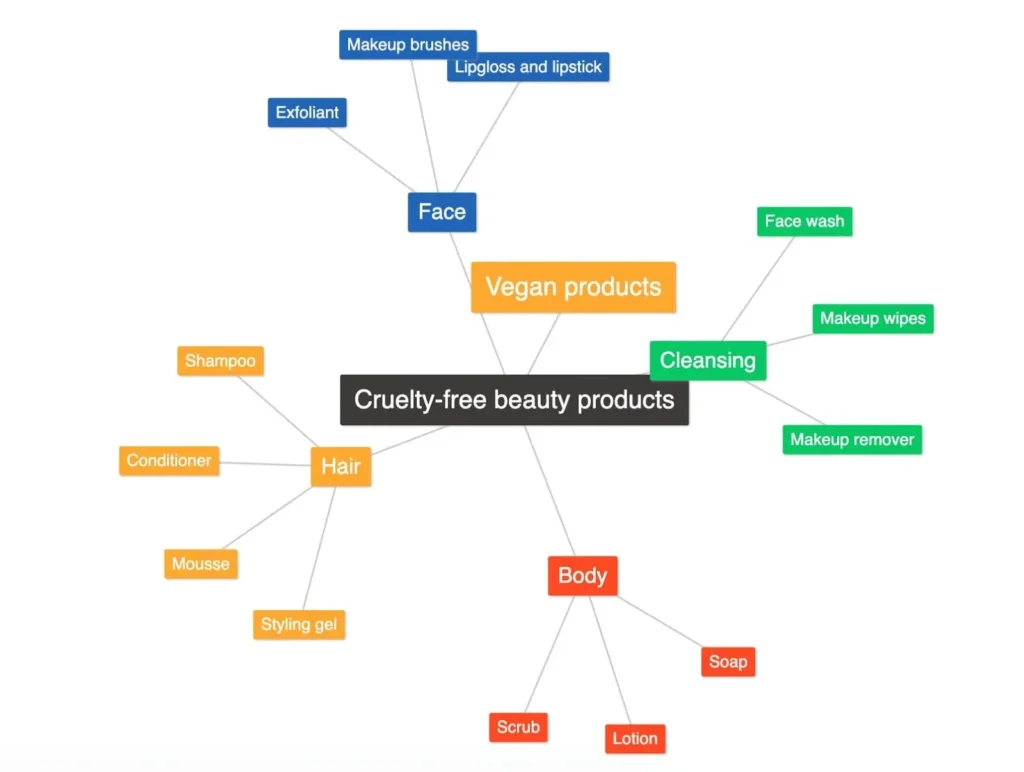
The global niche e-commerce market was valued at $1.5 trillion in 2023 and is projected to reach $3.2 trillion by 2032 at a 12% CAGR. [CONVERTIBLES, 2026] But “niche” is badly misunderstood. A niche isn’t just a narrow product category. It’s a specific customer identity combined with genuine expertise about that identity’s problems and desires.
The most successful examples build around customer identity rather than product category. “Supplements” is a category. “Supplements for women over 50 managing perimenopause” is a customer identity. The latter commands a premium, earns organic authority in search (because there’s less competition for specific long-tail terms), and generates community loyalty. Conversion rates in properly executed niche stores consistently hit 4%+ versus the generic average of 1.4–2.5%. [Digital Web Solutions, 2026]
| Metric | Generic Store | Niche-Authority Store |
|---|---|---|
| Average conversion rate | 1.4–2.5% | 4–8%+ |
| Customer acquisition cost | High (broad competition) | Lower (specific audience, less ad competition) |
| Brand premium (pricing power) | None — price is the differentiator | Significant — expertise justifies premium |
| Organic search traffic | Dominated by Amazon/Walmart | Ownable in specific long-tail terms |
| Customer lifetime value | Low — little reason to return | High — trust, community, repeat purchase |
| Resistance to ad cost inflation | Very low | Moderate to high (organic & community channels) |
Model 2 — Community-Led Commerce
This model treats the community as the primary asset and the store as a downstream result of that community. The store doesn’t come first. The forum, the Discord, the YouTube channel, the newsletter, the Facebook Group—these come first, and then the store follows the community’s trust.
Community-driven brand building is increasingly recognized as a primary driver of retail performance. Research cited by retail marketers at Microsoft Advertising shows that “the ability to demonstrate understanding and empathy will be a new expectation of brands” in the current market. [eMarketer, 2025] This isn’t fluffy brand theory—it translates into measurable CAC reduction and significantly improved LTV when done consistently.
Brands that skip omnichannel community engagement risk roughly 33% lower revenue versus integrated peers (Emarsys 2025 data, via Searchanise). Meanwhile, 63% of stores are actively ramping up social selling efforts because the ROI is demonstrable. [Searchanise / McKinsey, 2026]
Model 3 — Creator-Led and DTC Identity Brands
Creator-led commerce—where influencers or personalities monetize existing audiences through branded product lines—is perhaps the most dramatic recent shift. Examples like Feastables (MrBeast’s snack brand) and Rhode Skin (Hailey Bieber) both built around high consumer trust and viral community engagement before the store even opened. [Venture Media, 2026]
The structural advantage here is that the customer relationship pre-exists the commercial relationship. There’s no cold acquisition. CAC is effectively paid in content creation costs rather than ad spend—and those content costs compound into an audience that owns itself rather than renting eyeballs from platforms.
Not everyone is a creator with a million followers, obviously. But the principle scales: even a store with 8,000 engaged newsletter subscribers and genuine expertise in its domain has a structurally better starting position than a generic store spending $30k/month on Facebook ads for the same revenue.
Model 4 — Subscription and Membership Commerce
Subscription models force a different discipline: you must deliver ongoing value, or customers leave. This sounds like a disadvantage, but it’s actually a forcing function for quality. The stores that have built successful subscriptions have typically done so because they figured out what customers actually need recurrently—not just what they can be sold once.
Subscription commerce drives significantly higher LTV than transactional models and provides predictable revenue that allows better inventory management, reduced waste, and more sustainable marketing spend. A retention improvement of just 5% can translate to a 25–95% increase in profits, according to customer retention research. [Genesys Growth, 2026]
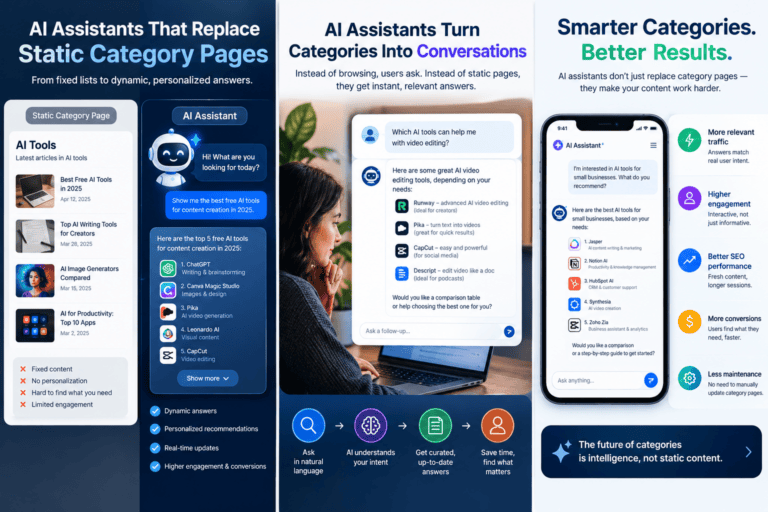
Model 5 — AI-Native Personalised Commerce
This is the fastest-moving category and deserves its own section—see below. In short: stores that deploy genuine AI personalisation at the product, content, and messaging level are demonstrating measurably superior retention metrics. The key word is “genuine”—AI-powered product carousels that recommend unrelated products are not personalisation. Real personalisation is when the store’s communication, pricing offers, and product sequence feel individually tailored.
5. The AI Personalization Inflection Point
The personalisation imperative has been discussed for years. What changed recently is the execution gap. Previously, meaningful personalisation required data science teams and six-figure software contracts. Now it’s within reach of mid-sized stores—and the consumer expectation has risen correspondingly.
Consider the data: 91% of consumers are more likely to shop with brands that provide personalised offers and recommendations. And 71% report feeling frustrated when their shopping experience is impersonal. [Elementor, 2026, citing industry research] These aren’t minor preference signals—at that scale, they’re structural market conditions.
AI-driven personalisation research shows measurable business impacts: a quantitative analysis in the Journal for Social Sciences Archives (2025) found that AI personalisation implementation correlated with a 15% increase in repeat purchases and extended average session times across studied DTC brands. [Journal for Social Sciences Archives, Vol. 3, No. 2, 2025]
What does effective AI personalisation actually look like in practice? The DTC brands doing it well are not just running recommendation algorithms. They’re doing what companies like ThirdLove (machine learning for sizing recommendations to reduce returns), Sephora (AI-driven virtual try-on), and Stitch Fix (AI style analysis at scale) figured out: use AI to solve a specific customer problem that the customer experiences as genuine value, not just as a marketing tactic. [Kustomer, 2025]
The distinction matters enormously. An AI recommendation widget that says “you might also like” is table stakes. An AI system that learns your pet’s food sensitivities and proactively suggests the right refill before you run out—that builds a relationship. The first is a feature. The second is a moat.
6. Real-World Cases: Who Pivoted and What Happened
Abstract arguments are one thing. These cases are documented and verifiable, drawn from publicly available reporting and platform data.
Stitch Fix: From Retail to Data-Driven Style Intelligence
Stitch Fix built its entire model around AI-assisted personalisation rather than traditional retail. Rather than opening a general clothing store, it used AI to analyse customer preferences and create personalised style recommendations at scale. The result wasn’t just a different user experience—it fundamentally changed the unit economics. Customers who receive genuinely personalised selections have higher average order values, lower return rates, and dramatically better retention than those who simply browse a catalogue. [Analyzify, 2026]
The lesson isn’t that you need Stitch Fix’s exact model. It’s that they chose a specific, hard-to-copy competency (style personalisation through data) rather than competing on selection or price.
Rhode Skin and Feastables: Community Before Commerce
Both Rhode Skin (Hailey Bieber) and Feastables (MrBeast) demonstrate the creator-commerce model at its most effective. Neither launched into a vacuum—they launched into pre-existing, highly engaged audiences with established trust. The commercial relationship was downstream of the parasocial relationship. Customer acquisition costs were effectively zero at launch because the audience already existed. [Venture Media, 2026]
This model isn’t accessible to everyone, but it illustrates the principle: the most powerful stores in 2026 are not stores that built audiences. They’re audiences that built stores.
ThirdLove: Machine Learning for Fit (Reducing Returns and Building Trust)
ThirdLove applied machine learning specifically to the problem of bra sizing—historically one of the highest-return-rate categories in apparel. By using ML to improve size recommendations, they reduced returns and improved customer satisfaction simultaneously. This isn’t AI as a marketing feature; it’s AI solving a concrete problem that customers actually care about. The result: lower return-processing costs, better reviews, and a word-of-mouth advantage in a category dominated by frustration. [Kustomer, 2025]
7. A Practical Framework for Deciding What to Do Next
This is the part where I resist the urge to give you a tidy five-step system that oversimplifies a genuinely complex decision. What I can offer is a set of honest diagnostic questions, followed by a decision path based on where you actually are.
The Honest Audit: 6 Questions Before You Do Anything
- What do you know that your competitors don’t? Not what you sell—what do you actually understand about your target customer’s life, problems, and desires that a generic seller has no idea about?
- Is there a community you could build around (or already belong to)? The best commerce communities are communities that existed before anyone thought to monetise them.
- What is your current CAC-to-LTV ratio? If CAC is within 80% of first-purchase revenue, you are on borrowed time. You need LTV.
- Could a customer find your products on Amazon for the same price? If yes, you need a reason to exist beyond the transaction.
- Do you have a first-party data strategy? Email, SMS, loyalty programs. If all your customer data lives in Meta’s pixel and Google’s ad platform, you own nothing.
- What would be lost if your store disappeared? If the honest answer is “nothing except the products themselves,” that’s your problem.
The Four Paths Forward
Path A — Deepen the niche: Stop adding SKUs. Remove the products that have no relationship to a specific customer identity. Invest the marketing budget you save from reduced ad spend into content that demonstrates genuine expertise. This is the slowest path but the most durable.
Path B — Build the community first: Before optimising the store, spend three to six months building an audience through content, newsletter, or social presence. This feels backwards, but the stores emerging strongest in 2026 almost universally did this. The store is downstream of the community.
Path C — Implement real personalisation: Not just product recommendations—contextual personalisation that changes what your customers see, read, and are offered based on where they are in their relationship with your brand. The AI tools to do this have become accessible in the last 18 months. See aipersonalization.cloud for specific resources on implementation.
Path D — Exit the category: This is under-discussed. Some categories are structurally untenable for independent operators right now: generic electronics, fashion basics, mass-market supplements without differentiation. If you’re in one of these, the most useful thing you can do is be honest about it and pivot rather than optimise your way out of a structural problem.
8. Honest Limitations: When This Analysis Doesn’t Apply
Every analysis has blind spots. Here are mine.
First: geography matters enormously. This analysis is weighted toward US and Western European ecommerce markets. The dynamics in Southeast Asia, Latin America, and parts of Africa are different—these markets are in an earlier growth phase where building infrastructure and acquiring customers through broad channels still produces reasonable returns.
Second: not every generic store is dying. Some genuinely commoditised products—certain consumables, replacement parts, standardised industrial goods—suit a transactional, non-branded approach. If customers need a specific filter cartridge and there’s no story to tell, there’s no story to tell. Not every business needs a community. The question is whether you’re in a category that rewards relationships.
Third: “niche” isn’t automatically profitable. The niche ecommerce market is growing, but within that growth is enormous variance. A niche with no margin (because the products are cheap and competition is still fierce even within it) is not better than a broad market. Niche needs to be combined with genuine expertise, a reasonable margin structure, and a customer willing to pay a premium for the specificity.
Fourth: AI personalisation requires data to train on. New stores don’t have that data. The AI advantage compounds over time—it’s not a quick fix for a struggling store with 200 customers and thin purchase history.
Frequently Asked Questions
Questions that come up repeatedly when discussing this topic—answered directly, without the marketing gloss.
Is it too late to start a niche ecommerce store in 2026?
No, but the bar is higher than it was three years ago. “Finding a niche” used to mean picking a product category. Now it means identifying a specific customer identity, developing genuine expertise, and building at least a small community before expecting the store to convert. If you can do those things, the competitive landscape in specific niches is often less crowded than you’d expect—because generic competitors have been filtered out.
How much does customer acquisition cost actually matter compared to retention?
A lot. Acquiring a new customer costs five to twenty-five times more than retaining an existing one. A 5% improvement in customer retention can produce a 25–95% increase in profit, according to research cited in industry analysis. For most stores struggling with margins, the retention side of the equation is dramatically under-optimised relative to acquisition spending.
What’s the minimum viable version of “community commerce” for a small store?
An email newsletter with genuine editorial voice—something that provides value beyond promotional announcements—is the practical minimum. It costs almost nothing, builds a first-party asset you own, and over time creates the kind of relationship that drops CAC and raises LTV. A Discord or forum comes later, once you have enough engaged customers to sustain conversation.
Should I list on Amazon if I’m building a niche brand?
The tradeoff is real: Amazon gives you traffic but takes your customer data and margin, and trains customers to associate your product with Amazon rather than your brand. Most niche brand operators treat Amazon as a discovery channel with limited SKU exposure, rather than their primary revenue stream. The answer depends heavily on your margin structure and how much customer data matters to your long-term strategy.
How long does it actually take to see results from a niche pivot?
Honest answer: six to eighteen months before meaningful organic traction, longer before community compounds. This is why many stores give up too early. The unit economics improve over time as CAC falls (from organic traffic and word-of-mouth) and LTV rises (from retained, loyal customers)—but the early months look worse than a paid-ads-only model.
Is dropshipping completely dead?
Generic dropshipping—buying from AliExpress suppliers and selling at a markup with no brand, no story, and no differentiation—is effectively dead in most Western markets because Temu and Shein have undercut the model structurally. Branded dropshipping (where you control the customer experience, build a genuine brand story, and add real value through curation or expertise) still works in specific niches. The product sourcing model isn’t the problem; the lack of differentiation is.
What conversion rate should I be targeting for a niche store?
The global ecommerce average sits at 2.5–3% for established stores. Niche stores with strong authority and specific customer targeting consistently achieve 4%+ and sometimes substantially more, particularly in food/beverage and personal care categories. If you’re below 2% with a well-established niche store, it’s worth auditing whether the niche is genuinely differentiated or just narrower.
How important is AI personalisation for a small store (under $1M revenue)?
At sub-$1M revenue, the highest-impact personalisation is human and editorial, not algorithmic: a newsletter that treats customers like individuals, product recommendations made with genuine knowledge, and customer service that remembers past interactions. AI personalisation tools become more powerful—and cost-justified—once you have the customer data volume to train them. Start with the human version, then layer in automation once you have the data and budget.
What categories are structurally most viable for independent operators?
Research consistently points to niches with three characteristics: high gross margins (60%+), strong repeat purchase rates, and underserved customer segments willing to pay a premium for specificity and expertise. Food/beverage niches, specialised health and wellness, hobby and craft supplies, and professional tools for specific trades all tend to score well on this framework. Generic electronics, basic fashion, and mass-market supplements score poorly.
Is social commerce a genuine alternative or just a trend?
It’s genuine and growing—US livestream ecommerce is projected at $68 billion by 2026, with conversion rates in livestream events up to 30% versus 2–3% for standard ecommerce. But it requires a different skill set: you need someone who can perform and sell simultaneously, and the content must be genuinely entertaining or informative, not just a product demo. For brands with the right personality or creator partnership, it’s a real and scalable channel. For stores with no one willing to be on camera, it’s not yet accessible.
What’s the single most common mistake stores make when trying to “go niche”?
Narrowing the product selection without deepening the expertise or community. They remove products until the catalogue is small, then wonder why nothing changed. The customer doesn’t care how many SKUs you have—they care whether you understand them better than anyone else. Expertise and community are the actual differentiators; the narrow product range is just a downstream consequence of having a specific focus.
How do I know if my current store’s differentiation is strong enough?
Simple test: describe your store in one sentence, then ask whether Amazon could write the same sentence. If the answer is yes, your differentiation is insufficient. Then ask whether there’s a specific type of person who would drive past a competitor to shop with you specifically, and whether you can name five things you know about that person that your competitors probably don’t. If you can’t, you have work to do.
Are there any sectors where generic stores are still viable?
Yes. Specific B2B supply categories (industrial parts, professional consumables), certain geographical monopolies where the population is too small for niche competitors to enter, and some commoditised necessities where price and availability genuinely are the only factors customers care about. These are not growing categories for independent operators, but they’re not dead either.
More from AI Personalization Cloud
Explore related analysis and practical guides on the same themes covered in this piece.
The Honest Verdict
The death of the generic online store isn’t a crisis for ecommerce. It’s a correction. The original premise of online retail—that lower barriers to entry would create a more competitive, consumer-friendly market—is still true. It’s just playing out in a way that rewards genuine expertise and community over convenience and margin-stacking.
The stores that are dying deserved to—not because their operators were incompetent, but because they were interchangeable. The stores replacing them are building something harder to copy: knowledge, trust, and identity.
Whether you’re building from scratch or rethinking an existing store, the question worth sitting with is simple: what would be genuinely lost if you disappeared? If the answer isn’t obvious, that’s where the work starts.
Updated May 2026 · All statistics sourced and linked · aipersonalization.cloud
How Personalization Encourages Customers to Spend More
Personalized Shopping Trends Taking Over Right Now
Personalized Shopping Examples That Transformed Retail
Brands Are Using Personalized Shopping to Lock In Customer Loyalty — Here’s How
Bespoke E-Commerce Wins: AI-Personalized Shopping Techniques Enhancing Satisfaction Across Platforms