

Last updated: October 26, 2026
Most personalization programs report good numbers and deliver weak ones. Dashboards credit the recommendation engine for purchases that were going to happen anyway, and nobody is rewarded for checking.
This guide is organized as a system, not a ranked list. First, the layers every personalization stack needs. Then seven strategies, each with the same template: when it earns its place, what it requires, how it fails, and when to stop. After that come the two shifts reshaping catalogs in 2026 (embedding and LLM retrieval, and agent-mediated shopping), a readiness-gated roadmap, and a measurement approach. Where a number comes from a published source, it is cited. Where it is a model, it is labeled as one.
Key takeaways
- The credible benchmark is modest. McKinsey’s widely cited research puts typical revenue lift from personalization at 10–15%, with a range of roughly 5–25% by sector and execution quality.
- Advanced techniques yield small increments on mature systems. Dream11’s 2025 production rollout of a hierarchical contextual uplift bandit reported about a 0.4% revenue gain in A/B testing and roughly a further 0.5% after full rollout.
- Your constraint is rarely the algorithm. It is data quality, experiment infrastructure, and whether your organization will accept lower short-term attributed numbers in exchange for real incremental ones.
- Discounting is a brand decision, not just an optimization problem. In some categories, the long-run damage from conditioning customers to promotions outweighs any conversion gain.
- Embedding/LLM retrieval and agentic commerce are now material. Both change what “personalization” means, because in the second case the shopper’s agent, not your site, is the first thing to see your catalog.
Table of contents
- What the evidence says
- The system view: four layers
- Strategy 1: Hybrid filtering with dynamic weighting
- Strategy 2: Session-aware sequential models
- Strategy 3: Contextual bandits
- Strategy 4: Offer optimization and its margin and brand risks
- Strategy 5: Graph neural networks
- Strategy 6: Uplift and causal personalization
- Strategy 7: Consent-first and privacy-preserving personalization
- The retrieval shift: embeddings and LLMs
- Agent-mediated shopping
- Regulation snapshot
- A readiness-gated roadmap
- How to measure honestly
- Break-even economics
- FAQ
- Sources
What the evidence says
Three points from McKinsey’s personalization research are worth keeping straight, because they are quoted loosely:
- Typical revenue lift is 10–15%, with company-specific results spanning roughly 5–25%.
- Faster-growing companies derive about 40% more of their revenue from personalization than slower-growing peers. That is a correlation. It does not show that personalization caused the growth.
- The spread matters more than the median. Weak programs see little or no lift, and some see negative results.
A caution about the rest of the literature. Much industry data (vendor surveys, “89% of marketers report positive ROI”) is self-reported and measures attributed revenue, not incremental revenue. There is also a long-standing academic warning that many neural recommenders fail to beat well-tuned simple baselines when evaluated carefully (Ferrari Dacrema et al., RecSys 2019). Treat every claimed lift as a hypothesis until you have seen a holdout.
A note on market-size figures. Estimates for the “hyper-personalization market” vary widely because research firms define the category differently. I have left them out rather than pick one. If you cite one, name the firm, the year, and that it is a vendor estimate.
The system view: four layers
Treat the seven strategies as components of one stack, not alternatives:
| Layer | Job | Strategies that live here |
|---|---|---|
| 1. Foundation | Clean events, identity, consent, catalog data, experiment infrastructure | Strategy 7, plus the measurement section |
| 2. Candidate generation and ranking | Decide which items are eligible and in what order | Strategies 1, 2, 5; the retrieval shift |
| 3. Decisioning | Choose placement, content, and incentive for this person now | Strategies 3, 4 |
| 4. Causal evaluation | Learn whether any of it changed behavior | Strategy 6 |
Most failed programs invest heavily in layer 2, lightly in layer 3, and almost nothing in layers 1 and 4. That ordering is why they produce impressive attributed numbers and weak incremental ones.
Each strategy below follows the same template so you can compare them on equal terms.
Strategy 1: Hybrid filtering with dynamic weighting
Use it when: you have any mix of interaction data and item attributes, which is nearly everyone. Effort: low to medium. Start here: yes.
What it is. Collaborative filtering (“people like you bought this”) needs interaction history and struggles with new items and new users. Content-based filtering works from item attributes but tends to trap users in a narrow loop. A hybrid blends them, and the step most teams skip is making the blend depend on how much signal you have for that user right now.
A starting heuristic: the signal-richness cascade. This is a starting point for your own testing, not a published benchmark.
| User signal | Collaborative | Content-based | Popularity | Typical user |
|---|---|---|---|---|
| Rich (dozens of interactions) | High | Medium | Minimal | Loyal returning customer |
| Medium | Balanced | Balanced | Low | Engaged newer user |
| Thin (a few interactions) | Low | High | Medium | Early in session |
| None | Zero | Medium | High | First-time visitor |
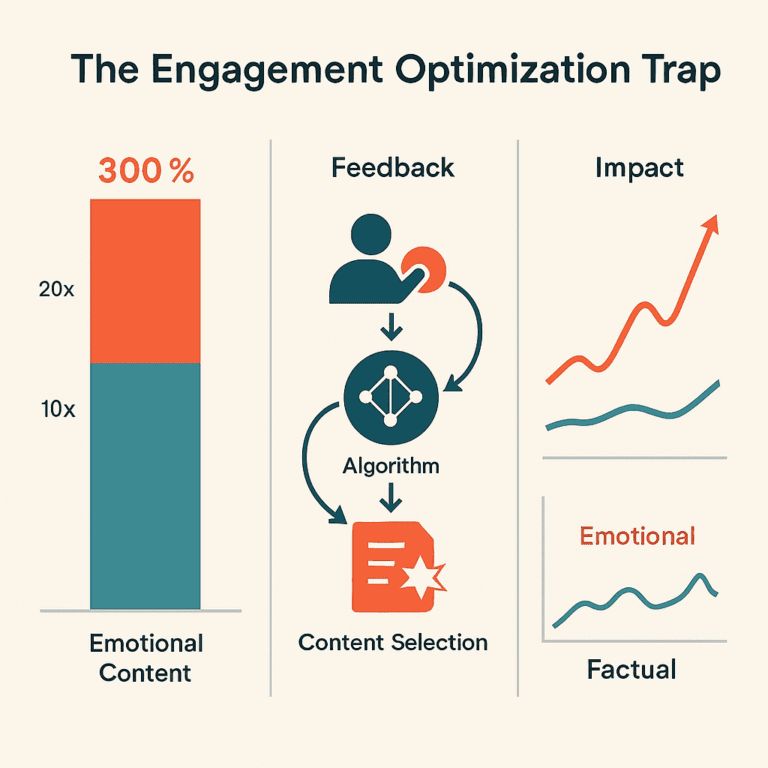
The filter-bubble problem. Pure engagement optimization narrows what people see. Add an explicit diversity term to the ranking objective that penalizes items too similar to recent interactions. How much is category-dependent: fashion and home décor tolerate and benefit from more exploration, while replenishment categories need almost none. Test it per category.
Prerequisites: reasonably clean item attributes and consistent product IDs across channels.
How it fails: a CTR-only reward silently removes diversity, because diversity lowers short-term clicks. It also fails when catalog attributes are inconsistent, since the content-based half then learns noise.
Stop or escalate when: adding more signal stops improving offline and online metrics together. That is the point to consider embeddings (see the retrieval shift) rather than hand-tuned weights.
Strategy 2: Session-aware sequential models
Use it when: purchase journeys involve consideration (browsing across many items before deciding). Effort: medium to high. Prerequisite: real-time event streaming.
What it is. Most recommenders know who you are but not what you are doing. Session-aware models treat the current visit as an ordered sequence (views, dwell time, searches, add-to-cart, removals) and reshape recommendations immediately. The same search for “running shoes” should return different results after a session of technical outdoor gear than after streetwear.
Architecture. Transformer-based sequential recommenders generally handle long-range dependencies better than GRU-based ones, at higher inference cost. For short sessions, the gap is small. Start light and move to attention-based encoding only where session length and measured gains justify the compute.
Cold start. Three practical approaches: seed from context (referral source, device, time, geography); delay personalized slots for the first few interactions and use them for signal; or use hierarchical models that begin with system-wide patterns and specialize per user.
How it fails: running on stale data. If events arrive in hourly or nightly batches, a session model is working from the past. It also fails when sessions are short and mostly single-item (grocery top-ups, repeat buys), where the sequence carries little information.
Stop or escalate when: median session length is too short for sequence signal. Invest in replenishment and recency models instead.
Strategy 3: Contextual bandits
Use it when: you must choose among a small number of options (placements, content blocks, offers) and want to keep learning. Effort: medium. Best for: decisions, not ranking a 50,000-item catalog.
What it is. A standard A/B test asks which version wins on average. A contextual bandit asks which option is best for this person in this context, and keeps learning while serving traffic. It balances exploitation (show what has worked) against exploration (try uncertain options that might work better).
What published production results look like. The most useful recent public data point is Dream11, a fantasy-sports platform. Its team published a hierarchical contextual uplift bandit that moves from broad, system-wide context to user-specific context to address cold start. They report about a 0.4% revenue improvement in large-scale A/B testing and roughly a further 0.5% after it became the default catalog personalization system in May 2025.
Two readings. A half-percent gain on a very large revenue base is valuable. It is also a reminder that the 15–40% lifts in vendor content are not what mature, already-optimized systems typically see. And Dream11 faces extreme demand volatility, so it is not a retail benchmark.
Setting exploration. Explore more where signal is thin and demand shifts quickly (new arrivals, trend items). Exploit more where data is rich and stable (staples, replenishment). Set it per category, not globally.
How it fails: distribution shift. Major sales, viral moments, and demand shocks invalidate what the model learned. Define anomaly detection on the reward signal and a fallback policy before launch.
Stop or escalate when: you cannot define a reward that reflects margin and repeat behavior. A bandit optimizing the wrong reward is faster at being wrong.
Strategy 4: Offer optimization and its margin and brand risks
Use it when: you already discount materially and have margin data per product. Effort: medium. Caution: highest brand and legal exposure of the seven.
What it is. Personalize the offer (discount depth, bundles, free-shipping thresholds, loyalty multipliers, timing) while the shelf price stays constant. A blanket 15% discount gives margin to people who would have bought at 5% or at full price. A bandit or uplift model can learn who needs what.
The savings case (an assumption to test). For a retailer with about €3M in annual discount spend, trimming unnecessary discount depth by 10–20% while holding conversion flat would recover roughly €300K–€600K a year. That is a hypothesis for your own holdout test, not a published result.
The risks that conversion dashboards hide
Conditioning customers to wait. Frequent, predictable incentives teach people to delay purchase until an offer arrives. Short-term conversion rises while full-price sell-through and baseline demand erode. This effect shows up over months, so a two-week test will not see it.
Reference-price damage. In premium and luxury categories, visible and frequent promotion can reduce perceived value. For some brands, one wrongly targeted discount costs more than the margin it appears to save.
Perceived unfairness. Shoppers compare notes, share codes, and screenshot offers. If two people discover materially different incentives for the same item, the story travels faster than the savings accumulate.
Cannibalization and leakage. Offers shared through coupon sites or social channels reach people the model never targeted, and subsidize purchases you would have won anyway.
Regulatory exposure. In the EU, traders must tell consumers when a price has been personalized on the basis of automated decision-making. Personalizing offers rather than prices lowers exposure, but dynamic mechanics such as variable free-shipping thresholds still deserve legal review. This is general information, not legal advice.
Guardrails that belong in the design, not the post-mortem
- Discount floors and ceilings per category, with some categories excluded entirely.
- Frequency caps on incentives per customer per period.
- A margin-aware reward function, not conversion alone, and repeat-purchase rate as a secondary metric.
- Never-discount lists for hero products, new launches, and anything where brand positioning matters.
- A long-horizon holdout (90–180 days) that receives no personalized incentives, so you can see baseline erosion.
- A review ritual: someone senior regularly reads the actual offers being generated, not just the aggregate dashboard.
Stop or escalate when: the long-horizon holdout shows a falling full-price baseline. That is the signal that the model is buying short-term conversions with long-term margin.
Strategy 5: Graph neural networks
Use it when: you have rich cross-category behavior, a large catalog, and a simpler stack that has plateaued. Effort: high. Payoff: high ceiling, uncertain floor.
What it is. A graph neural network (GNN) represents users, products, brands, categories, and attributes as nodes in one graph, with interactions as edges. It learns each node’s embedding by aggregating information from its neighborhood. That lets it pick up relationships a flat user-item matrix misses, such as a premium road-bike buyer who also needs nutrition, apparel, and navigation gear sitting in separate category silos.
Proof it works at scale, and what that proof does not show. Pinterest’s PinSage (2018) showed graph-based representation learning in production on a graph with billions of nodes. Lighter graph models such as LightGCN simplified the approach for recommendation. But those are companies with enormous interaction graphs and dedicated ML platform teams. Public benchmark gains do not automatically transfer to a catalog of 20,000 SKUs with sparse data.
Where a GNN beats simpler models.
- Strong cross-category relationships that matter commercially.
- Sparse items that gain signal from graph neighbors (attributes, brands, co-purchase links).
- Rich side information you can express as edges.
Where simpler stacks are usually enough. A well-built two-tower model with good embeddings and a learned ranker captures much of the same benefit at lower cost. Establish that baseline first.
Social edges. With proper consent, social or community relationships can add signal for socially influenced categories such as gifts, fashion, and home. A purchase by a connected person is typically a stronger signal than purchases by strangers. It also raises the privacy bar, so see Strategy 7.
How it fails.
- Compute: training and serving cost more than matrix factorization, and large catalogs need approximate nearest-neighbor indexing (such as FAISS or ScaNN) to meet latency budgets.
- Debuggability: when a graph model recommends something odd, finding out why is harder than with a hybrid.
- Graph staleness: edges decay, and stale edges mislead.
A decision rule. Pilot a GNN only if (a) a tuned two-tower baseline has plateaued, (b) you can show that cross-category recommendations drive measurable demand, and (c) you have ML platform support. If not, put the budget into Strategies 1, 3, and 6.
Strategy 6: Uplift and causal personalization
Use it when: you have reliable holdout infrastructure and spend meaningfully on incentives or outreach. Effort: high. Ceiling: highest.
What it is. Every strategy above learns from correlation. Uplift modeling asks a different question: not “who is likely to buy?” but “whose behavior changes because of what we do?”
| Segment | Behavior | What to do |
|---|---|---|
| Persuadables | Buy only if treated | Target them |
| Sure things | Buy either way | Don’t spend incentive on them |
| Lost causes | Don’t buy either way | Don’t spend on them |
| Sleeping dogs | Buy if left alone, but not if treated | Avoid contacting them |
Standard recommenders tend to focus on high-intent shoppers (the sure things) and take credit for their purchases. Uplift models try to isolate the marginal buyer.
A simple diagnostic: the incrementality ratio.
Incrementality ratio = holdout-measured incremental conversions ÷ attributed conversions
A low ratio means most credited conversions would have happened anyway. There is no public benchmark I can stand behind for what counts as good, so track your own ratio over time and by channel.
Why it is hard to adopt. Causal approaches often show lower headline conversion than attribution dashboards, because they deliberately stop chasing sure things. That makes it a harder internal sell than the algorithm. Agree on incremental revenue as the KPI before you build.
How it fails. Uplift estimates are noisy, especially for small segments and rare purchases. You need randomized treatment data to train them honestly, which means deliberately withholding treatment from some people, and some stakeholders resist that.
Stop or escalate when: you cannot sustain a randomized control group. Without it, you can run uplift-shaped models but not verify them.
Strategy 7: Consent-first and privacy-preserving personalization
Use it when: always. This is the foundation layer, not an optional add-on. Effort: medium, with a steeper curve for on-device methods.
Path A: first-party data architecture (the realistic default)
- Capture explicit consent at every touchpoint and record what was agreed, when, and for what purpose.
- Process data server-side on infrastructure you control.
- Offer a preference center that customers can actually use, and propagate changes across your stack quickly.
- Keep purpose limitation honest: data collected for order fulfillment is not automatically available for behavioral modeling.
If you cannot show a regulator what you collected, under what consent, and how it is used, fix that before adding any new model. Treating privacy as a compliance checkbox is a missed opportunity as well as a risk. Transparent practices tend to improve consent rates, which improves training data, which improves models.
Path B: federated and on-device learning (specific cases)
What it is. Instead of centralizing raw data, the model trains on the device and only aggregated updates return to the server. The foundational paper is McMahan et al. (2017), and Google has used federated learning for keyboard prediction since then.
Variants worth distinguishing.
- Cross-device: millions of phones or browsers, each with little data. Relevant to consumer apps with large installed bases.
- Cross-silo: a few organizations (for example, a retailer and a brand partner) training jointly without exchanging raw data. Often more practical for retail than cross-device.
- On-device ranking: the server sends candidate items and the device re-ranks locally with private context. This can be simpler than full federated training and still keeps sensitive signals local.
Common companions. Secure aggregation, so the server cannot see individual updates, and differential privacy, which adds calibrated noise to limit what can be inferred about any one person. Both reduce risk and both cost accuracy.
The trade-offs. Expect some accuracy loss relative to centralized training, particularly with sparse data, plus higher engineering and debugging cost. Heterogeneous devices and unreliable connectivity add operational drag.
Alternatives that often deliver most of the benefit. Data clean rooms for partner collaboration, server-side first-party pipelines with strict minimization, and on-device storage of sensitive preferences without full federated training.
A decision rule. Consider federated or on-device approaches when trust is central to the brand, when regulation or partner contracts prohibit centralizing the data, or when you have a large app installed base and the engineering depth to run it. Otherwise, Path A done well is usually the better investment.
The retrieval shift: embeddings and LLMs
This is no longer a sidebar. For many catalogs, the biggest change in the last two years is not a new recommendation algorithm. It is how products get found and ranked in the first place.
What is changing?
- Semantic (embedding) retrieval matches meaning, not just keywords. A query like “something warm for a rainy hike” can surface relevant items even when none contain those words.
- Hybrid search combines lexical matching (exact terms, SKUs, brand names) with semantic retrieval. Lexical still wins on precise queries, so most production systems blend both.
- Learned rerankers reorder the top candidates using richer signals than the first-stage retriever can afford to use.
- LLMs in the loop are used for query understanding (turning vague requests into structured filters), attribute enrichment (extracting consistent attributes from messy product text), conversational shopping assistants, and generating explanations.
What this does to the earlier strategies.
- It strengthens Strategy 1’s candidate generation, especially for new and sparse items, since embeddings built from titles, descriptions, and images give them signal before behavior data exists.
- It gives session models (Strategy 2) a better item representation to work with.
- It raises the value of catalog data quality, because embedding quality depends on the content you feed it.
Costs and risks.
- Latency and cost. LLM calls in the request path add delay and expense. Many teams use LLMs offline (enrichment, evaluation) and reserve online use for specific high-value moments.
- Hallucination and policy risk. A conversational assistant that invents a feature, a stock level, or a return policy creates real liability. Ground it in your catalog and policies, and constrain what it can claim.
- Evaluation is harder. Offline relevance metrics can disagree with online business metrics. Run holdouts, and read a sample of actual outputs weekly.
- Bias toward the popular. Embedding retrievers can reinforce popularity; keep the diversity controls from Strategy 1.
How to adopt sensibly. Start with offline enrichment and hybrid search, which carry the lowest risk and often the clearest gains. Add reranking next. Put LLMs in the live path last, and only where a measured lift justifies the latency and governance burden.
Agent-mediated shopping
Agentic commerce is shopping where an AI agent searches, compares, and sometimes buys on a person’s behalf. As of mid-2026, it is early but no longer hypothetical, and it changes where personalization happens.
What is verifiable. OpenAI and Stripe published the Agentic Commerce Protocol (ACP), with a first specification in September 2025. Google announced its Universal Commerce Protocol (UCP) at NRF in January 2026, developed with partners including Shopify. Multiple other protocols exist, and interoperability between them is limited. Retailer and industry reports in spring 2026 described platforms as still in early access or closed beta, with broader availability timelines unclear. Most activity today is AI-assisted discovery, not fully autonomous purchasing.
A caution on statistics. Much of the surrounding data (AI-referred traffic growth, “7× sales growth” claims, shares of consumers using assistants) comes from vendors who sell agentic-commerce tooling. Directionally, AI-referred traffic is growing fast from a small base. Specific multipliers should be treated as unverified until you see them in your own analytics.
Why it matters for personalization.
- The agent, not your site, is the first personalization layer. The agent knows the shopper’s preferences and constraints. Your on-site recommender may never see the interaction. Your leverage shifts from ranking items on your page to how well your catalog data represents your products to the agent.
- Product data becomes the product. Agents rely on structured, complete, accurate feeds: titles, identifiers, price, availability, variants, attributes, reviews, shipping and return terms. Reports from commerce-data vendors suggest many product pages fall short of what agents need; treat that as a prompt to audit your own data, not as a settled statistic.
- Measurement gets harder. If an agent shortlists and checks out through a protocol, your usual funnel analytics may not capture it. Plan for new attribution and for tracking whether agents surface your products at all.
- Pricing and offer governance matter more. Agents compare programmatically. Personalized incentives that look arbitrary or inconsistent are more likely to be exposed, and inconsistent feeds can lose you the recommendation.
- Trust and liability questions are open. Who is accountable when an agent misreads a size chart or a return policy? Expect your policies to be read by machines, so make them unambiguous.
What to do now, cheaply.
- Audit your product feed for completeness, consistency, and accuracy against whatever the major agent surfaces ask for.
- Make inventory and price data fresh and reliable.
- Pick the protocols that your commerce platform already supports before building bespoke integrations.
- Start tracking AI-referred sessions and orders separately.
- Treat large investments as options, not commitments. The protocol landscape is still shifting.
Regulation snapshot
- AI Act. The EU’s AI Omnibus has entered into force. It moves the application date for stand-alone high-risk AI systems under Annex III from 2 August 2026 to 2 December 2027. General-purpose AI obligations and most transparency requirements were not deferred. Most retail recommenders do not fall into the high-risk categories (which cover areas such as employment, education, credit assessment, and law enforcement), but anything touching credit, financing, or eligibility deserves review.
- GDPR and ePrivacy. The Commission announced Digital Omnibus proposals to amend GDPR and ePrivacy in November 2025. At the time of writing, parts of that package were still working through the legislative process. Verify current status before relying on them.
- Consumer protection. Price personalization based on automated decision-making must be disclosed to EU consumers.
This section is a snapshot, not legal advice. Check current status with qualified counsel.
A readiness-gated roadmap
Company size is a poor predictor of what to build next. Readiness is better. Three constraints usually decide it:
- Data quality. Consistent IDs, clean attributes, reliable event tracking, working consent records.
- Experiment infrastructure: randomization, holdouts, a trustworthy metrics pipeline, and people who can read the results.
- Organizational willingness. Leadership accepts that incremental numbers will look smaller than attributed ones, and agrees up front what success means.
Score yourself honestly on each gate before choosing a strategy.
| Gate | Not ready | Ready |
|---|---|---|
| Data quality | Duplicate IDs, patchy tracking, unreliable consent records | Stable IDs across channels, validated events, auditable consent |
| Experiment infrastructure | A/B tests run ad hoc, no persistent holdout | Randomization service, permanent holdout, pre-registered metrics |
| Organizational willingness | KPI is attributed conversions; bad news is unwelcome | KPI is incremental margin; senior sponsor accepts lower headline numbers |
What to build, by readiness.
| Where you are | Build next | Don’t build yet |
|---|---|---|
| Data gate not passed | Fix tracking, IDs, consent records, catalog attributes | Anything beyond rule-based and simple hybrid recommendations |
| Data passed, experiments not | A/B and holdout infrastructure; hybrid filtering (Strategy 1) | Bandits, uplift models |
| Data and experiments passed, organization uncertain | Bandits on low-risk decisions (Strategy 3); incrementality reporting | Aggressive offer optimization; GNN pilots |
| All three passed | Session models, offer optimization with guardrails, uplift pilots, embedding/LLM retrieval | GNNs, unless a tuned baseline has plateaued |
| Mature and resourced | GNN and on-device pilots; agentic-commerce readiness; long-horizon causal programs | Anything without a pre-agreed kill criterion |
Larger organizations usually have more data and engineering capacity, which helps with the first two gates. They are also often the slowest on the third. Smaller teams can move faster organizationally but run out of traffic for statistically meaningful holdouts. The roadmap follows constraints, not revenue bands.
How to measure honestly
If your ROI case relies on last-click attribution and no control group, you have measured traffic patterns, not personalization.
- Keep a permanent holdout. Reserve a randomized slice of traffic (commonly 5–10%) that receives a baseline experience. Do not rotate users in and out.
- Measure incremental revenue and margin, not “conversions influenced by recommendations.”
- Add a long-horizon holdout for incentives (90–180 days) to expose conditioning effects.
- Track lifetime value and repeat purchase, not just session conversion.
- Pre-register success criteria before an experiment starts, including the kill criterion.
- Watch segments for harm. A treatment that lifts the average while hurting a segment (sleeping dogs, loyal full-price buyers) should be stopped for that segment.
- Audit outputs by hand. Read a sample of real recommendations and offers every week.
- Check traffic sufficiency. If your volume cannot detect the effect you are looking for, say so, rather than reading noise as a result.
Break-even economics
Illustrative projections of net value invite false precision, so this section asks a more useful question: what lift do you need to break even?
Break-even incremental revenue = annual all-in program cost ÷ contribution margin
Take a mid-market store with 1.5M monthly sessions, 2.4% conversion, and a €67 average order value. That is about 36,000 orders and roughly €2.41M per month, or about €29M per year. Assume an all-in annual program cost of €400K (platform, infrastructure, and a small team). Your real cost will differ.
| Contribution margin | Break-even incremental revenue | As a share of €29M |
|---|---|---|
| 25% | ~€1.6M | ~5.5% |
| 35% | ~€1.14M | ~4.0% |
| 45% | ~€0.89M | ~3.1% |
Read it this way. If your honestly measured lift is likely to land well below the break-even column, the program should not be funded at that scale. If it is likely to land above, the case is promising, subject to your own measurement. Compare it to published ranges: McKinsey’s typical 10–15% sits far above these thresholds, while Dream11’s additional 0.5% sits well below them in relative terms. Your business is somewhere in between, and only your holdout can tell you where.
Convert everything to margin, not revenue, before taking a business case to finance. All figures here are assumptions for illustration, not forecasts.
FAQ
What is an adaptive algorithm in e-commerce personalization?
A model that updates its decisions as new behavior arrives, rather than relying on fixed rules or periodic batch retraining. Contextual bandits and session-aware models are common examples.
How much revenue lift should I expect?
McKinsey’s research puts typical lift at 10–15%, with a range of roughly 5–25% by sector and execution. Mature systems often see single-digit or smaller incremental gains from each new technique. Only a holdout on your own traffic gives your number.
Which strategy should I start with?
Hybrid filtering with dynamic weighting, plus experiment infrastructure. Then contextual bandits once you have event streaming. Use the readiness gates, not company size, to pick the next step.
Are contextual bandits better than A/B testing?
They solve different problems. A/B tests give clean answers about average effects and are easier to audit. Bandits adapt per context and waste less traffic on losing options, but need careful reward design and monitoring. Many teams use both.
Can personalized discounts hurt my brand?
Yes. Frequent, predictable incentives can condition customers to wait and can erode perceived value, especially in premium categories. Use discount floors and ceilings, never-discount lists, frequency caps, a margin-aware reward, and a long-horizon holdout.
Is personalized pricing legal?
It depends on jurisdiction and design. In the EU, traders must disclose price personalization based on automated decision-making. Personalizing offers rather than shelf prices lowers exposure. Get legal review for your case; this article is not legal advice.
Do I need federated learning?
Usually not. Rigorous first-party consent architecture covers most retailers. Consider federated or on-device approaches when trust is central, when data cannot legally or contractually be centralized, or when you have a large app base and the engineering depth.
Are GNNs worth it?
Only after a tuned embedding-and-ranker baseline has plateaued and cross-category recommendations demonstrably matter commercially. Otherwise, the same budget usually returns more elsewhere.
What is agentic commerce and should I prepare?
It is shopping where an AI agent searches, compares, and sometimes buys for the shopper. Protocols such as OpenAI and Stripe’s ACP and Google’s UCP are emerging but early. Audit and improve your product data and inventory feeds now, track AI-referred sessions, and treat bigger investments as options.
What is uplift modeling?
It estimates the individual-level causal effect of an intervention such as a discount or recommendation, so you can target people whose behavior changes and avoid spending on those who would have bought anyway.
Sources
- McKinsey & Company, The value of getting personalization right, or wrong, is multiplying
- Agrawal, Mohanty, Bhattacharjee, Mittal (Dream11), Hierarchical Contextual Uplift Bandits for Catalog Personalization (arXiv, January 2026)
- Hsieh, Kasiviswanathan, Kveton, Uplifting Bandits (NeurIPS 2022)
- Ferrari Dacrema, Cremonesi, Jannach, “Are We Really Making Much Progress? A Worrying Analysis of Recent Neural Recommendation Approaches” (RecSys 2019)
- Ying et al., “Graph Convolutional Neural Networks for Web-Scale Recommender Systems” (PinSage, KDD 2018)
- He et al., “LightGCN: Simplifying and Powering Graph Convolution Network for Recommendation” (SIGIR 2020)
- McMahan et al., “Communication-Efficient Learning of Deep Networks from Decentralized Data” (AISTATS 2017)
- Wilson Sonsini, The EU Omnibus Proposals Intend to Introduce More Flexibility in the GDPR, AI Act, and Other EU Digital Regulations (November 2025)
- Mondaq, EU Digital Omnibus On AI Enters Into Force
- Baker Botts, The EU Digital Omnibus Proposal: A Strategic Pivot for AI and Data Compliance
- Adyen, How leading retailers are approaching agentic commerce (May 2026)
Methodology and disclosure: Figures marked “illustrative” or “assumption” are modeled scenarios, not measured results. Weights and heuristics are starting points to test, not published benchmarks. Statistics on agentic commerce largely originate with vendors and are flagged as such. Regulatory details change; verify with qualified counsel. If you mention products or vendors in your own version of this article, disclose any commercial relationship.