
Let me be direct with you. Most articles on this topic read like they were assembled from a McKinsey deck, three press releases, and a LinkedIn post. This one is different — not because I have better access to data, but because I’ve actually been in the room when AI implementations went sideways, and I know what the failure modes look like up close.
I’ve worked with retailers ranging from mid-size e-commerce brands to brick-and-mortar chains, and the pattern is almost always the same: leadership buys into the hype, procurement selects an off-the-shelf platform, the rollout skips the data audit phase, and six months later someone is explaining to the board why the promised 40% conversion lift turned into a 6% nudge and a project management headache. I’ve seen it too many times.
That’s the context for everything you’re about to read. The numbers are real, the case studies are verifiable, and the opinion is mine. Let’s get into it.
What AI Transformation in Retail Actually Means
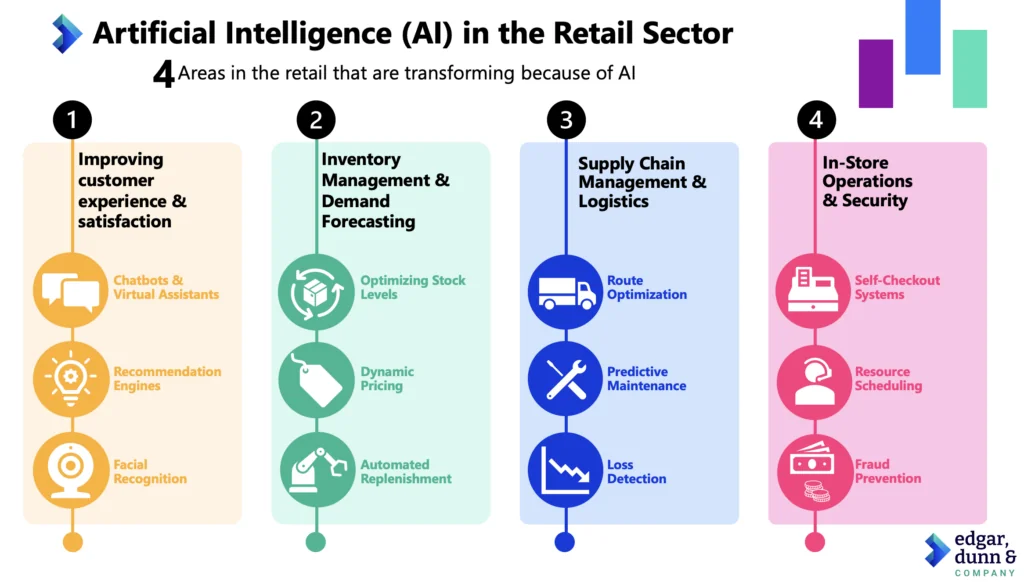
Strip away the buzzwords and AI transformation in retail boils down to one thing: replacing gut instinct with data at every decision point. Pricing, inventory, personalization, logistics, fraud detection — every one of these used to be driven by human judgment, historical spreadsheets, and a lot of hope. AI replaces that with real-time inference from live data.
That’s not glamorous. But it’s what actually moves the needle.
For someone new to this space, think of the pre-AI retailer as a restaurant with one server who memorizes regular customers’ orders over months of visits. The AI retailer has a system that knows your preference for the aisle seat, your usual oat milk order, and the fact that you only buy coffee on Thursdays — on your first visit.
The transformation has been coming in waves. Recommendation engines in the 2010s. Predictive inventory around 2018–2020. Real-time dynamic pricing through 2022–2024. And now, in 2026, we’re into what industry analysts call agentic AI — systems that don’t just analyze and recommend, they act. They adjust prices at 3am. They reroute shipments autonomously. They generate thousands of personalized product descriptions overnight.
That last part is where a lot of retailers are underestimating the magnitude of what’s coming. → See: AI Personalization in Practice
The Market in Numbers: 2026 State of Play
Okay, numbers. Here’s what the data actually shows — and I’ll flag where different research firms diverge, because they do.
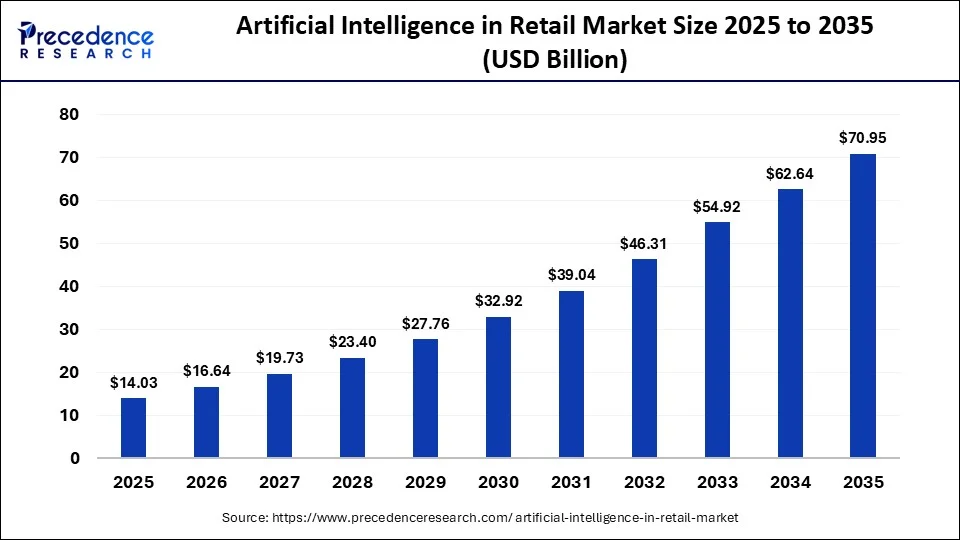
The growth trajectory is genuinely astonishing. From roughly $11.6 billion in 2024 to a projected $40–130 billion by the early 2030s (the range reflects different analyst methodologies, not disagreement on direction). Every major firm agrees: this market is accelerating, not plateauing.
But here’s the number that actually matters to me: only 33% of retailers have fully implemented AI across their operations. Meaning that while nearly everyone is “using” AI in some form, the vast majority are still doing it piecemeal — a chatbot here, a recommendation widget there — rather than integrating it end-to-end. That gap is where the real competitive opportunity lives. → AI Personalization Cloud
Regional Breakdown: Who’s Actually Ahead
| Region | Market Share | CAGR (projected) | Key Characteristic |
|---|---|---|---|
| North America | 39% | 34% | Early adoption, robust cloud infra, VC support. Regulatory uncertainty increasing. |
| Asia-Pacific | Fastest growing | 35% (China) | Alibaba’s $53B cloud/AI investment 2025–27. Mobile-first, high velocity. |
| Europe | 2nd largest | Moderate | EU AI Act fully enforced 2026. Compliance-first approach slowing some rollouts. |
| Australia | Top 5 GenAI | Moderate-high | Strong adoption in loss prevention and fraud. Privacy Act creates 6–12 month delays vs. US. |
One thing worth noting about Canada, where I’ve advised projects: AI adoption for customer-facing experience lags at around 43%, but the Toronto and Montreal AI corridors (Mila, Vector Institute) are producing genuine innovation that’s beginning to filter into mid-market retail. Expect a catch-up phase through 2027.
Key Technologies Driving the Revolution
You don’t need to understand gradient descent to benefit from this. But you do need to understand which tool does which job, because buying the wrong one is an incredibly expensive mistake. I’ve watched a $2M computer vision deployment sit unused because the retailer’s stores weren’t set up for the camera infrastructure. Don’t be that retailer.
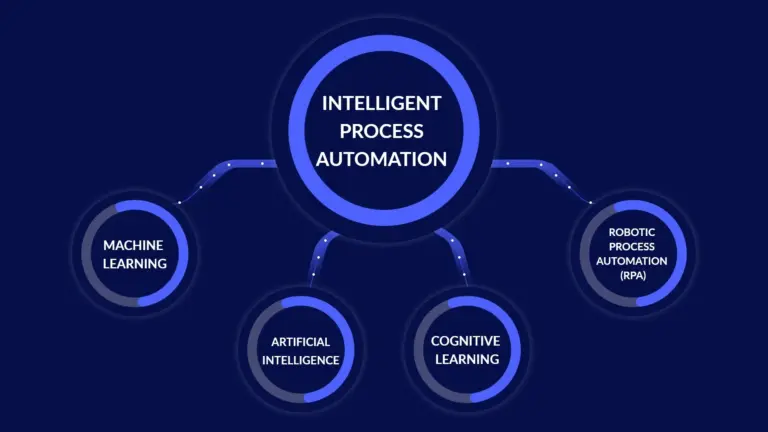
Machine Learning: The Workhorse
ML dominates because it’s been around longest and its ROI is clearest to measure. A well-tuned ML model for demand forecasting will cut your overstock by up to 35% and eliminate stockouts by 50%. That’s not theoretical — that’s what the supply chain teams at Walmart-scale operations have proven repeatedly. The catch: it needs clean, consistent data. Garbage in, garbage out. And most mid-market retailers have garbage data. I say that without judgment — it’s just the reality of years of siloed systems. → Personalization data strategies
Generative AI: The Disruptor
Generative AI traffic to US retail sites grew 4,700% year-on-year as of mid-2025. That number stopped me cold the first time I read it. This is the technology generating personalized product descriptions at scale, powering virtual try-ons, creating synthetic customer data to train other models while sidestepping privacy concerns, and enabling AI shopping assistants that some analysts believe will begin eroding Amazon’s marketplace dominance by 2026. If you’re not experimenting here yet, you’re already behind.
Computer Vision: The Store’s New Brain
Amazon opened checkout-free stores using computer vision in Chicago in March 2025. Everseen’s loss prevention systems have been adopted by 60% of retailers they’ve targeted. The technology reads physical space in real time — shelf gaps, traffic patterns, suspicious behavior. For brick-and-mortar, this is the equivalent of what ML is to e-commerce: the foundational intelligence layer.
The ARTI Framework: A Practical Implementation Guide
I developed this after the third time I watched a retailer jump straight to implementation without doing the groundwork. It’s not rocket science. But it’s the difference between a 6% uplift and a 180% one. Five stages, in sequence. Don’t skip any of them.
Assessment
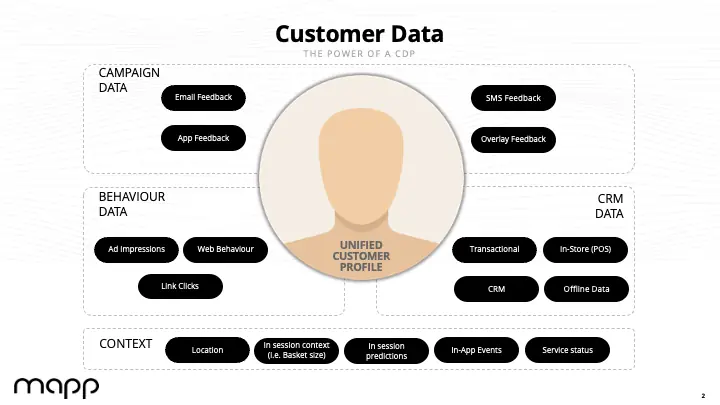
Score your data readiness before you touch a single AI tool. How complete is your customer data? Is it unified across channels or split between five different systems that don’t talk to each other? What’s your data quality score? If you can’t answer these questions in a week, you’re not ready to deploy AI — you’re ready to fix your data infrastructure.
Roadmap
Plan phased rollouts. Budget 15–20% of operations spend for AI in year one. Identify your highest-ROI use case (usually personalized recommendations or demand forecasting) and start there. Don’t try to boil the ocean. One well-executed pilot beats five simultaneous experiments every time.
Technology Integration
Match tool to problem. Don’t buy enterprise AI because a vendor gave you a compelling demo. Blend new AI capabilities with existing systems where possible — rip-and-replace is expensive and disruptive. And for the love of everything, don’t ignore your regional regulatory environment. What’s legal in Texas might trigger a compliance review in Queensland.
Impact Measurement
Define your success metrics before you launch, not after. Revenue per visitor, conversion rate, basket size, churn rate, NPS. A/B test rigorously. One client I worked with A/B tested AI-personalized email against their standard batch-and-blast approach — the personalized version saw a 40% open rate improvement, but it took eight weeks of clean data collection to prove it. Patience matters here.
Iteration
AI doesn’t stay accurate on its own. Consumer behavior shifts, seasonality hits, supply chain events occur. Your models need retraining schedules, monitoring dashboards, and a human in the loop who understands the output well enough to catch when something is going sideways. Iteration isn’t optional — it’s the whole game.
→ Download the ARTI assessment checklist
Case Studies: Where It Worked (and Why)
Birdzi built a system that predicts individual shopper behavior across grocery chains — not just what you bought last week, but what you’re likely to need next, which promotions will actually move you, and how to sequence offers across your lifecycle. The math here is real and verifiable.
Strength: exceptional data assessment and clean integration with existing loyalty infrastructure. Room to improve: limited global scalability of the model at present.
Walmart’s supply chain AI is one of the most studied examples in the industry, and it earns that attention. The system optimizes inventory positioning across thousands of locations in real time, adapting to demand signals that human planners would never catch at the speed required. In Canada, regional demand modelling added a further efficiency layer.
Key lesson: they phased the rollout over 18 months rather than big-banging the transition. That decision alone is why this didn’t turn into a headline about a supply chain meltdown.
Australian retailers face some of the world’s more rigorous privacy regulations, which makes deploying surveillance-adjacent technology genuinely tricky. The retailers that succeeded did it by building compliance into the architecture from day one — not as an afterthought. Everseen’s system, adapted for Australian regulatory requirements, delivered measurable results without triggering data protection issues.
ARTI note: the iteration score was the highest of the three cases — compliance with Australia’s Privacy Act forced rigorous data governance that actually made the system more reliable, not less.
Myths vs. Reality
❌ Myth
“AI will immediately boost my conversion rate by 40%+”
✓ Reality
10–23% conversion lifts are realistic for well-implemented personalization. 40%+ results require exceptional data quality, clean test design, and often 6+ months of model refinement.
❌ Myth
“Small retailers can’t afford AI transformation”
✓ Reality
Cloud-based AI tools start under $10K/year. The real cost is internal: time, data cleanup, and change management. AI phone support for Shopify stores now starts at $349/month.
❌ Myth
“Once deployed, AI runs itself”
✓ Reality
Models drift. Consumer behavior shifts. Seasonal patterns break predictions. AI requires continuous monitoring, retraining schedules, and human oversight. This is an ongoing operational commitment.
❌ Myth
“AI will replace most of my retail staff”
✓ Reality
Certain roles do face automation risk. But AI is also creating 350,000 new positions globally — AI trainers, ethics specialists, human-AI collaboration coordinators. 45% of retail management roles will be enhanced, not replaced. → See job impact analysis
What Happens to Retail Jobs?
I’m not going to sugarcoat this, because the human stakes matter. Some jobs are being eliminated. 76,440 retail positions were cut in 2025 due to AI automation, with customer service roles facing up to 80% automation risk. Stock clerks, basic data-entry roles, and standard customer service agents are the most exposed.
But the picture is more complicated than the headlines suggest.
AI is simultaneously eliminating roles and creating new ones. The net job impact in retail tech is projected as +15% growth in technology positions — but that doesn’t help the stock clerk who needs retraining. The transition cost falls unevenly, and that’s a real policy and management problem that can’t be solved with a bullet point.
What I’ve seen in practice: organizations that invest in retraining parallel to AI deployment have dramatically better adoption outcomes. Not just better optics — the teams that understand the AI systems they’re working alongside actually catch more errors, flag more anomalies, and improve model performance faster. It’s not altruism. It’s good strategy.
Emerging roles worth knowing: AI Retail Optimizer (algorithm performance and tuning), Customer Intelligence Specialist (behavioral data interpretation), and AI Ethics Coordinator (compliance and governance). Glassdoor data shows demand for AI-adjacent skills up 35% year-over-year. → Glassdoor: AI Specialist career data
How to Implement AI Without Burning Your Budget
Practical. Let’s go.
| Metric | Before AI | After AI (realistic outcomes) |
|---|---|---|
| Sales growth | 5–10% annually | 10–25% with ML personalization; 250%+ only in exceptional targeted campaigns |
| Churn rate | ~25% | 10–15% with sustained personalization programs |
| Inventory costs | Baseline | 30–35% reduction with ML demand forecasting |
| Customer service costs | Baseline | AI chatbots resolving up to 86% of queries without human escalation |
| Lifetime value | Static | 1.5× increase over 12–18 months in well-executed programs |
The Implementation Checklist
Before you engage a vendor, go through this honestly:
- Audit your customer data quality — can you actually build models on what you have?
- Identify your single highest-ROI AI use case for year one (one, not five)
- Establish your A/B testing infrastructure before deployment, not after
- Understand your regulatory environment (GDPR, Privacy Act, Colorado AI Act, etc.)
- Budget for change management — training, communication, team restructuring
- Define your success metrics and measurement cadence in writing before launch
- Assign a human owner for ongoing model monitoring and retraining
→ Implementation guides at AI Personalization Cloud
Frequently Asked Questions
Outlook: 2027 and Beyond
Here’s my honest read on where this goes.
By 2027, the AI in retail market will exceed $85 billion globally by most projections. The technology will be cheaper, more accessible, and more integrated into the platforms retailers already use. This is good news for adoption. The challenge shifts from “can we afford AI?” to “can we use it well enough to differentiate?”
Three trends I’m watching most closely:
Agentic AI becomes the default. Systems that act autonomously — adjusting prices, reordering stock, personalizing in real time — will become baseline expectations, not premium differentiators. The retailers who haven’t built the data infrastructure and organizational capability to support agentic AI by 2027 will be playing significant catch-up.
Regulatory complexity intensifies. The EU AI Act is fully in force. Colorado’s AI Act took effect in February 2026. California passed 18 AI-related laws. Australia continues to tighten its Privacy Act framework. Global retailers operating across jurisdictions are going to need dedicated AI governance functions. This isn’t optional compliance overhead — it’s risk management.
The human-AI hybrid model wins. I’ve become more convinced of this, not less, over the past two years. The retailers seeing the best outcomes aren’t the ones who replaced the most humans with AI — they’re the ones who used AI to make their human teams dramatically more effective. The system that flags the anomaly, the human who decides what to do about it. The AI that generates the 10,000 personalized subject lines, the human who sets the tone and values that constrain it.
→ AI Personalization Cloud: resources and tools → Book a strategy consultation
Sources & Further Reading
- PwC AI Predictions Update — AI impact on retail revenue and productivity
- McKinsey — The State of AI 2025
- Deloitte — State of AI in the Enterprise 2026
- Coherent Market Insights — AI in Retail Market Report 2026–2033
- Fortune Business Insights — AI in Retail Market Forecast to 2034
- Grand View Research — AI in Retail Market Report 2025–2030
- Forbes — Where Retail AI Is Headed in 2026
- Glassdoor Research — AI Job Growth and Skills Demand
- E-Commerce Germany — AI in Retail 2026: Why Most Companies Struggle to Deliver Value
- ContactPigeon — Top Retail Predictions 2026
ML SEO: The Next Big Leap in Intelligent Website Optimization
Financial Sector Overhaul: Compelling AI Integration Case Studies Transforming Banking with Predictive Analytics
Optimizing Stock Levels: AI-Powered Inventory Management Case Studies That Slashed Overstock by 40%
Maximizing Profits: AI-Powered Dynamic Pricing Case Studies That Boosted Revenue by 35%
7 Task Automation Tools You’ll Wish You Knew Sooner
Top 8 Generative AI CRM Strategies for Smarter Selling